|
|
 |
|
 |
|
 |
|
|
 |
| Technology affects almost
every aspect of contemporary life, from the production and consumption
of goods to the way in which people communicate with each other.
Innovation and progress are terms often associated with technology,
but the term can also suggest a distance from simpler ways of living
and the visual, aural, and textual information. Artists often employ
the tools, techniques, and methods of their time and the boundaries
of creative thought have expanded to reflect these new technologies.
The lessons in this topic address how people use and understand
technologyfrom the systems we create to define our lives
to the ways technology alters thought and action. |
|
 |
|
|
 |
systems
& styles
Subject Area: Language Arts
Artists: Celmins,
Gallagher, Nauman, Orozco, Pfeiffer, Ritchie, Zittel
Working within systemic constraints is what often leads to innovation,
and artists often organize their work into systems or groups to
categorize and sort their ideas. This lesson will explore the ways
that creative writing relates to this visual style of making work.
Students will compare and contrast the working styles of contemporary
visual artists to literary styles like Concrete Poetry, conceptual
writing, visual poetry, and typographic poetry. (Updated
for Season Three!) |
|
 |
|
 |
mediating
media
Subject Area: Social Studies
Artists: Charles, Kilgallen,
Kruger, Pfeiffer
Visual saturation and perceptual overload are terms we
use to describe the way that new technologies and media have become ubiquitous
in daily life. With new technologies come opportunities and responsibilities.
This lesson explores how artists, politicians, and business interests have addressed
the issue of mass media like advertising and popular culture and its relationship
to individual rights and identity. Students will explore the connections between
art and advertising. |
|
 |
|
 |
new
tools, new materials
Subject Area: Visual & Performng Arts
Artists: Antoni,
Barney, Chin, Hamilton, Hawkinson, Lin, Zittel
Many contemporary artists use unconventional tools and materials in their
art making practices, bringing innovative ideas to traditional methods
and forms. By doing so, these artists blur the distinctions between traditional
categories of art, and hence change the publics perception of what art
can be. In this lesson students will create several works of their own that incorporate
new methods, means, and resources. |
|
 |
|
 |
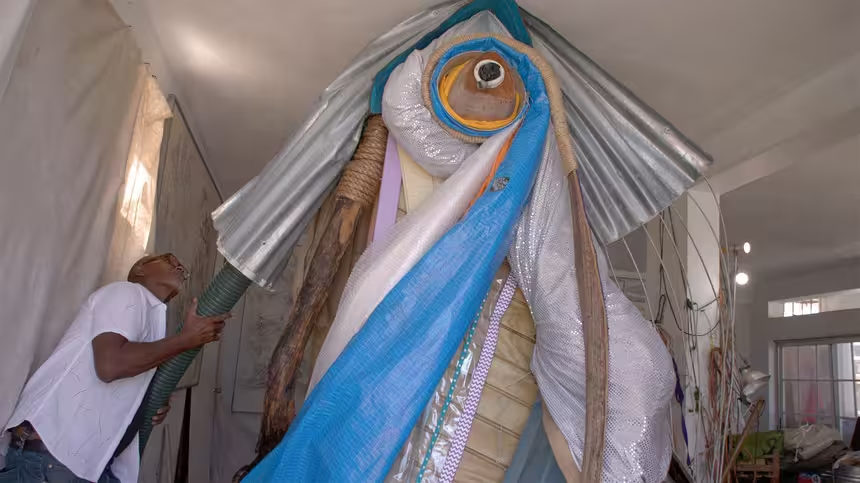
There
are mechanical interests and kinetic work, a fascination with
moving partsjust the magic of seeing this kind of animation
and making it happen.
Tim
Hawkinson
In these images I see evidence
of a society thats in decline...kind of desperate to feel like
things are okay...that things have been good and will continue to
be good. Thats the promise of advertising and thats the
promise of the spectacle. That things will go on forever...no one
will die, and things will be beautiful and glamorous for eternity.
Paul
Pfeiffer
|
|
 |
|
|
 |
 |