
larkin building
larkin building
drawings
exterior
interior
critical response
parallel movements
wright at the time
other works
larkin building: movements

New York Times Book Review, Sunday, May 31, 1931
“Tyranny of the Skyscraper”

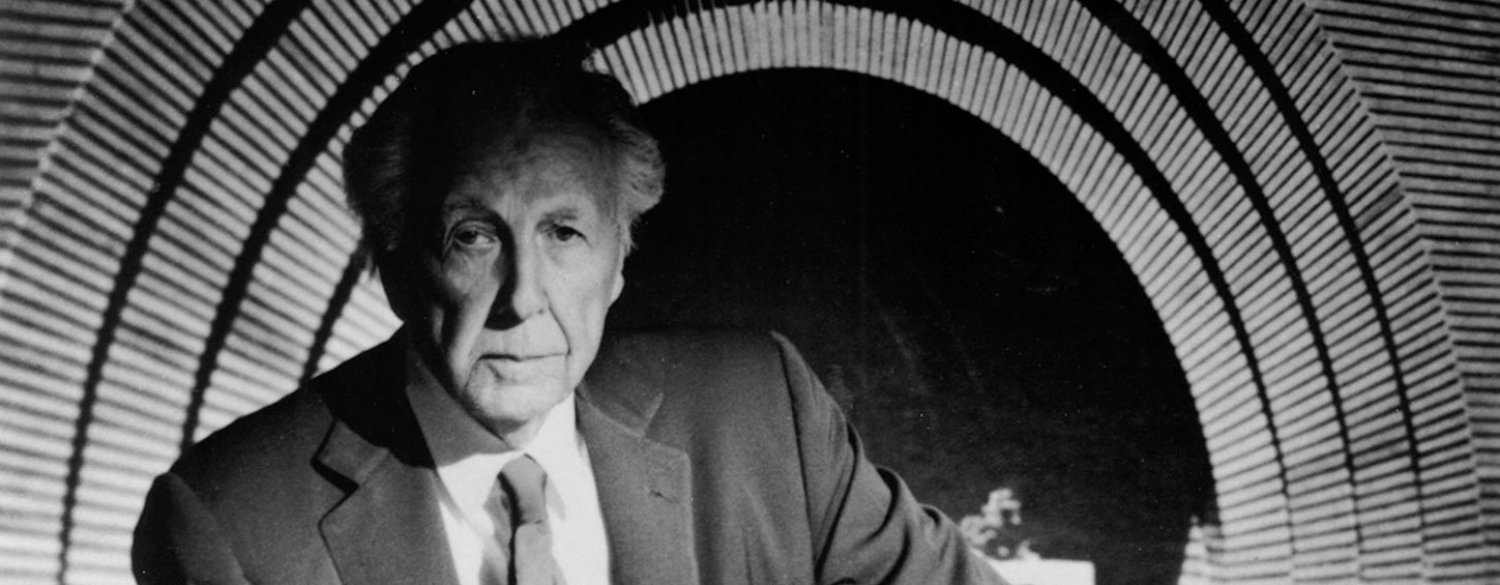
he passing of classic forms was dramatized for Mr. Wright as it has been for few fledgling architects. Passing one day in his late ’teens around Capitol Square in Madison, Wis., he was just in time to witness the collapse of the new west wing of the Capitol, with death or serious injury to forty workmen. “A great ’classic’ cornice,” he remembers, “had been projecting boldly from the top of the building, against the sky. Its moorings partly torn away, this cornice now hung down in places, great hollow boxes of galvanized iron, hanging up there suspended on end. One great section of cornice I saw hanging from an upper window. A workman hung, head downward, his foot caught, crushed on the sill of this window by a failing beam.” After this experience young Wright began “to examine cornices critically.” He saw them as “images of a dead culture,” and began to cast about for expressions of a new and living culture. He saw the “pilasters, architraves and rusticated walls” of late Victorian architecture as belonging to the same stuffy scheme of things as the “puffed sleeves, frizzes, furbelows and flounces” of the absurd feminine attire of the same period...

But the skyscraper, as Mr. Wright now believes, has been abused. Though at least partially emancipated as to form, it is self-defeating as to function. It has grown out of drawing with the human beings who have to use it and forced human life “to accommodate itself to growth as of potato.” It has produced “a dull craze for verticality and vertigo that concentrates the citizen in an exaggerated super-concentration that would have shocked Babylon—and have made the Tower of Babel itself fall down to the ground and worship.”

And Mr. Wright predicts:

“Even the landlord must soon realize that as profitable landlordism, the success of verticality is but temporary, both in kind and character, because the citizen the near future preferring horizontality—the gift of his motor car and telephonic or telegraphic inventions—will turn and reject verticality as the body of any American city. The citizen himself will turn upon it in self-defense. He will gradually abandon the city. It is now quite easy and safe for him to do so...”

Mr. Wright believes that “the city, as we know it today, is to die”; he does not believe that it can or should evolve into the “new machine-city of machine-prophecy as we see it outlined by Le Corbusier and his school.” It is here that he diverges from a whole wing of the modernist movement. He does not see why men should continue to “go narrowly up, up, up, to come narrowly down, down, down—instead of freely going in and out and comfortably around about among the beautiful things to which their lives are related on this earth.” He would “enable human life to be based squarely and fairly on the ground,” and to follow that horizontal line which “is the line of domesticity—the Earthline of human life.” Cities there will be in his Utopia, but they will “be invaded at ten o’clock, abandoned at four, for three days of the week.”

People will get back to the land, to at least an acre of land apiece, carrying with them by means of modern invention—that is to say, the “Machine”—all and more than all they now find in the midst of urban congestion. The entire countryside will be “a well-developed park—buildings standing in it, tall or wide, with beauty and privacy for every one.” In this environment man will find the manlike freedom for himself and his that Democracy must mean.

This is, clearly, more than architecture—it is a way of life. But for Mr. Wright architecture has come to seem the expression of a way of life. If the way of life is not beautiful the architecture will not be—and vice versa. This philosophy he has stated lucidly and with a fine glow of enthusiasm. His message ought to stir the imaginations of youthful architects and of youthfulness, whether of years or of point of view, everywhere. What Sullivan did for him he and his fine and glowing words may do for the generation that comes after him.

© 1931 by The New York Times. Reprinted by permission.

top of page