
 |
Introduction
Activity One:
Ballad of Horatio
Activity Two:
Dear Swipes
Activity Three:
Diary of a Driver
Activity Four:
Family Road Trips
Activity Five:
The Horseless Carriage
Activity Six:
If Horatio Drove Today
Activity Seven:
New Frontiers
Activity Eight:
Horatio’s Ratios
|
 |
Mathematics
6-8
Students will apply the concept of averages, ratios and rates to calculate aspects of Horatio’s road trip

The following definitions are critical to this learning activity. When explaining the concept, be sure to provide relevant examples for each term.
Average - The number obtained by dividing the sum of a set of numbers by the number of addends.
Rate - A ratio that compares two quantities having different units of measure. For example, a speed such as 66 miles per hour compares distance with time.
Ratio - A comparison of two quantities with like units. Ratios can be expressed with fractions, decimals, percents, or words; or they can be written with a colon between the two numbers being compared. For example, if a team wins 3 games out of 5 games played, the ratio of wins to total games is 3/5, 0.6, 60%, 3 to 5, or 3:5.

Ask students to reflect a long trip they have taken. Where did they go? How did they go? How long did it take to get there? How far was the destination from their home? How much money do they think they spent on food, souvenirs, lodging, and other travel-related things? If they drove, how many miles did they travel? How much money did they spend on gas? Select and chart several students’ data and facilitate the class’ calculation of averages, i.e. — miles traveled per day, gallon of gas per day, monies spent each day on food, etc. Have the class compare and contrast the data to make determinations about the trips in terms of expense, distance, etc.
Introduce the concepts of rate and ratios, providing generic examples. For example: total gas= $8,000; total time=63 days; total distance=4,600 miles. Students can calculate dollars per, mile, or gallon of gas, or days per mile or gallon, or miles per day. Invite students to use data from the their stories to calculate rates and ratios.

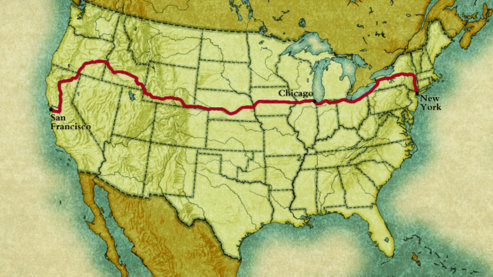
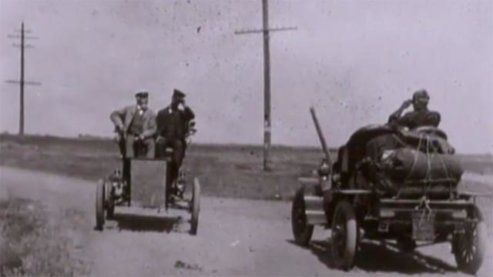
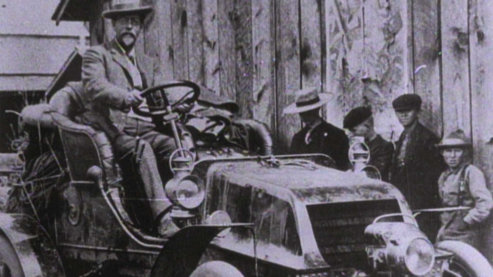
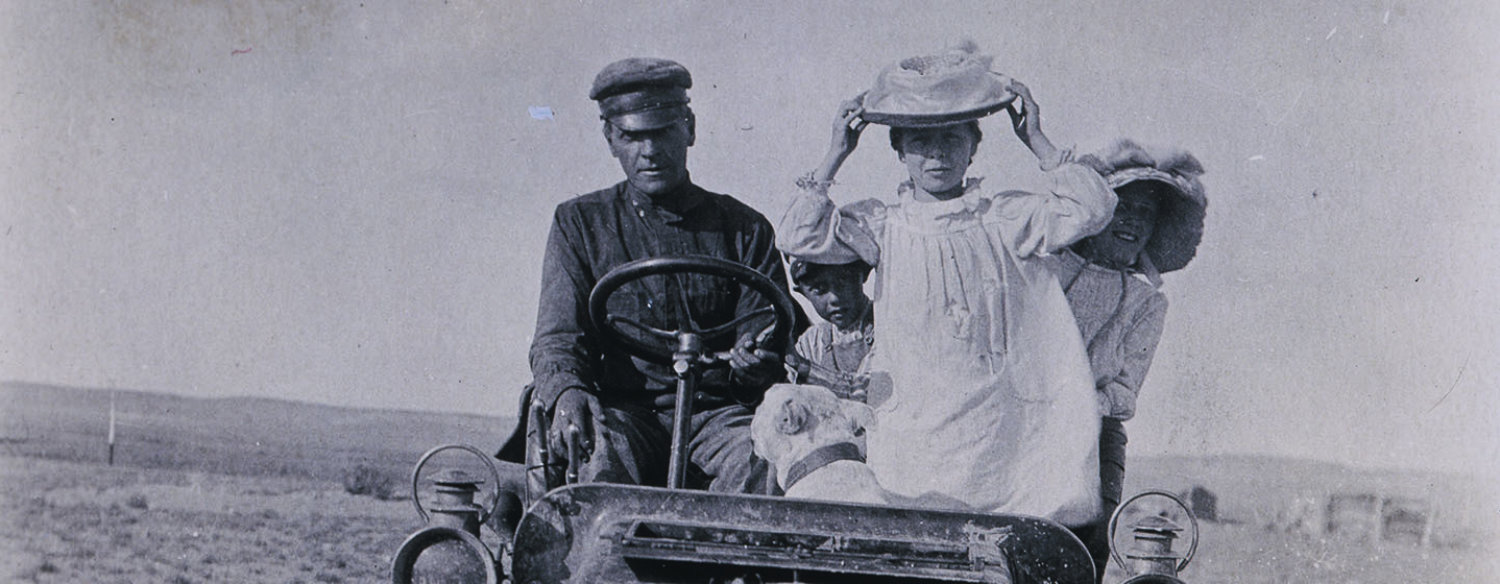
Point out to students that Horatio’s extended road trip presents myriad data to calculate in terms of averages, rates, and ratios. Students, for example, can calculate how fast Horatio traveled between Kansas and Ohio, how much gasoline he used when traveling in the mountains of Oregon and in the deserts of Nevada, where he got more miles to the gallon of gas, or how many dollars he spent for each mile traveled.
Divide students into small groups, distributing a graphic organizer that enables them to gather data from the film and this Web site —distances covered, time traveled between destinations, gas costs, etc. Use Mapquest (www.mapquest.com) or How Far Is It? (www.indo.com/distance/) to determine the distances Horatio and his crew covered. (The class can choose to track the entire trip, or select specific parts of the journey.) A brief list of items might be provided to jump start student data collection. For data per category collected, instruct students to calculate averages, rates, and ratios, and discuss as a class how these calculations might look in the present.
Horatio’s Stops
 |
| May 23, 1903 |
San Francisco to Tracy, California |
| May 24 |
To Sacramento, California |
| May 25 |
To Oroville, California |
| May 26 |
To Anderson, California |
| May 27 |
To Montgomery, California |
| May 28 |
To Bieber, California |
| May 29 |
To Alturas, California |
| June 2 |
To Lakeview, Oregon |
| June 6 |
To SL Ranch, Oregon |
| June 7 |
To Silver Creek, Oregon |
| June 8 |
To Buchanan's Ranch, Oregon |
| June 9 |
To Vale, Oregon |
| June 10 |
To Ontario, Oregon |
| June 11 |
To Caldwell, Idaho |
| June 12 |
To Orchard, Idaho |
| June 15 |
To Pocatello, Idaho |
| June 16 |
To Soda Springs, Idaho |
| June 17 |
To Montpelier, Idaho |
| June 18 |
To Diamondville, Wyoming |
| June 21 |
To Rock Springs, Wyoming |
| June 23 |
To Rawlins, Wyoming |
| June 30 |
To Laramie, Wyoming |
| July 1 |
To Cheyenne, Wyoming |
| July 2 |
To Archer, Wyoming |
| July 12 |
To Omaha, Nebraska |
| July 17 |
To Chicago |
| July 18 |
To South Bend, Indiana |
| July 19 |
To Toledo, Ohio |
| July 20 |
To Cleveland |
| July 21 |
To Buffalo, New York |
| July 23 |
To Syracuse, New York |
| July 24 |
To Little Falls, New York |
| July 26, 1903 |
Arrive New York City |
 |

www.pbs.org/harriman/education/lessonplans/
transportation.html
Harriman Expedition - How Has Transportation Changed
www.pbs.org/goldrush/activities.html
Gold Rush - Teacher's Guide
www.pbs.org/opb/greatlodges/teachers/teachers.htm
Great Lodges - You Be The Tour Guide
www.pbs.org/kqed/springboard/sb-auto.pdf
Springboard - The Changing Face of the Automobile
www.pbs.org/fmc/lessons/lesson1.htm
First Measured Century - The Demise of the Great American Frontier
www.pbs.org/fmc/lessons/lesson2.htm
First Measured Century - Writing a Play about Immigrant Life in America around 1910
Resource Type: Lesson Plan
www.pbs.org/lewisandclark/class/l03.html
Lewis And Clark - Lesson 3: Mapping and Cartography

Correlation to NCTM Curriculum Standards and Expectations for Grades 6-8:
Number and Operations
Understand and use ratios and proportions to represent quantitative relationships.
Algebra
Represent, analyze, and generalize a variety of patterns with tables, graphs, words,
and, when possible, symbolic rules
Model and solve contextualized problems using various representations,
such as graphs, tables, and equations.
Measurement
Solve simple problems involving rates and derived measurements for such attributes as velocity.
Data Analysis and Probability
Formulate questions
Communication
Communicate mathematical thinking coherently and clearly to peers, teachers, and others.
Analyze and evaluate the mathematical thinking and strategies of others.
Connections
Recognize and apply mathematics in contexts outside of mathematics.

Author Steve Crandall has taught secondary mathematics and science since 1979. An amateur entomologist and astronomer, he has presented lessons at state/national conferences for math, science, and middle school.
|
 |