
|
|
 |
 |
 |
Go back to 1805 |
 |
January 1
In his journal entry, Lewis exhibits the homesickness that seems
to afflict everyone during the rainy winter, during which there are only 12 days in which it doesnt rain. Nothing worthy of notice soon replaces we proceeded on as the most common phrase used by the diarists.
|

Arikara Rush Gatherer
|
January 4
In the East, President Jefferson welcomes a delegation of
Missouri, Oto, Arikara, and Yankton Sioux chiefs who had met Lewis and Clark more than a year earlier. Jefferson thanks them for helping the expedition and tells them of his hope that we may all live together as one household. The chiefs respond with praise for the explorers, but doubts about whether Jeffersons other white children will keep his word.
March 7
Having previously run out of whiskey, the expedition now runs
out of tobacco. Patrick Gass reports that the men use crab tree bark as a substitute.
March 23
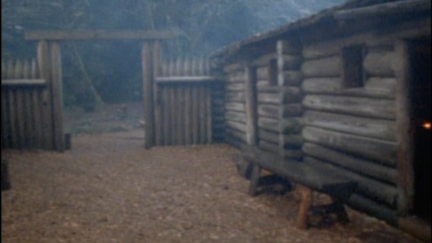
Fort Clatsop is presented to the Clatsops, and the expedition sets
off for home.
|

Nez Perce Scout
|
May - late June
The expedition arrives back with the Nez Percé but have to wait
for the snows to melt on the Bitterroots before trying to cross them. They play a game of base with the Indians, who once again provide the explorers with food. Lewis calls them the most hospitable, honest and sincere people that we have met with in our voyage.
July 3
After re-crossing the Bitterroots, the expedition splits into
smaller units, in order to explore more of the Louisiana Territory. Clark takes a group down the Yellowstone River; Lewis heads across the shortcut to the Great Falls and then explores the northernmost reaches of the Marias River (and therefore the Louisiana Territory). It will mean they will be split at one point into 4 separate groups.
|

Clark's Signature
|
July 25
Having reached the Yellowstone (with some guiding assistance
from Sacagawea), Clarks group has re-entered the Great Plains, built two dugouts, been stopped on the river by a huge buffalo herd, and now comes to a sandstone outcropping east of present-day Billings, Montana. He names it Pompys Tower, in honor of Sacagaweas son, nicknamed Little Pomp. And on the rock face, Clark inscribes his name and the date the only physical evidence the Corps of Discovery left on the landscape that survives to this day.
Lewis and three men, meanwhile, are now 300 miles away, near the Canadian border and what is now Cut Bank, Montana.
July 26/27
Heading back toward the Missouri, Lewis sees eight Blackfeet
warriors. They camp together warily, but the morning of the 27th the explorers catch the Blackfeet trying to steal their horses and guns. In the fight that follows, two Blackfeet are killed the only act of bloodshed during the entire expedition. Lewis leaves a peace medal around the neck of one of the corpses that they might be informed who we were. The explorers gallop away, riding for 24 straight hours, meet the group with the canoes on the Missouri, and paddle off toward the rendezvous with Clark.
August 12
Downstream from the mouth of the Yellowstone, the entire expedition is finally reunited.
|

Mandan Lodge
|
August 14
They arrive back at the Mandan villages. John Colter is given
permission to leave the expedition and return to the Yellowstone to trap beaver (and become one of the first American mountain men). The captains say good-bye to Charbonneau, Sacagawea, and Baptiste.
September
Speeding home with the Missouris current, they cover up to 70
miles a day, often not even stopping to hunt in order to get back sooner. They exchange harsh words with the Teton Sioux chief, Black Buffalo; pay their respects at the grave of Charles Floyd, their only casualty; and begin meeting boat after boat of American traders already heading upriver into this newest section of the nation.
September 20
The men see a cow on the shore and raise a cheer at the sign that
they are finally returning to the settlements; that day they reach La Charette.
September 23
Their last day as the Corps of Discovery. They reach St. Louis.
Having been gone nearly two and a half years, they had been given up for dead by the citizens, who greet the explorers enthusiastically. Now, young John Ordway writes, we intend to return to our native homes to see our parents once more, as we have been so long from them.
Fall
The captains are national heroes; as they travel to Washington,
D.C., balls and galas are held in the towns they pass through. In the capitol, one senator tells Lewis its as if he had just returned from the moon. The men get double pay and 320 acres of land as rewards; the captains get 1,600 acres. Lewis is named governor of the Louisiana Territory; Clark is made Indian agent for the West and brigadier general of the territorys militia.
|
 |
October 11
Traveling east along the Natchez Trace in Tennessee, on his way from St. Louis to Washington, Lewis commits suicide at Grinders Stand, an inn south of Nashville. (Later, theories that he was murdered arise, but neither Clark nor Jefferson doubted the original, on-site reports that Lewis had shot himself. Few historians give credence to the the murder theory.)
|
 |
December 20
At Fort Manuel in what is now South Dakota, Sacagawea dies.
Clark, in St. Louis, assumes custody of Jean Baptiste and her infant daughter, Lisette. (Later, legends arise that it was Charbonneaus other wife that died, that Sacagawea lived until the late 1800s and died on the Shoshone reservation in Wyoming; even fewer historians give much weight to this.)
|
 |
York dies sometime before this date, probably of cholera, after
going into the freighting business in Tennessee and Kentucky. Clark had kept him slavery for at least ten years following the expedition before granting him his freedom.
|
 |
September 1
William Clark had married Julia Judith Hancock, for whom he named a river in Montana; been respected as Indian agent (Native Americans called St. Louis the Red-Headed Chiefs Town); successful in business; and several times appointed governor of the Missouri Territory (though he lost the first election to be the new states governor, after being accused of being too soft on Indians). On this date he dies at the home of his eldest son, Meriwether Lewis Clark.
|
|