Visit Your Local PBS Station PBS Home PBS Home Programs A-Z TV Schedules Support PBS Shop PBS Search PBS
Home
Home
Resources for Students
Arts

Science
Math and Economics

World

U.S. History

Health / Fitness
Resources for Teachers & Educators

Click here for more current events lesson plans matched to national standards.

How to use this story in a classroom...

Online NewsHour:
The New Iraq

Two senators discuss ex-weapons inspector David Kay's, testimony before Congress.
01.28.04

An update and discussion on the ongoing weapons hunt.
01.09.04

President Bush and Democrats responded to David Kay’s testimony that his team has not yet found any weapons of mass destruction in Iraq. 10.03.03

David Kay talks to Jim Lehrer about his testimony that his team has not yet found any weapons. 10.02.03

Secretary of State Colin Powell fields questions about the claims in President Bush's State of the Union speech. 07.10.03

Experts assess Secretary of State Colin Powell's case that Iraq is developing weapons of mass destruction. 02.05.03

Browse the NewsHour's coverage of the White House.

NewsHour Extra:
Situation Still Tense in Post-Saddam Iraq 01.14.03

Where are the weapons of mass destruction? 06.04.03

Outside Links:
U.S. Department of Defense

The White House

U.S. Central Intelligence Agency

U.S. House of Representatives

U.S. Senate

Extra is not responsible for the content of external Internet sites

Panel to Investigate Iraq Intelligence
Posted: 02.02.04

The issue of what the United States knew about prewar Iraq returns to the forefront as President Bush announces an inquiry into faulty intelligence.

Printer-friendly versions: HTML / PDF

On Monday President Bush said he would call for an independent, bipartisan commission to investigate intelligence failures in Iraq but defended his decision to go to war.

Reading and Discussion Questions

"I want all the facts. We do know that Saddam Hussein had the intent and capabilities to cause great harm, we know he was a danger. … He slaughtered thousands of people," the president said.

Faulty intelligence

The president's decision comes after rising pressure from both Democrats and Republicans to respond to information suggesting that the agencies charged with spying on other countries David Kayoverstated Iraq's stockpiles of chemical and biological weapons.

Last week, former chief U.S. weapons inspector David Kay told Congress that prewar weapons intelligence assessments on Iraq, which led to the American invasion, was flawed.

"My view was that the best evidence that I had seen was that Iraq indeed had weapons of mass destruction. It turns out we were all wrong, probably, in my judgment, and that is most disturbing," Kay said.

During the hearing Kay also urged Congress to begin an investigation into why the intelligence in Iraq was wrong.

"It's really up to you and your staff on behalf of the American people to take on that challenge. It's not something that anyone from the outside can do. I do believe we have to understand why reality turned out to be different than expectations and estimate," Kay added.

Political implications

President Bush's decision, which reverses his earlier opposition to a probe, also follows attacks by Democrats, including the leading presidential candidate, Massachusetts Sen. John Kerry.

Kerry has said Mr. Bush, Vice President Dick Cheney and Secretary of State Colin Powell chose intelligence that supported their case against Saddam Hussein, "misleading" Congress during the debate over whether to authorize military action against Iraq.

The president did not set a timetable for the investigation, but the findings are not expected until after the presidential elections in November.

Beyond Iraq

By establishing the commission himself, President Bush will have greater control over its membership and mandate, which President George W. Bushaccording to White House officials, will be broad - to examine America's "global security challenges of the 21st century."

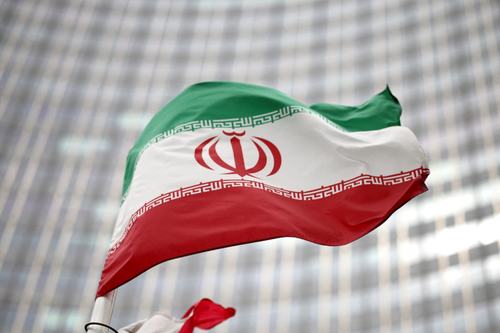
In addition to examining the possible misjudgments in Iraq, the panel will examine problems in gathering information in such secretive regimes as North Korea and Iran as well as stateless groups such as terrorists.

"What we don't know yet is (reconciling) what we thought and what the Iraq Survey Group has found, and we want to look at that," the president said. "But we also want to look at our war against proliferation and weapons of mass destruction, kind of in a broader context."

On Sunday, Dan Bartlett, the White House communications director, said that the president will get commission members from experts who are "very distinguished statesmen and women, who have served their country and who have been users of intelligence, or served in a gathering capacity."

Previous intelligence problems

Problems with intelligence are not new. The United States has faced additional intelligence shortfalls, most recently in the failure to anticipate the Sept. 11, 2001, attacks.

Chemical and nuclear weaponsIn addition, the United States failed to predict that both Pakistan and India intended to test nuclear weapons in 1998. The United States was also surprised to learn after the collapse of the Soviet Union that the Soviet Union was not as economically sound or powerful as had been thought.

David Kay summed up some of the problems in intelligence gathering in a discussion with Jim Lehrer on the NewsHour last week.

"We are not very good as a nation in our intelligence capability at reading the most fundamental secrets of a society, what are its capabilities, what are its intentions? You can't photograph those. You need Americans on the ground penetrating those societies and people who are speaking their languages," Kay said.

-- Annie Schleicher, Online NewsHour

© 2004 MacNeil/Lehrer Productions

Daily Buzz


Evan Wood
Preparing to Cover the Republicans
It's important to understand both sides in an election, and I think it will be interesting to hear the Republican opinion on big issues. As a writer, it will be my job to take that perspective and share it with the youth of the country, a crowd that mainly supports Obama.
Evan, Minneapolis

Debating The News
My Story
Editorial Page
Poetry


Click here to find out how your essay or poem could appear on NewsHour Extra.