Visit Your Local PBS Station PBS Home PBS Home Programs A-Z TV Schedules Watch Video Support PBS Shop PBS Search PBS
Home
Home
Resources for Students
Arts

Science
Math and Economics

World

U.S. History

Health / Fitness

Media
Resources for Teachers & Educators

Click here for more current events lesson plans matched to national standards.

How to use this story in a classroom...

Online NewsHour:
Special Report

The Israeli-Palestinian Conflict

U.N. warns against cutting aid to Hamas led Palestinian Authority. 02.28.06

Two experts assess Hamas' decision to open talks about forming a coalition government. 02.20.06

Hamas victory highlights crisis facing bankrupt Palestinian Authority. 02.10.06

Israeli reaction to Hamas' election victory. 02.02.06

Palestinian reaction to Hamas' election victory. 01.30.06

Experts discuss Hamas' victory in the Palestinian elections. 01.26.06

Browse the NewsHour's coverage of the middle east.

NewsHour Extra:
Top Story: Hamas Victory in Palestinian Election Surprises World. 01.31.06

Top Story: Israeli Braces for Life After Sharon 01.11.06

Top Story: Israeli Settlers Leave Gaza 08.22.05

Lesson Plan: Seeds of Peace: The Israeli-Palestinian Conflict

Outside Links:
Israeli Government

Palestinian National Authority

Extra is not responsible for the content of external Internet sites

U.S. Considers Cutting Aid to New Palestinian Hamas Government
Posted: 03.01.06

American and European Union officials are considering what aid, if any, should go to the Palestinian Authority government that is now under the control of the Islamic militant group Hamas.

Printer-friendly versions: PDF

Hamas won a surprising victory in the Palestinian parliamentary elections in late January. The group is unpopular in the West because it advocates the destruction of the state of Israel and has taken responsibility for many terrorist attacks and suicide bombings.

Although by law the Palestinian Authority is still headed by an independently elected president, Mahmoud Abbas of the secular Fatah Party, Abbas has asked Hamas to form a cabinet. That means that Hamas, labeled a terrorist organization by Israel and the West, is expected to dominate the government within weeks.

Western conditions for aid

Late last month, senior representatives from the United States, United Nations, European Union and Russia, the so-called

Reading and Discussion Questions

"Quartet," met in London and laid down conditions for continuing aid.

They demanded the next Palestinian government recognize Israel and commit itself to non-violence and a two-state solution.

Even though Hamas has not agreed to any Western conditions -- only saying they would consider a long term truce with Israel -- on Monday the European Union announced it was giving the Palestinian Authority $144 million in emergency aid to tide it over until Hamas takes power.

Officials said they were responding to concerns that stopping all payments could send the region into more violence and chaos.

But critics of the plan feel that giving Hamas any money makes the group seem legitimate and eliminates the incentive to change.

Financial condition of the Palestinian Authority

The Palestinian Authority is in a precarious financial situation.

Each year it gets $1.3 billion in outside funding. Of that money about 40 percent goes to development, 30 percent to humanitarian aid and 30 percent to direct government support.

The money in question is the development and direct government aid, which provides monthly salaries for 135, 000 government workers.

According to a UN report, about 942,000 Palestinians, or one in four of those living in Gaza and the West Bank, are financially dependent on someone who works for the Palestinian Authority.

Although there are regional experts who believe withholding money will force Hamas to change politically, others believe that it will only strengthen the group.

"We're not going to weaken Hamas by starving Palestinians and there's no way to starve the Palestinian government as opposed to starving Hamas. Money is fungible," Amjad Atallah, a former advisor to the Palestinian Liberation Organization and now president of Strategic Assessments, a law firm that deals in conflict resolution, told the NewsHour.

Israel's position

Israel, long a U.S. ally, has asked the United States and other Western nations to suspend all funding to the Palestinian government, although they have agreed to continue humanitarian aid to the Palestinian people.

"Do we want to show that Palestinians who made a free choice for Hamas have repercussions and implications of their choice?" asked Robert Satloff, executive director of the Washington Institute for Near East Policy.

"This is a choice the international community need not subsidize. ... There's no entitlement that they have a claim on the rest of the world to pay for a Hamas-led regime," Satloff said.

The Bush administration has asked president Abbas to return $50 million the United States provided the Palestinian Authority last year for infrastructure improvements.

Abbas protested the demands.

"People should not be punished for the democratic choice, regardless of the government. You can punish the government but how can you punish the whole people for the position of this government? We will have to face all these issues and we'll have to try and solve the crisis," he said.

Hamas leaders have vowed they'll turn to Iran and other Muslim nations for support if they're cut off by the West.
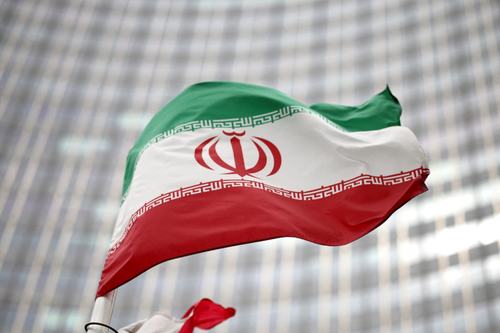
Earlier in February, Iran, a country with a repressive Islamic government, pledged to help the Palestinian Authority if it needs money.

-- Compiled by Annie Schleicher for NewsHour Extra

Daily Buzz


Evan and Kamaria
Debating Financial Aid for Illegal Immigrants
American schools and financial aid should be only for legal citizens of the United States. There should be no exceptions to this.
Evan, Houston, Texas

Debating The News
My Story
Editorial Page
Poetry


Click here to find out how your essay or poem could appear on NewsHour Extra.