Visit Your Local PBS Station PBS Home PBS Home Programs A-Z TV Schedules Support PBS Shop PBS Search PBS
Home
Home
Resources for Students
Arts

Science
Math and Economics

World

U.S. History

Health / Fitness

Media
Resources for Teachers & Educators

Click here for more current events lesson plans matched to national standards.

How to use this story in a classroom...

Online NewsHour:
Two authors examine the impact of starting daylight time earlier. 03.09.07

Politicians discuss how to curb rising energy costs. 04.25.06

A breakthrough in lightbulb technology saves energy. 11.10.05

Experts explain the Y2K bug.
06.11.98

Browse the NewsHour's coverage of environment and economy.

NewsHour Extra:
Lesson Plan: Exploring Alternative Energy Sources

Top Story: School Districts Hard Hit By Energy Cost Increases 11.21.05

Top Story: Y2What?
09.25.99

Outside Links:
Information about the new daylight savings time (National Institute of Standards and Technology)

Extra is not responsible for the content of external Internet sites

Daylight-saving Time Lasts Longer This Year
Posted: 03.09.07

Most of the United States begins daylight-saving time three weeks earlier this year -- Congress' attempt to save energy and money.

Printer-friendly version: PDF

Daylight-saving time, intended to help people make better use of daylight hours, was increased by four or five weeks when President Bush signed the Energy Policy Act of 2005.

Capitol BuildingThe act mandated that clocks "spring forward" on the second Sunday of March, not the usual first Sunday of April. The act also mandated that clocks "fall back" on the first Sunday in November, not the last Sunday in October.

The idea is to move an hour of daylight from when people are typically sleeping to when they are out and about, therefore decreasing the amount of energy used for lighting and appliances.

According to studies done by the U.S. Department of Transportation, those savings amount to a decrease of the entire country's energy usage by about 1 percent each day.

"The entire population is active at 6 p.m. versus 6 a.m., and if we all have an extra hour before we turn on the lights, that's a big savings," David Moulton, chief of staff for Representative Edward Markey, D-Mass., who introduced the amendment to the law, told Time magazine.

Daylight-saving time also has been shown to reduce crime and traffic accidents, which are more frequent in the evening when drivers are tired.

History of daylight-saving time

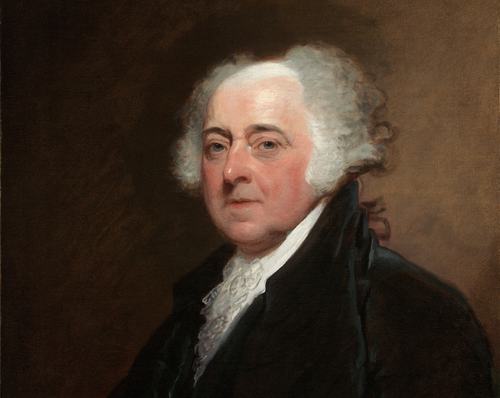
Daylight-saving time is often attributed to Benjamin Franklin, who wrote about the concept in his essay, "An Economical Project," while living in France in 1784. The thrifty diplomat and inventor advised getting up an hour earlier each day to save on the use of candles at the end of the day.

Map of U.S. time zones (USGS)Although enacted temporarily toward the end of World War I and throughout World War II to save fuel, the idea of daylight-saving didn't really take hold in the United States until the 1960s.

Reading and Discussion Questions

Congress created the Uniform Time Act in 1966. This act mandated a set beginning and ending of daylight-saving across the country. Any state that wanted to opt out of the system had to create its own law to keep the state on standard time. Arizona and Hawaii are two such states.

Standard time created distinct time zones throughout the country. They were originally created by the railroad industry in the 1880s to streamline communication and travel but didn't become federal law until 1918.

Potential technological problems

LaptopSome technology experts worry that the change in the timetable for daylight-saving will cause cell phones, computers, digital video recorders and other technological gadgets to malfunction.

In addition, airports, hospitals and other institutions that rely on tight schedules might be affected.

However, companies have had two years to fix major problems, and the remaining glitches aren't expected to do more than add confusion or make people an hour late.

Critics of the extension

Critics of an earlier daylight-saving time include farmers, psychologists and some energy experts who do not think the savings will be as much as expected.

"Farmers have to follow the sun regardless of what the clock says," which may put them off of other people's schedule, David Prerau, author of "Seize the Daylight: The Curious and Contentious Story of Daylight Saving Time," told the NewsHour.

Smokestacks and power linesSome psychiatrists worry that less sunshine in the mornings could compound the effects of seasonal affective disorder, or wintertime depression.

"One of the main factors involved in the genesis of seasonal affective disorder is the lack of morning light," said David Avery, a professor of psychiatry at the University of Washington, who wrote Congress in opposition of the extension of daylight-saving time.

One winner from the later switch back to standard time is the candy industry, which has been pressing for the change since 1986 because it will mean and hour more light for trick or treating on Halloween.

Any energy savings will be studied by Congress next year. If deemed too small, the change may be reversed.

--Compiled by Annie Schleicher for NewsHour Extra

Do you have an opinion about this article? Or do you have a personal experience related to this article that you'd like to share with our readers? Click here to submit your story.

Daily Buzz


Imani
Racial and Economic Differences Divide Cities
I grew up with constant influences from the black and white communities, a situation which caught me in that limbo where I was too black to be white but too white to be considered fully black.
Imani, Atlanta

Debating The News
My Story
Editorial Page
Poetry


Click here to find out how your essay or poem could appear on NewsHour Extra.