| |  |
 |
 |
 |
 |
Turkey's
Presidential Election Revives Battle Between Religion and State |
Posted:
05.09.07
|
 |
 |
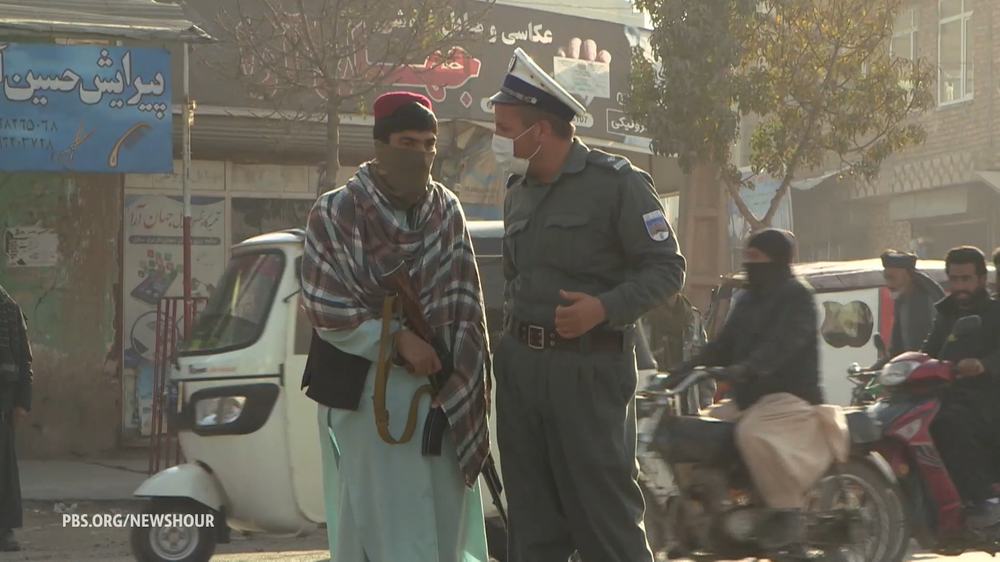
Turkey's parliament canceled presidential elections Wednesday,
adding to a political crisis that has isolated the ruling government
from its people, who hold sacred the country's secular tradition.
Printer-friendly version: PDF
|
 |
 |
 |
 |
The political turmoil also is raising uncertainty over Turkey's
position as a link between Europe and Asia, where the Western
and Islamic worlds meet.
Turkey
is a nation of Muslims -- 99.8 percent of Turks follow the Islamic
faith -- but its government has been largely secular since its
creation in the 1920s.
Turkey's first president, army officer and World War I hero Mustafa
Kemal Ataturk, built the country from the ashes of the Ottoman
Empire, allowing women to vote, restricting Islamic dress and
removing Islam from its constitution, creating a strict separation
between religion and state.
Now, moves by the ruling Justice and Development Party, known
by its Turkish initials "AK," have troubled Turks who
fear that the AK Party's Islamist roots, a philosophy that advocates
the spread of Islamic values, may emerge.
|
 |
 |
 |
 |
 |
 |
Candidate
sparks outrage |
 |
 |
 |
 |
 |
The crisis began last month, when the AK party named Foreign
Minister Abdullah Gul as its candidate for president.
The nomination sparked outrage from the secular establishment
-- including the powerful Turkish army, political opposition parties,
the courts and the Turkish middle class.
Some 1 million Turks protested in Istanbul and Ankara, Deutsche
Presse-Agentur reported, fearing that the AK Party could exercise
a hidden Islamist agenda, which its leaders have denied, once
it holds control over the parliament, the prime-ministership and
the presidency.
Turkish
citizens vote once every five years for members of the 550-seat
parliament, the Turkish Grand National Assembly, which holds legislative
power. Executive power is shared between the president, who is
appointed by parliament to a seven-year term, and the prime minister,
who is appointed by the president.
Current secularist president Ahmet Necdet Sezer, whose term began
in 2000 -- before the rise of the AK party -- has used his veto
powers as a check on the AK-led parliament, blocking legislative
bills and appointments of officials.
But with an AK-backed president, those checks could disappear.
|
 |
 |
 |
Fears of
rising Islamism |
 |
 |
 |
 |
 |
"[Gul] does not represent democracy, or Turkey. His wife
wears the veil, which I don't appreciate, and I don't believe
he intends to follow Ataturk's ideals," Iffet, a Turkish
citizen, told BBC News.
Both
Prime Minster Recep Tayyip Erdogan and AK Party No. 2 Gul have
tried to distance themselves from their Islamist pasts, but their
party has been criticized for easing restrictions on teaching
the Quran, inserting religious references in textbooks and taking
steps to ban alcohol consumption and criminalize adultery.
"In order to appeal to a majority of people, AK will have
to convince them that the party does not have an Islamist agenda,"
Dogu Ergil, a political science professor at Ankara University,
told Reuters.
Erdogan has maintained that secularism should not come at the
cost of religious expression.
"The essential problem is to find a way to stay united,
preserving our differences. Rights and freedoms are necessary
for everybody," Erdogan said, BBC News reported.
|
 |
 |
 |
Reversing
progress |
 |
 |
 |
 |
 |
"We would have preferred the campaign to be about structural
reforms, the Turkish lira, and Turkey's relations with the EU.
Now the main focus will be the secular-religious clash and the
role of the army," Atilla Yesilada, a political analyst with
Global Source/Turkey, told the Wall Street Journal.
Many
Turks fear that threats from the army could undo the financial
and diplomatic gains of the past four and a half years.
Under the AK, Turkey has seen unprecedented economic growth following
a near-collapse in 2001 which discredited politicians of the previous
legislative session.
And after years of bargaining, Turkey entered formal talks to
join the European Union in 2005, a credit to the country's foreign
minister, Abdullah Gul. But the European Commission warned Turkey
that it could not gain entry into the EU while its military holds
so much power over its democratically elected government.
The new clashes also could have implications for democracy in
the Middle East. President Bush and British Prime Minister Tony
Blair have argued that Prime Minister Erdogan's government could
serve as an example for its Middle Eastern neighbors -- Iraq,
Iran, Syria -- for how a democracy can exist in an Islamic country.
|
 |
 |
 |
Opposition
from the court and army |
 |
 |
 |
 |
 |
Following Gul's nomination to the country's top post in April,
the opposition Republican People's Party boycotted the election.
The country's constitutional court then overturned Gul's election
-- a first in Turkey's history -- leading to Gul's withdrawal
from the race Sunday.
With no candidate in place, the AK Party halted the presidential
election process Wednesday, saying it would only continue after
the July parliamentary elections, which it had already moved forward
in the hopes that it could lessen the erosion of its power as
opposition parties merge.
"The
key is whether the current dissatisfaction will be translated
into votes at the ballot box," Semih Idiz, a columnist at
Turkish newspaper Milliyet, told Reuters.
The Turkish parliament has taken steps toward a major constitutional
amendment that would allow the president to be elected by a vote
from the people instead of the legislature, but critics say that
could only further disrupt the checks and balances in the nation's
constitution.
"Whether it is a president elected through parliament or
a popular vote, you can't do this hastily. There needs to be a
period of contemplation so that we don't have to change the system
soon again," Dogu Ergil of Ankara University told Reuters.
And fears of a military coup remain.
The army, as stewards of the secular state, has intermittently
overthrown governments it believes to be too Islamic -- most recently
in 1997. Last month, it released a statement accusing the AK government
of tolerating rising Islamist activities, hinting it would intervene
should a pro-Islamist rise to the presidency.
--Compiled
by Adnaan Wasey for NewsHour Extra
Do you have an opinion about this article? Or do you have
a personal experience related to this article that you'd like
to share with our readers? Click
here to submit your story.
|
 |
 |
 |
 |
 |
|
 |
|