|
VOA
debuted in 1942 with a radio broadcast into Nazi Germany. Its
mission was stated clearly: "This is a voice speaking from
America. Daily, at this time, we shall speak to you about America
and the war. The news may be good or bad. We shall tell you the
truth."
The service now reaches more than 115 million people worldwide
through its TV and radio programming in 45 languages, as well
as millions more through the Internet.
|
 |
 |
After
World War II, the service broadcast on shortwave frequencies to
people in closed communist societies where information was controlled
by the government.
During the ideological struggles of the Cold War, VOA was accused
of diverting from its mission to deliver objective information
due to political pressure to promote pro-American views.
Partially in response to the criticism, VOA's charter, written
in 1960 and signed into law in 1976, states the goal as delivering
accurate, objective and comprehensive news, while also presenting
the policies of the United States clearly and effectively.
|
 |
 |
As it turns 65, VOA is still changing in reaction to shifting
global conditions.
In coordination with the Bush administration's war on terrorism,
VOA is looking for ways to reach out to audiences in the Muslim
community, in North Korea, and in parts of Latin America.
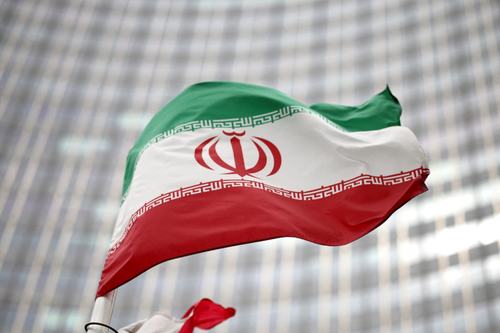
The service currently broadcasts four hours of satellite TV a
day in Farsi, the language spoken in Iran. Before the Sept. 11,
2001, terrorist attacks in the United States, VOA broadcasted
one hour a day in that language.
Setareh Derakhshesh, who anchors a newscast called "News
and Views," said on the Jan. 26 NewsHour that she is "trying
to reach everyone in Iran -- the young people in Iran, the activists,
the everyday people."
Derakhshesh,
who left Iran as a young girl, said it's a critical time to be
reaching Iranians, whose media is controlled by the government.
Broadcasting in Dari and Pashto, the official languages of Afghanistan,
also has become a priority.
Shaista Sadat, who anchors "TV Ashna," which means
"friend" in Pashto, said in the same NewsHour segment
that the goal is to "connect, actually, people in the United
States with the people of Afghanistan right over there. We are
like a window of the Western world to them. They have never had
this."
Yet, expanding TV broadcast hours in foreign languages comes
at the expense of English-language programming and radio. VOA's
budget for 2008 would eliminate all TV and radio broadcasts in
English except for its limited-vocabulary broadcast to Africa
that is designed to help people learn English. It also cuts broadcasts
in Croatian, Turkish, Thai, Greek, Albanian, Russian and Hindi.
|
 |
 |
These changes have been met with criticism both from inside and
outside the organization.
Neil Currie, anchor of VOA's international English-language radio
newscast "News Now," told the NewsHour he is against
de-emphasizing radio. "There's no opportunity to sit down
and say, do you realize that it only costs a penny per listener
per week to reach [foreign audiences] with radio? You can't send
them a postcard for that price. It's a very efficient medium."
Sanford
Ungar, who headed VOA from 1999 to 2001, said he opposes a practice
begun in 1981 of adding daily editorials, or statements of U.S.
policy drafted outside the news department.
Ungar thinks that the editorials get confused with straight news
and make VOA broadcasts less credible.
In a 2005 article in the journal Foreign Affairs, he went as
far as accusing former VOA director David Jackson of pushing more
positive stories about the Iraq war. Jackson denied the claims.
Meanwhile, VOA's new director, Dan Austin, said the service does
not broadcast propaganda and that it is in the best interest of
the United States for VOA to be a model news agency in places
where a free press does not exist.
"We believe that the interests of this country are served
by having people around the world understand us. We're not asking
people to like us. Those are policy issues. And we don't do policy
at -- at Voice of America," he told the NewsHour.
Broadcasts to Iran are set to increase to seven hours a day starting
in the spring.
--Compiled
by Noah Buhayar for NewsHour Extra
Do you have an opinion about this article? Or do you have
a personal experience related to this article that you'd like
to share with our readers? Click
here to submit your story.
|
 |