|
|
NewsHour Extra: Extended
coverage of Life After 9.11 A new Russia: The past and future of our former arch-rival. (8/22/01) Guiding the Globe: Eight of the world's richest countries are negotiating our future. (7/18/01) Anatomy of a Crisis: Why two world superpowers almost came to blows over a plane. (4/11/01)
The
Response After The Attacks on the United States For
Teachers: Outside
Links: The Council on Foreign Relations Foreign Policy studies from the Brookings Institution CIA World Factbook, Afghanistan United Nations Action Against Terrorism Universal Declaration of Human Rights
|
A New World Order Since the events on Sept. 11, the United States government has formed an international coalition to stop additional terrorist attacks. President Bush,
Secretary of State Colin Powell, and other U.S. officials met with Many countries will allow U.S. planes to fly over their airspace for future bombing missions. Others have agreed to share information gathered by their police and other investigators. Some close allies, like Britain, have offered submarines or other military support. In order to build international support for the war against the Taliban and the terrorists based in Afghanistan, many countries are siding with the United States who probably wouldn't have done so under any other situation. New alliances A month ago, it would have been hard for Americans to imagine they would be relying on so many different countries for support. For the first time,
the U.S. is relying on countries we rarely dealt with like Pakistan,
Two decades ago, it would have been hard for Americans to believe the U.S. government would drop bombs on the Taliban in Afghanistan. In 1979, following the Soviet invasion of Afghanistan, the United States and Britain actually gave weapons to freedom fighters, who eventually took over the government when the defeated Soviet army went home. Afghanistan was left devastated and largely abandoned by the West. After the U.S. and Russia spent years fighting the "Cold War," it would have been even harder to imagine that Russia would contribute military support and cooperation to the American-led effort today. Fifty-six years ago, on the heels of World War II when the U.S. considered Germany and Japan their enemy, Americans would not have imagined that these countries would be counted among their strongest supporters in today's war, providing military, intelligence, financial and logistical support. What's in it for me? As Washington works hard to build the international coalition, many countries have offered support only in exchange something beneficial to each country. For example, Pakistan
conducted illegal tests of their nuclear weapons in 1998, and as a However, since the attacks, Pakistan, which shares a long border with Afghanistan, has proven itself to be an important partner, and the sanctions from 1998 were lifted. Russia has been fighting with Islamic rebels in a region called Chechnya. The Chechens want to create an independent nation, and certain groups have used methods like bombings and drug trafficking to break away from Russia. However the fighting created a horrific refugee situation and the international community has actively criticized Russia for using brutal force against the people of Chechnya. Russian President Putin is hoping the new international goal of rooting out terrorism will improve public opinion about Russia's actions in Chechnya. Isolationist America Prior to the attacks,
many Americans had little appetite for foreign news or events in other
countries. American students scored poorly on geography tests compared
to their In part, Americans developed this isolationist approach because large oceans separate the United States from much of the world, and because the U.S. military is so much more advanced than most other countries. Messy international wars were mostly unable to touch American soil. The last time foreign troops touched down in the U.S. was when the British burned Washington D.C. during the War of 1812. Wars fought in foreign lands like Israel and Northern Ireland were visible only on television and most Americans had the false idea that that type of warfare would never happen in the United States. As
President Bush proclaimed in a speech America's approach to the world is changing swiftly, and Americans are getting a crash course in geography and history as they struggle to understand why this happened. The Middle East As Washington weighs its relationships with Middle Eastern and Central Asian governments, Israeli and Palestinian concerns present a special challenge. Many people in the Middle Eastern believe Washington's friendship with long-time ally Israel has caused much suffering to Palestinians. This has helped create the hatred for Americans that fuels terrorists in the region, including Osama bin Laden's network. Meanwhile, relations
with Israel are showing signs of strain as Washington works with other
Arab countries to fight the terrorist Washington's coalition-building efforts prompted Israeli Prime Minister Ariel Sharon to make statements critical of Washington's efforts to "appease" the Arab states, announcing, "Israel can only depend on itself." He later apologized for his remarks. In order to gain favor with some countries, Washington also announced that it was considering public support for the creation of a Palestinian state. American Jewish organizations are very split over that announcement and it is causing much discomfort for all involved. Many Gulf Arab states have offered quiet, behind-the-scenes support for Washington, but they are well aware of both the domestic risks presented by supporting Washington, and the consequences if they do not lend support. Many of these states are against terrorism, but they are aware that terrorists live within their borders, and for the most part they have been unable to root them out. President Bush has made it clear that if a country harbors terrorists, they will be seen in the same light as the terrorists, and many Middle Eastern countries are anxious to demonstrate that they are not sympathetic to terrorism. International Organizations The role of international
organizations like the North Atlantic Treaty Organization (NATO) and
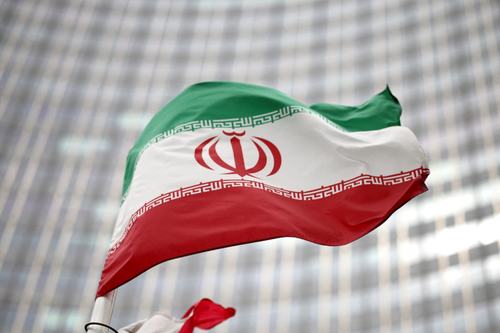
the United Nations (UN) could also change as For the first time ever, NATO invoked a "mutual defense clause" after the attacks. This clause says an attack on one NATO member country is equal to an attack on all members. Meanwhile, Russia, which previously refused to work with NATO, indicated that it will work with NATO and even lower its resistance to NATO expansion on Russia's borders, a difficult issue for many Russians. Many countries, including China and Iran, urge that action must be taken only if it is led by the U.N. However, U.S. officials say moving through the U.N. would require too much time. So it is hard to tell which countries will continue to support the coalition, and whether support will waver if the military action lasts for a long time or anti-American protests grow stronger. The U.S. and its closest friends are working around the clock to hold it together, but only time will tell.
|
PBS Online Privacy Policy | Contact Us | Our Mission | FAQ Copyright © MacNeil-Lehrer Productions All Rights Reserved |