President Bush Visits Five African Nations, 7/2/03
http://www.pbs.org/newshour/extra/features/jan-june03/africa_7-2.html

Related Lesson Plan
http://www.pbs.org/newshour/extra/teachers/lessonplans/world/Africa_7-02.html


President George Bush will travel to Africa on Monday to promote a new terrorism plan, economic stability and AIDS prevention in African countries.

In his first official trip to the African continent, President George Bush will travel to five nations starting Monday to promote economic development and a new plan for fighting terrorism in African countries.

The $100 million counter-terror initiative will focus on security in Tanzania, Kenya, Ethiopia, Uganda and Djibouti and will provide funding for strengthening air and port security, and tightening border patrols.

"Many African governments have the will to fight the war on terror... we will give them to the tools and the resources to win the war on terror," President Bush told an audience at a U.S.-Africa Business Summit last week.

Terrorists have sought refuge in some African countries, made vulnerable by economic troubles and political unrest. The continent has also seen a series of deadly terrorist attacks against U.S. and Israeli targets that have killed hundreds of Africans.

In 1998, terrorists simultaneously bombed U.S. embassies in Kenya and Tanzania, killing 224 people. Last year, terrorists bombed an Israeli-owned hotel in Nairobi. The attack resulted in the deaths of sixteen people.

Pressure to intervene in regional conflicts

The president's trip will take him to Uganda, Nigeria, South Africa, Senegal and Botswana. He will meet with leaders of those countries to discuss security, economic development, AIDS and regional conflicts.

Despite a full agenda of issues he hopes to address, two ongoing and bloody wars threaten to overshadow most other concerns. One such conflict is the five-year-old war in Congo that has left 3.3 million people dead.

Also making headlines in U.S. papers recently is the situation in Liberia, a West African nation formed in 1847 by freed American slaves, where escalating violence has ended a short-lived cease-fire in the country's 14-year civil war.

While President Bush has expressed interest in exploring ways to stop fighting in Congo and Liberia, he has yet to agree to commit peacekeeping troops to either country.

During his visit, the president will likely face calls for U.S. involvement.

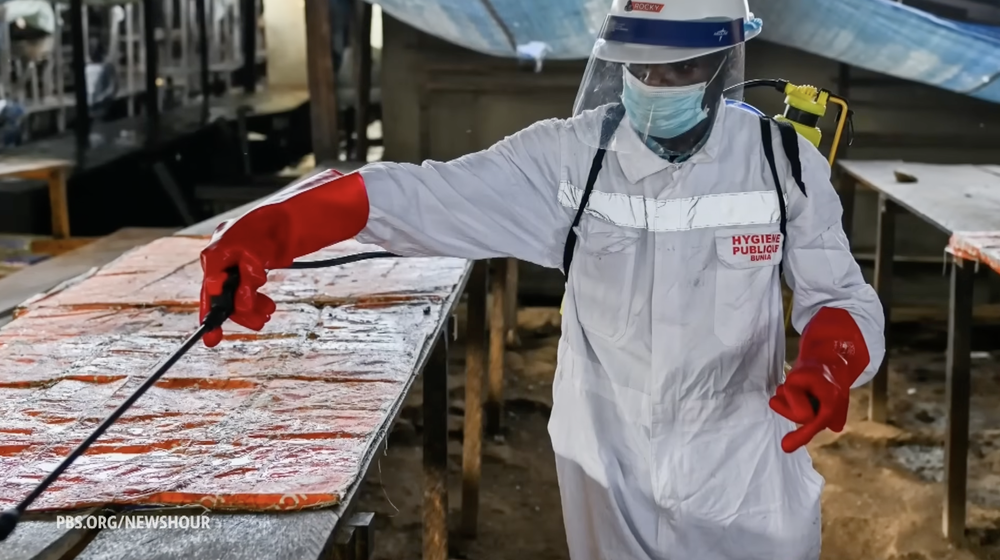
This week, U.N. Secretary General Kofi Annan asked the U.S. to join France, Pakistan, Nigeria and several other nations in sending peacekeeping forces to the Congolese town of Bunia. Annan, joined by British and French officials, has also called on the U.S. to lead a peacekeeping mission to Liberia to re-establish the cease-fire.

Stops along the way

The president's trip will begin in Senegal's Goree Islands, a former slave-trading outpost visited by President Bill Clinton five years ago. The outpost housed Africans before they were brought to the U.S. during slavery. President Bush will then travel to Botswana -- a largely peaceful country in the midst of a mounting AIDS crisis, Uganda, South Africa and Nigeria.

In Nigeria, President Bush will meet with recently re-elected President Olusegun Obasanjo, a former military ruler now serving his second democratically elected term in office.

Mr. Bush will also talk with South African President Thabo Mbeki. It remains unclear whether he will sit down with Nobel Peace Prize Laureate and former South African leader Nelson Mandela. Mandela, known for his successful fight against apartheid, an oppressive set of laws imposed by a minority white government in the 1980s on the majority black South African population, publicly opposed the U.S.-led war in Iraq.

President Bush was originally scheduled to visit several other countries in Africa earlier this year, but postponed the trip because of the Iraq War. He leaves for Africa on Monday.


By Kristina Nwazota, Online NewsHour


© 2003 MacNeil/Lehrer Productions