|
Afghans
Vote in First Democratic Election,
10/25/04 Related
Lesson Plan
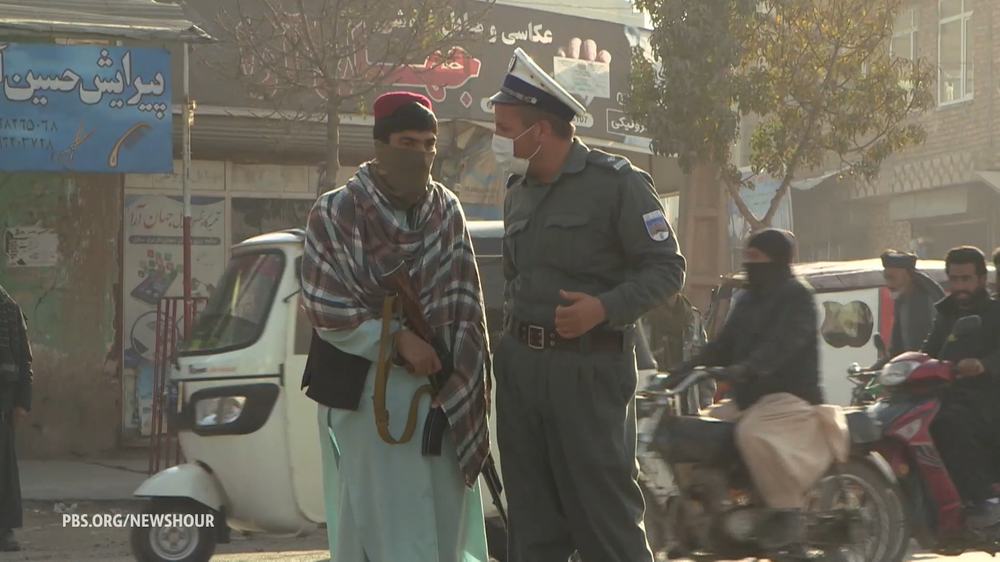
Ballot boxes that arrived on planes, trains, even donkeys have proclaimed Hamid Karzai the winner of Afghanistan's first-ever democratic election. The election, canceled twice because of security problems, took place on Saturday, Oct. 9, but votes from remote areas took weeks to make it to the capital, Kabul. There were 18 candidates in the presidential election, but the U.S.-backed Hamid Karzai, a tribal leader of the ethnic Pashtun group, was the favorite to win. Karzai held an evident majority on Monday, carrying 55.3 percent of the vote, or 4.2 million votes, with 94.3 percent of the ballots counted. The percentage is enough to avoid a run-off with his closest competitor, Yunus Qanuni, a former cabinet minister and ethnic Tajik, who garnered a little over 16.2 percent of the vote, or 1.2 million votes. The United States picked Karzai to head an interim government after U.S. and Afghan forces overthrew the Islamic Taliban government in 2001 for providing refuge to Osama bin Laden, the organizer of the Sept. 11 attacks. Karzai and the interim government were charged with leading the country until elections could take place. A defeat for the Taliban Remnants of the Taliban regime and the al-Qaida terrorist network had promised to use bombings and assaults to hinder the elections, but the Afghans did not seem deterred. "We want a proper government that can be active, with a good police force," Amadullah, a 35-year-old trader, told The New York Times as he cast his vote. An estimated 70 to 80 percent of Afghans voted in the election, and roughly 10 million Afghan citizens were registered to vote in the election. The polls were guarded by about 100,000 Afghan and international security forces. "[Election Day] was a huge defeat for the Taliban," said Lt. Gen. David Barno, commander of U.S. troops in Afghanistan, The Washington Post reported. "The Taliban didn't show."
Despite a successful election day, Afghans faced potential controversy when Karzai's opponents listed 300 complaints of voter fraud and polling errors in the election process. Candidates claimed that ink placed on voters' hands to indicate if they had voted rubbed off, which could allow people to vote twice. But the controversy subsided as the competitors agreed to an impartial three-panel review of the results. Diplomats and other sources said the opposition candidates decided to accept the panel after receiving upbeat feedback on the election from Afghan citizens. "Some candidates now believe they acted in too much of a rush. Their statements were not well received," said a Western diplomat to The Washington Post. "Most of them are now looking for a way out without losing face." What's ahead The newly elected president faces an uphill climb trying to provide security and rebuild cities torn by decades of war. In an effort to stabilize the country, the government has tried to disarm 40,000 men loyal to rival militia throughout the country. So far, only 9,700 have disarmed. Additionally, most households have high-powered weapons. "This is not a country that has insurance companies that insure your house. In this country, your insurance policy is an AK-47 over the fireplace," said Peter Babbington, an official leading disarmament efforts. In addition to security,
Karzai will need to combat a rapidly growing opium production. According to United Nations estimates, poppy farmers earn over $2,500 a year, while traditional crop farmers earn about $700 a year. About 7 million Afghans now farm poppy for economic reasons. As much as Karzai wants to battle the opium trade, warlords in the southern Nangahar region of Afghanistan protect the poppy farmers and play an integral role in the manufacture and sale of opium. "Poppies are not only criminalizing the Afghan economy, destroying our agriculture, destroying lives, addicting people, but they are also going hand in hand with terrorism, with extremism and with warlords in Afghanistan," Karzai said in August. The power of warlords who helped to bring down the Taliban but now sponsor the illegal poppy farmers is one of the many problems Karzai will seek to end in his upcoming five-year term. --Compiled for NewsHour Extra by Deirdre Erin Murphy © 2004 MacNeil/Lehrer Productions |