|
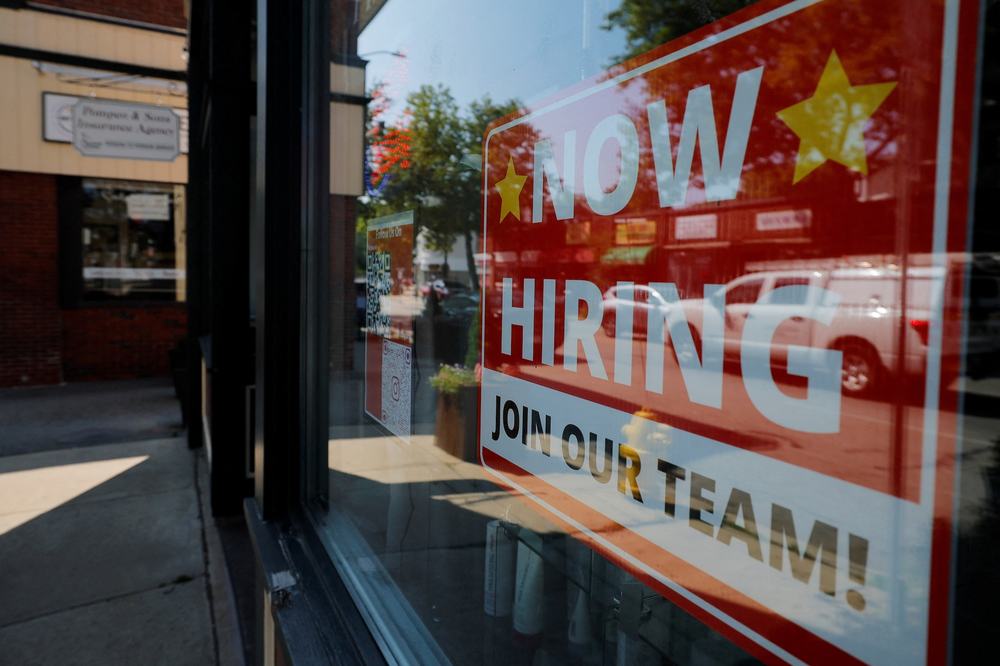
Although economists pointed out that the rate at which Americans are losing their jobs is decreasing, the high number of people looking for work or not working enough hours is a serious problem for the Obama administration and the economy in general.
Vice President Joe Biden, who is in charge of the president's Middle Class Task Force, said he will not be satisfied until the economy is adding jobs on a monthly basis.
"Let me be very clear: Lower job rate loss is not our goal. Less bad, less bad is not how we're going to measure success here in the White House," Biden said.
White House wants to speed stimulus spending
 |
 |
 |
 |
 |
 |
 |
 |
 |
 |

President Obama met with Vice President Joe Biden and other advisors to discuss his plan to create more jobs with funding from the stimulus package. |
 |
 |
President Obama's signature domestic policy so far has been the passage of a $787 billion stimulus package aimed at creating jobs during one of the worst recessions in a generation.
Professor Lisa Lynch of Brandeis University said that without the stimulus money, state governments would have had to lay off more teachers and police officers.
There's some evidence that the stimulus is already having an impact insofar as state and local employment has not decreased, and we know states are struggling with their budgets," Lynch told the NewsHour.
Unemployment statistics can be misleading
 |
 |
 |
 |
 |
 |
 |
 |
 |
 |

Although unemployment numbers continue to rise, the rate of job losses is slowing down slightly. |
 |
 |
Although the media use the unemployment rate as a gauge for the health of the economy, it is a complicated and sometimes misleading statistic.
People who are so discouraged with the rough job market that they have stopped looking for work are not counted as officially unemployed.
Furthermore, the 9 million workers who are employed but working fewer hours, also known as "underemployed" workers, bring the combined rate of underemployment and unemployment to 16.4 percent.
Unemployment ripples throughout economy
 |
 |
 |
 |
 |
 |
 |
 |
 |
 |

For a closer look at how the auto industry's troubles are affecting American workers around the country, check out the Patchwork Nation blog. |
 |
 |
When people who want to work cannot find jobs, they are not earning money otherwise spent on food, gas or housing.
Although it is normal for modern economies to have some unemployment, high unemployment can have a ripple effect on the economy, making a bad economy even worse.
Two of the largest American car companies, General Motors and Chrysler, recently filed for Chapter 11 bankruptcy protection, meaning they have to radically cut back their workers, factories and dealerships to survive.
"For every lost job at an auto assembler like GM and Chrysler, you lose as many as 10 other jobs in the rest of the economy, so that so-called multiplier is very, very large and very significant," economist Mark Zandi explained to the NewsHour.
Great Depression unemployment was devastating
 |
 |
 |
 |
 |
 |
 |
 |
 |
 |

This photograph shows workers waiting for relief checks during the Great Depression, when the economy was in far worse condition than it is today. |
 |
 |
Although the current recession is causing many Americans to lose their homes and jobs, the Great Depression of the 1930s, spurred by the stock market crash of 1929, was a much more devastating economic slowdown.
During the Great Depression, economic historian Price Fishback wrote on the blog "Freakonomics," the unemployment rate remained very high for more than a decade.
"The Great Depression was far more disastrous. One year after the stock market crash of 1929, the unemployment rate had risen from 2 percent to 10.8 percent. The next year it was 16.8 percent. Then unemployment rates rose above 20 percent for four straight years!" Fishback wrote.
The Great Depression inspired government action at that time as well, including government spending to create jobs and the creation of the Social Security public insurance system by President Franklin D. Roosevelt.
|