|
Last February, a Democratic majority in Congress passed the $787 billion stimulus package known as the Recovery Act which included billions of dollars in tax cuts and spending for public works projects such as building new roads and bridges.
In a White House speech marking the one year anniversary, the president said the Recovery Act has saved or created 2 million jobs thus far. But he acknowledged that most Americans don't feel like the economy is recovering.
"Millions more are struggling to make ends meet. So it doesn't yet feel like much of a recovery. And I understand that. It's why we're going to continue to do everything in our power to turn this economy around," President Obama said.
Republicans charge the Recovery Act did not work
 |
 |
 |
 |
 |
 |
 |
 |
 |
 |

Sen. Mitch McConnell voted against President Obama's Recovery Act. |
 |
 |
Republicans used the occasion to step up charges that the president's efforts to revive the economy have largely failed.
"In the first year of the trillion-dollar stimulus, Americans have lost millions of jobs, the unemployment rate continues to hover near 10 percent, the deficit continues to soar and we're inundated with stories of waste, fraud and abuse," said Senate Republican Leader Mitch McConnell.
"This was not the plan Americans asked for or the results they were promised," McConnell added.
Details on job creation are complicated
 |
 |
 |
 |
 |
 |
 |
 |
 |
 |

The current unemployment rate stands at 10.6 percent. |
 |
 |
Some independent economic analysts and the nonpartisan Congressional Budget Office support the president's claims that the stimulus created 2 million jobs in the last year.
But with national unemployment numbers holding steady around 10 percent, recent polls show that Americans feel very negatively about the stimulus package.
Only 6 percent of Americans think that the stimulus package has created jobs, a recent CBS News/New York Times poll showed.
According to Michael Grabell of the stimulus tracking Web site ProPublica, pinpointing the number of jobs that have actually been produced can be complicated.
"What we have seen in the first year is that most of it has gone out in -- in tax cuts or in these safety net programs, and not in the projects that would make the stimulus more visible, " Grabell told the NewsHour.
How effective has the stimulus been?
 |
 |
 |
 |
 |
 |
 |
 |
 |
 |

It is hard to calculate exactly how many jobs were created by the stimulus. |
 |
 |
With more than half of federal stimulus funds still waiting to be doled out, it may be too early to tell how far the stimulus has gone in helping the economy recover.
University of Chicago finance Professor John Cochrane rejected the president's claims that the stimulus had staved off another Great Depression, "The stimulus, in the end, is taking money from one place and giving it to another place. And it's too easy to forget that you had to take money from somewhere in order to do any stimulating," he told the NewsHour.
But Lawrence Mishel of the Economic Policy Institute said on the NewsHour that it has made a difference. "If you look at what actually happened in the economy, in the beginning of 2009, we were losing 750,000 jobs a month. In the last three months, we were losing about 35,000. This wasn't by accident that we went from a deep, you know, decline in the economy to an actual growing economy," Mishel said.
Check out ProPublica's stimulus coverage to see how much stimulus money has been going to your community.
Election year
 |
 |
 |
 |
 |
 |
 |
 |
 |
 |

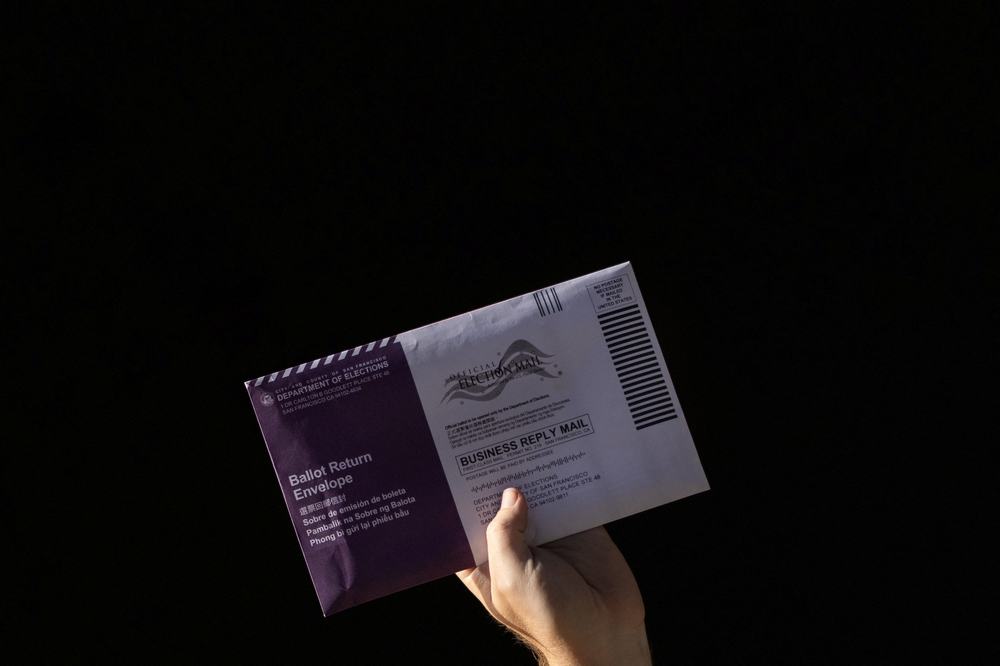
Many incumbent Democrats could potentially lose their seats in the 2010 midterm elections. |
 |
 |
The debate about the stimulus and other administration policies will intensify over the next year as the 2010 election season heats up.
The Democratic majority in Congress faces a significant battle in its attempt to hold on to power as the Republican Party tries to capitalize on public discomfort with high unemployment and mounting national debt.
|