|
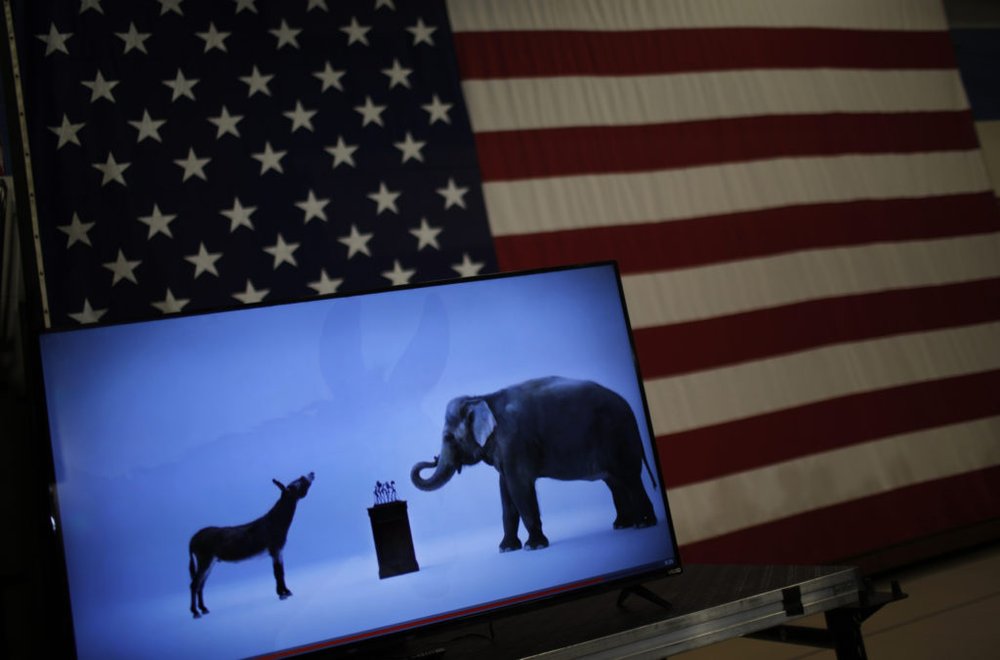
On a day full of primary contests across the country dubbed 'Super Tuesday,' former Massachusetts Gov. Mitt Romney picked up more momentum in his bid for the GOP nomination, winning six of the ten states that held primaries. However, in some states, his margin of victory was too close for comfort. |
 |
 |
 |
 |
 |
 |
 |
 |
| Voters in six states headed to the polls to vote and caucus in primary elections on 'Super Tuesday.' They were there to choose a Republican nominee to run against President Obama in November. |
|
 |
|
Former Pennsylvania Senator Rick Santorum came in a close second in Ohio, the state that many analysts called the prize of the night. Ohio has lots of delegates - points needed for a particular Republican candidate to go on to the general election against President Obama. And, Ohio has a demographic that Republican candidates value: a mix of working-class, rural and evangelical voters.
Former Speaker of the House Newt Gingrich won in his home state of Georgia, and Texas Congressman Ron Paul came in second in North Dakota and VIrginia.
Check out the final numbers in the NewsHour's map center.
The Democratic Candidate
 |
 |
 |
 |
 |
 |
 |
 |
 |
 |

Barack H. Obama is the 44th President of the United States. On April 4, 2011, Obama announced his re-election campaign for 2012 in a video titled "It Begins with Us" that he posted on his website. |
 |
 |
The U.S. Constitution says that a president can serve two four-year terms, and that is what President Obama would like to do.
The Democratic Party will hold primaries and caucuses, but there are no real challengers to the president’s nomination. Instead, the Obama team will spend its time reaching out to independent voters, who helped President Obama win in 2008.
President Obama has already started traveling the country giving speeches and outlining why he wants and deserves another four years in office. Key to his success will be whether the economy gets better or worse.
NewsHour conservative analyst David Brooks said his message misses the point. “I think this election is about national decline. And he's trying to make it an election about [economic] inequality. And I think people agree that inequality is a problem. I don't think they see it as the central problem, which is about growth and really preserving the country as a growing, dynamic country.”
NewsHour liberal analyst Mark Shields adds, “There are going to be two questions that voters ask in 2012. Is it working -- that is, is the Obama economy, economic plan -- and is it fair?”
What Happens Next?
 |
 |
 |
 |
 |
 |
 |
 |
 |
 |

Each party holds a national convention to choose a final presidential nominee. |
 |
 |
The next primary contests will be held March 10 in Kansas and several U.S. island territories, including Guam and the Virgin Islands.
Click here to see a calendar of primary contests from the New York Times.
When both parties have chosen a candidate sometime in the spring or possibly early summer, each party will hold a convention. Conventions are big celebrations that try to energize the “base” of the party – the folks who will give money, knock on doors and speak out for their candidate.
Some candidates decide to run in the November presidential election as independents or as representatives of smaller third parties, but they face very tough odds without the money and power networks of the Republican and Democratic Parties.
|
 |
| --Compiled by Veronica DeVore and Thaisi Da Silva for NewsHour Extra |
 |
|
 |
 |
 |
 |

 |
 |
 |
 |
 |
 |
 |
 |
| Students From Around the US Debate Gun Control |
 |
I think we've been witnessing violence for years, whether in reality through the media or through video games, and I don't think that's a first-hand effect. |
 |
| Ellie, Student Reporting Labs |
|
 |


 |
 |
|
 |
 |
 |
|