the Online NewsHour
E-mail This Page   Print This Page  
the Online NewsHour EXTRANews for Students AND Teacher Resources MAIN: ONLINE NEWSHOUR
7 - 12 grade level
SEARCH
ALL OR STUDENT VOICES LESSON PLANS VIDEO GO
Main: NewsHour ExtraU.S.WorldScienceEconomicsHealthArts and MediaStudent VoicesTeacher Center

Five Years In, Iraq War Pushes On

Posted: March 19, 2008 PRINTER FRIENDLY VERSION: PDF
Five years into the war in Iraq, the United States is still working to secure the country and create conditions for a lasting peace between religious factions.
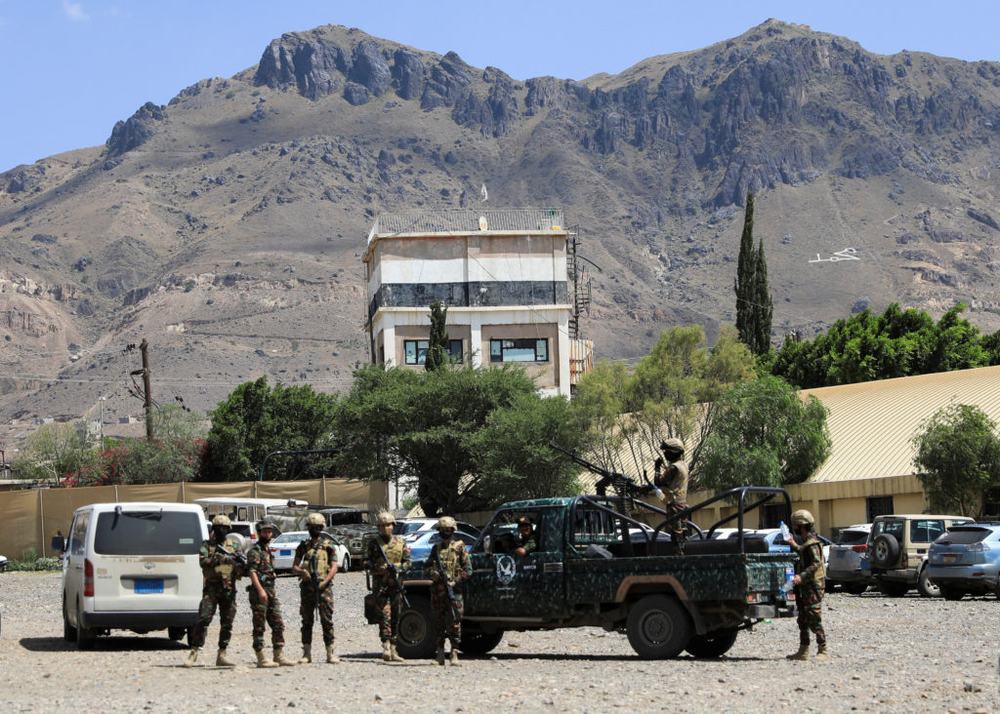
U.S. soldiers in Fallujah, Iraq
Nearly 4,000 American soldiers have died and 30,000 have been injured in the Iraq war since the conflict began in March 2003.

In the years since the war began, Iraq has achieved a democratically elected government and its ousted leader, Saddam Hussein, was captured and put to death for war crimes. But divisions between two sects of Islam, Sunni and Shiite, have caused a violent rift in the country, and the U.S. military has faced a brutal insurgency.

Nearly 4,000 American soldiers have died and another 30,000 injured, according to the Washington Post. About 171 British and between 200,000 and 600,000 Iraqis have died, according to the Guardian Newspaper.

The war has cost the United States an estimated $3 trillion dollars, economists told the Washington Post.

Origins of the war


Saddam Hussein

Iraqi President Saddam Hussein was found hiding in a hole by U.S. forces after he fled the American invasion.
In the run up to the Iraq invasion in 2003, the U.S. government alleged that Iraqi dictator Saddam Hussein possessed weapons of mass destruction.

U.S. Secretary of State Colin Powell made the case to the U.N. Security Council, showing aerial photographs of what were thought to be chemical weapons sites and mobile labs.

On March 19, 2003, as coalition forces led by the United States prepared to attack, President Bush made a speech from the White House.

"Peaceful efforts to disarm the Iraqi regime have failed again and again because we are not dealing with peaceful men," the president said.

"Intelligence gathered by this and other governments leaves no doubt that the Iraq regime continues to possess and conceal some of the most lethal weapons ever devised."

Coalition forces overthrew Saddam's dictatorship within weeks, sending him into hiding. By May 1, 2003, the president declared the end of major combat operations from an aircraft carrier decorated with a banner reading "Mission Accomplished."

No weapons of mass destruction were ever found in Iraq, though teams of weapons specialists carried out an extensive search. Bush administration official Condoleezza Rice later said that intelligence reports pointing to the existence of weapons may have been incorrect.

Insurgency


Golden Mosque

One of the holiest shrines to Shiites, the Golden Mosque, was bombed in 2006
In the years following the invasion, militia fighters and members of the terrorist group dubbed al-Qaida in Iraq targeted U.S. military operations.

Sunni fighters and al-Qaida in Iraq members went after U.S. soldiers and rival Shiites with guerilla tactics like roadside bombs and attacks on busy markets.

Shiite militias retaliated and the anger grew. In February of 2006, one of the holiest shrines of Shiite Islam, the Golden Mosque, was bombed.

"One cannot overemphasize the blow to Shiaism of the destruction of the shrine," Vali Nasr of the Council on Foreign Relations told the NewsHour at the time of the attack.

"This was an attack on the very existence, on the very meaning of Shiaism."

The attack set off fighting that bordered on civil war. Hundreds of thousands of Iraqis left their homes as areas became more clearly Shia or Sunni.

Sunni and Shiite divide


Muqtada al-Sadr

Shiite militia leader Muqtada al-Sadr is a key figure in the Sunni-Shia divide in Iraq.
Sunnis are a minority group in Iraq, but under Saddam, they ruled the country.

When the United States invaded Iraq in 2003 and toppled the government, the Sunni leadership was also kicked out.

Sunni and Shiite Muslims are similar in many ways, but differ on their belief of how the leadership of Islam should have been passed down after the Prophet Muhammad's death.

The two groups have a long history of distrust and conflict, so finding a way to form a power-sharing government that pleases both sides remains the biggest challenge in Iraq.

The surge


U.S. solider

President Bush ordered an additional 30,000 U.S. troops to Iraq in early 2007.
In early 2007, President Bush ordered a new deployment of troops to help curb Iraqi violence in a tactic called "the surge." An additional 30,000 troops focused on violent hot spots like Baghdad.

The general in charge of U.S. troops in Iraq, General David Petraeus, put a new emphasis on forming trust and relationships with the Iraqi people.

"You can't kill your way out of an insurgency," Petraeus told Newsweek in February. His strategy included distributing soldiers at small posts throughout neighborhoods and having patrols on foot, instead of in closed vehicles.

Also contributing to U.S. military efforts were new partnerships with some Sunni militias that were disillusioned by al-Qaida in Iraq's attacks.

Violence dropped significantly in many of the areas targeted by the surge. Iraq's civilian death toll fell from about 1,700 fatalities in January 2007 to 246 in December, according to Reuters. But a new uptick in bombings has gripped parts of Iraq since January.

Despite recent gains, there is no set timetable for withdrawal. And while the issue of the Iraq war has been a key topic in the 2008 presidential primaries, some analysts feel the war has not truly touched the daily lives of most Americans.

"It's still a war that hasn't involved a draft or an increase in taxes," Jon Alterman, who heads the Middle East program at the Center for Strategic and International Studies in Washington, told the AFP. "This is a war that most Americans continue to feel they don't have to make sacrifices for."


--Compiled by Talea Miller for NewsHour Extra
Resources

Daily Video Clip

Student Voice
NewsHour
Students From Around the US Debate Gun Control
I think we've been witnessing violence for years, whether in reality through the media or through video games, and I don't think that's a first-hand effect.
Ellie, Student Reporting Labs
Send us your essay, personal story or poem
SUBMIT

Related Coverage

Extra: News for Students
Contractors Criticized for Violence in Iraq
Iraq War Central Issue in 2008 Primary
Iraqi Insurgents Spread Message Via Internet
Thousands on the Move in War-torn Iraq
Militants Target Electricity But Spare Phones
President Bush Sends More Troops to Iraq

The Online NewsHour
As Violence Peaks and Dips, Debate Over 'Surge' Persists
Suicide Bomber Kills 5 U.S. Soldiers in Baghdad
In Iraq, Al-Sadr Extends Cease-fire Order

SUGGESTIONS / COMMENTS
Do you have an opinion about this article? Or do you have a personal experience related to this article that you'd like to share with our readers? Submit your comments!
FRIDAY
Former IRS Chief: 'Foolish Mistakes Were Made'
News Wrap: Sectarian Blasts in Iraq Kill 76
Outrage Over Sexual Assaults in the Military
Political Wrap With Shields and Brooks
Covering Watergate With MacNeil and Lehrer
An hour-long daily news broadcast.