|
As he met with other presidents and prime ministers at the Group of 20 (G20) meeting, President Obama said it was important that the world takes bold actions. He called on other leaders not to think just of their country's needs.
"That was true in the Great Depression, when nations prolonged and worsened the crisis by turning inward, waiting for more than a decade to meet the challenge together. Even as recently as the 1980s, a slow global response deepened and widened a debt crisis in Latin America that pushed millions into poverty. Today we've learned the lessons of history," he said at a news conference after the meeting.
Diplomacy by numbers
 |
 |
 |
 |
 |
 |
 |
 |
 |
 |

President Obama, Italian Prime Minister Berlusconi and Russian President Medvedev made nice at the G20 summit, where world leaders gathered to discuss pressing global economic issues. |
 |
 |
The G20 is an international body that meets periodically to discuss global economic issues.
G20 members -- 19 distinct countries plus the European Union -- are some of the world's biggest industrial and emerging economies. It is responsible for 80 percent of world trade, 66 percent of the global population and 90 percent of the world's economic activity, known as gross domestic product or GDP.
G20 member countries include Argentina, Australia, Brazil, Britain, Canada, China, France, Germany, India, Indonesia, Italy, Japan, Mexico, Russia, Saudi Arabia, South Africa, South Korea, Turkey and the United States.
Smaller groups of industrialized nations have been meeting since the 1970s (the G-7 and G-8). In the 1990s, with the tumultuous effects of the Asian financial crisis, the organization chose to extend the circle to include emerging market countries.
Struggling to stay united
 |
 |
 |
 |
 |
 |
 |
 |
 |
 |

Along with German Chancellor Angela Merkel, French President Nicolas Sarkozy threatened to walk out of the summit, demanding strict regulations on banking. |
 |
 |
Going into this month's discussions, there were was a dispute between the United States and Britain on one side and France and Germany on the other. President Obama and British Prime Minister Gordon Brown want other countries to pump money into the economy with large stimulus bills, such as the $787 billion American Recovery and Reinvestment Act.
France and Germany don't think large spending bills are the way to go, and argued instead to impose strict regulations on banking systems around the world.
In the end, each side got a little of what they wanted.
The group pledged $1.1 trillion in aid money to the International Monetary Fund to help struggling economies and increase global trade. It also agreed to new international regulation of hedge funds and credit-rating agencies, and oversight of tax havens to end the anonymity cloaking many international banking transactions.
Avoiding mistakes of the past
 |
 |
 |
 |
 |
 |
 |
 |
 |
 |

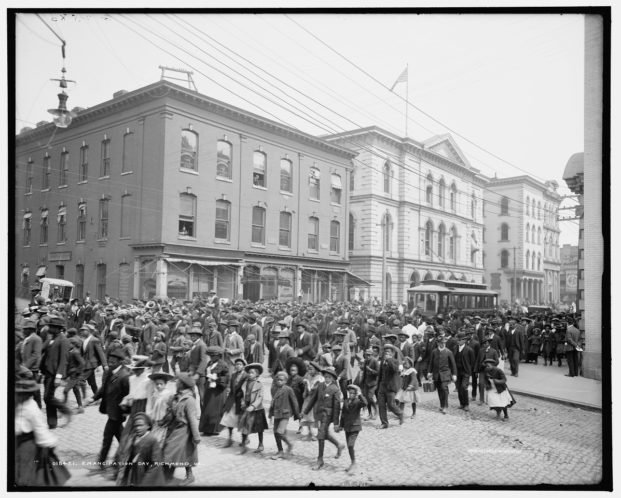
Sixty-six countries attended an unsuccesful economic summit during the Great Depression, where newly elected President Franklin Roosevelt opposed any restrictions on his New Deal plan. |
 |
 |
In the end, the main goal of the conference was to present a united front and avoid the chaos of the last time London hosted a world economic summit: in 1933 during the midst of the Great Depression.
That London summit collapsed as the new U.S. president, Franklin Roosevelt angered the Europeans by refusing to commit to a plan to stabilize currencies, and some historians claim the lack of unity emboldened Germany's new chancellor, Adolf Hitler.
“The depression was made ‘great’ by the lack of cooperation,” said Mike Froman, a White House international economic adviser, according to the Associated Press.
Russia and China
 |
 |
 |
 |
 |
 |
 |
 |
 |
 |

President Obama met privately with both Chinese President Hu Jintao (left) and Russian President Medvedev, the leaders of two countries whose interests are especially important to the U.S. |
 |
 |
In addition to the G20 meeting, President Obama met privately with the leaders of China, Russia and other countries in an attempt to repair international relations damaged by the war in Iraq and other American policies.
"President Obama wanted to use this meeting not just to advance the G20 economic agenda, but also to try to set up relationships that would help the U.S. on the big issues, other issues that it wants to make progress on in the future," the NewsHour's Margaret Warner reported from London.
President Obama and his Russian counterpart discussed limiting the spread of nuclear weapons and signed a joint statement stating that Iran must demonstrate the totally peaceful intentions of its nuclear program.
President Obama and China's President Hu Jintao spoke for an hour through translators and pledged close cooperation on North Korea, Iran and Sudan.
Mr. Obama agreed to visit Moscow this summer and China later in the year.
|