|
"I should be honest, as president of the United States, there are times where I wish information didn't flow so freely because then I wouldn't have to listen to people criticizing me all the time," Mr. Obama said during his first stop in China, a town hall-style meeting with students at a Shanghai University.
But, he added, "Because in the United States, information is free, and I have a lot of critics in the United States who can say all kinds of things about me, I actually think that that makes our democracy stronger and it makes me a better leader, because it forces me to hear opinions that I don't want to hear."
President Obama's trip is intended to focus largely on the economy, the environment and trade tensions between the U.S. and China, the largest country in the world with 1.3 billion people, compared to 300 million in the U.S.
As he visits Japan, Singapore and South Korea, the president is also seeking to solidify support for limiting Iran's pursuit of nuclear weapons, international efforts to stabilize Afghanistan, and strategic reaction to North Korea's aggressive actions.
China censors the president's speech
 |
 |
 |
 |
 |
 |
 |
 |
 |
 |

Click here for a detailed map of China. |
 |
 |
Because the Chinese government controls its image very carefully, the president shied away from directly criticizing the Chinese leadership or speaking publicly about hot-button issues such as human rights.
Even so, the Chinese government censored coverage of President Obama's comments. While the town hall was streamed and archived on the White House’s Web site, it wasn’t broadcast on CCTV, the state-run national television in China. Nor was it streamed on the Web site of the state-run news agency, Xinhua. Instead, under the term "live broadcast," an edited transcript of the meeting appeared.
Later in private meetings with Chinese President Hu Jintao, President Obama pressed China to open up dialogue with representatives of the Dalai Lama, according to White House officials. After meeting the two leaders declared to reporters their intention of working together on free trade, rebuilding the global economy and tackling nuclear proliferation.
They agreed to hold joint talks on human rights next year.
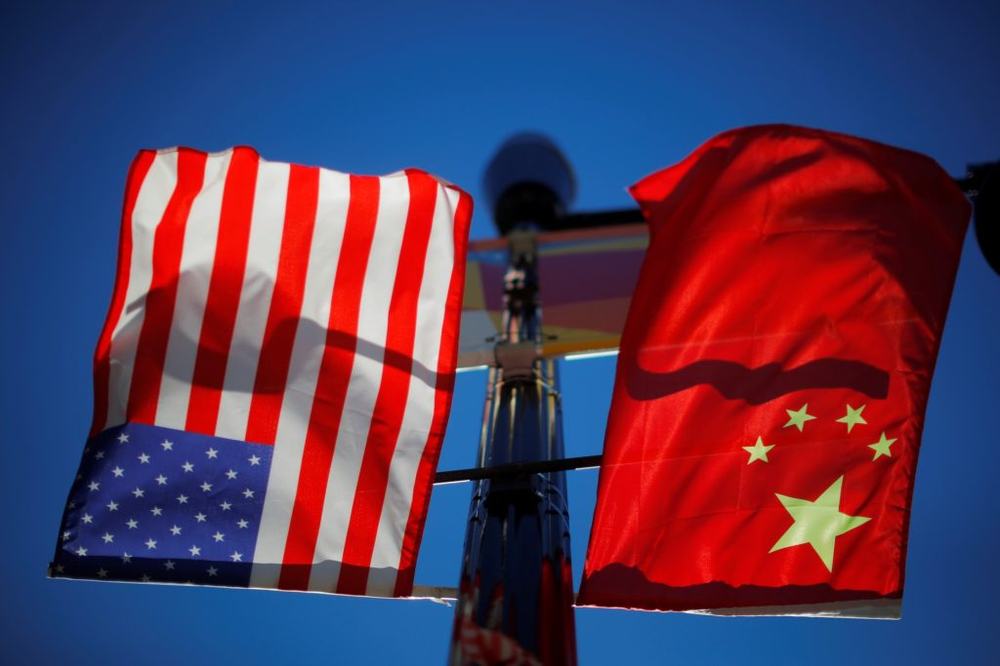
China and the United States: 'Frenemies'?
 |
 |
 |
 |
 |
 |
 |
 |
 |
 |

China and the U.S. have emerged as global superpowers that are in competition but must also work together. |
 |
 |
An online survey by the Chinese English newspaper, the Global Times showed 86 percent of respondents were indifferent to Obama's visit, while 46 percent said they actually disliked the U.S. president.
In recent years, China has become the United States' largest trading partner, an important global power and the No. 1 debt holder for the United States. In fact, China owns more of the United States debt than any country ever has in history.
But the relationship is more complicated than just borrower and lender. James Fallows of Atlantic Magazine told the NewsHour "On climate issues and environmental issues, if the China and U.S. don't work together, it really is going to be difficult for anybody else to do anything. During the financial crisis, it was crucial for China to work with Western countries as well."
"Frenemies" is the word used by Niall Ferguson, a Harvard professor. "There is a dimension of friendship and a there's a dimension of rivalry in this relationship," he told the NewsHour.
'Asia is our future'
 |
 |
 |
 |
 |
 |
 |
 |
 |
 |

President Obama, shown overlooking Forbidden City in Beijing, will also visit Japan, South Korea and Singapore. |
 |
 |
China is the second stop in President Obama's four-nation Asia tour. And as Sheila Smith of the Council of Foreign Relations told the NewsHour in a recent interview, expect the president to stick to a central theme.
"The administration has its agenda quite clearly laid out. The big-picture message is America is engaged in Asia; Asia is our future."
|