the Online NewsHour
E-mail This Page   Print This Page  
the Online NewsHour EXTRANews for Students AND Teacher Resources MAIN: ONLINE NEWSHOUR
7 - 12 grade level
SEARCH
ALL OR STUDENT VOICES LESSON PLANS VIDEO GO
Main: NewsHour ExtraU.S.WorldScienceEconomicsHealthArts and MediaStudent VoicesTeacher Center

New Malaria Drug Could Save Millions

Posted:11.04.11
PRINTER FRIENDLY VERSION: PDF
Malaria, a disease responsible for nearly a million deaths per year, may have met its match. Researchers have created a vaccine against the illness, which is spread by mosquitos.
For the first time, results of an experimental malaria vaccine showed significant protection against the deadly disease, raising hopes that a vaccine could be in use as early as 2015.

If you travel to parts of Africa, Asia or Latin America, you may have to take malaria drugs, sleep beneath a mosquito net and constantly reapply bug repellent. 

That is because malaria is caused by a parasite spread by a certain type of mosquito, of the genus Anopheles.

Once a person is infected with malaria, symptoms can appear within ten days and include nausea, fever, headache and the chills, symptoms similar to the common flu.

Malaria is a curable disease, and with appropriate medical treatment an infected person can make a recovery.   But in remote villages where medical treatment is unavailable, malaria deaths and illness can devastate entire communities.

New hope comes in a vaccine


The vaccine works by triggering the immune system against the malaria parasite, which is introduced into the body by mosquitoes. RTS,S targets the parasite as it enters the bloodstream and liver, preventing the parasite from multiplying in the liver and going on to infect red blood cells.
Recently released results of an ongoing trial for a new malaria vaccine, called RTS,S, showed that the vaccine offered subjects significant protection.  In children ages 5-17 months, research scientists found the vaccine decreased the risk of malaria infection by 56 percent and reduced the chance of severe malaria by some 47percent.

The creation of a malaria vaccine could have a profound effect on global health, since malaria infects roughly 250 million people each year, according to the World Health Organization.

"This is remarkable when you consider there has never been a successful vaccine against a human parasite nor obviously against malaria,” said Tsiri Agbenyega, a principal investigator of the research, in a NewsHour global health article.

"This potentially translates into tens of millions of malaria cases in children being averted."


Infecting people across the globe


Young children living in sub-Saharan Africa are the most vulnerable to the disease.
Some 3.3 billion people live in regions across the world where they are at risk of contracting malaria. 

For the most part, Malaria is found in parts of Asia, Latin America and the Caribbean, but it is most prominent in Sub Saharan Africa, where some of the highest rates of malaria transmission are found.  Worldwide, 89 percent of the deaths caused by malaria occur in Africa, where after HIV/AIDS, malaria is next deadliest infectious disease.

Climate plays a key role in the transmission of malaria. Mosquitoes breed in water, so during rainy seasons, malaria transmission rates tend to increase. 

In the United States, around 1500 cases of malaria are diagnosed each year and many of these cases involve travelers who have recently returned from abroad.

Combating the disease


Bed nets have been a crucial weapon in the fight against malaria, and more than 300 million have been distributed since 2008 in sub-Saharan Africa, according to the Global Fund to Fight AIDS, Tuberculosis and Malaria.
Currently, there are several antimalarial drugs that can be taken to prevent the disease. However, none of these drugs are 100% effective.

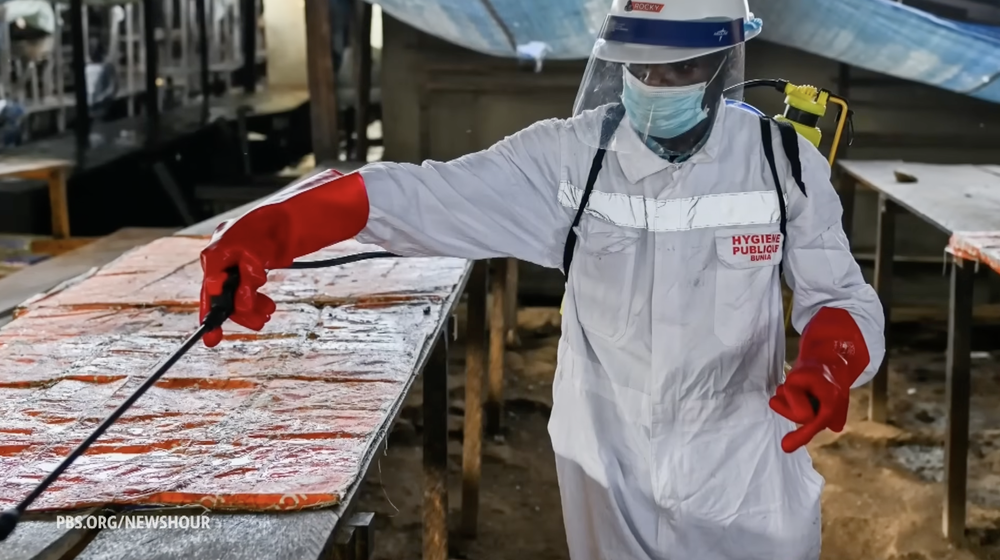
Several strategies, including wearing full-body clothing and spraying the indoor walls of a home with insecticide to kill mosquitoes, are used to combat malaria in high risk areas.

In 2007, world health organizations set a target to decrease the number of malaria cases and deaths by 75% between 2010 and 2015, using some of the methods mentioned above.  The creation of an effective malaria vaccine could prove extremely helpful in reaching that goal.   

--Compiled by Allison dePeyster Morris for NewsHour Extra
Resources

Daily Video Clip

In the News
Nintendo Reports First Annual Losses in Decades


Blind Chinese Activist Is Center Of China-U.S. Diplomatic Crisis


Attack on Girls School Marks Pivotal Moment for Women in Afghanistan

Student Voice
MaKenzie Jones
Rising from the Ashes: A Joplin Teen Reflects
Joplin was able to rise from the ashes because of help from everyone. And I am eternally grateful to anyone who made that possible.
MaKenzie, Joplin, Mo.
Send us your essay, personal story or poem
SUBMIT

Related Coverage

Extra: News for Students
Scientists on the Cusp of Having Malaria Vaccine
Nine Deadly Diseases that Plagued the World
How Are Vaccines Produced?

The PBS NewsHour
New Vaccine Aims to Take Major Bite out of Malaria's Toll in Africa
Vaccine Could Become 'Another Very Powerful Weapon' to Fight Malaria
Study: Experimental Vaccine Cuts Malaria Cases in Half

SUGGESTIONS / COMMENTS
Do you have an opinion about this article? Or do you have a personal experience related to this article that you'd like to share with our readers? Submit your comments!
FRIDAY
A Timely Drop in Gas Prices for Memorial Day Trips
News Wrap: SpaceX 'Dragon' Reaches Space Station
Partial Vote Count in Egypt Reveals Public Rift
What a Muslim Brotherhood Win Might Mean for U.S.
The Legacy of Etan Patz
Are U.S. Nuclear Plants Ready for a Meltdown?
Brooks, Marcus on Coming Economic 'Chaos,' Bain
When the Ancient Past Reaches Out and Touches Us
An hour-long daily news broadcast.