Visit Your Local PBS Station PBS Home PBS Home Programs A-Z TV Schedules Watch Video Support PBS Shop PBS Search PBS
       
the Online NewsHour The Web site of the NewsHour with Jim Lehrer
E-mail This Page   Print This Page  
the Online NewsHour EXTRANews for Students AND Teacher Resources MAIN: ONLINE NEWSHOUR
7 - 12 grade level
SEARCH
ALL OR STUDENT VOICES LESSON PLANS VIDEO GO
Main: NewsHour ExtraU.S.WorldScienceHealthArts/MediaStudent VoicesTeacher Center
NewsHour Teacher Center Blog
March 4, 2008

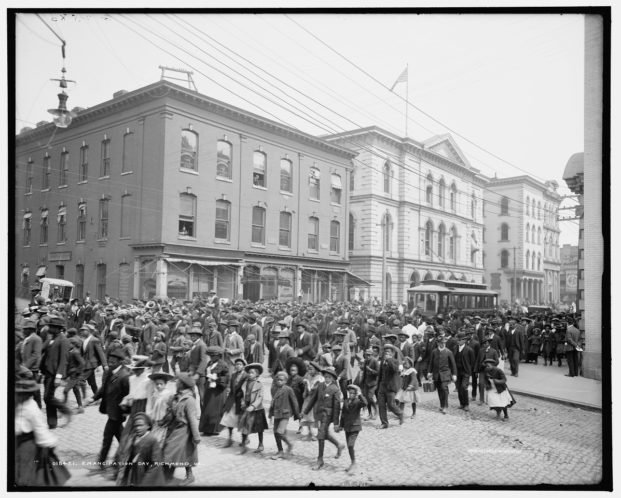
Eyes on the Prize, the essential documentary of the US civil rights movement from 1954-1985, is back on Public TV. Civil rights veteran Julian Bond discussed the continuing impact and relevance of the story in this recent interview on the NewsHour. videoplayer.jpg

PBS first aired Eyes on the Prize almost 20 years ago but the film ran into in a decades-long dispute over rights to the material. Now the landmark series has been fully resurrected in two parts, and the final eight segments “Eyes on the Prize Part II,” began airing on PBS stations last month. In the NewsHour interview, Bond tells behind-the-scenes stories about how the documentary was created and how he used it in his own classes.

“It’s one thing to read about in a book, ‘Stokely Carmichael said this.’ But it’s another thing to see him talk about it, to see the emotion in his eyes, the emotion in his face. It’s an entirely different situation,” he tells Gwen Ifill.

He also quotes Henry Hampton, the executive producer for the series, who said “A hundred civil rights stories had been told, but it was always black people being saved by whites. In ‘Eyes,’ we brought our people up in history.”

Check out more information and teacher resources for Eyes on the Prize from PBS.

Author

Comments

Posted:
03/10/08 at
02:27 PM
catadams : Having grown up in the turbulent 60's and 70's, (born 1953),this program (Keeping Eyes on the Prize re: MLK Jr., et al) really brings into focus all the events that turned me into the person I am today. It is a must show to students of all grades, especially middle and high school, to help make them understand why some of us are not bigoted, racist, white folk, but are actually people who see all people as colorless. We can judge a person by how he acts and treats others, rather than based on color. I teach in a school for pregnant and young mothers with infants, and we have a diverse, multicultural group of ladies. It is beautiful to see how they all get along without the constraints of racism. Were it only that way in the rest of society! I have used the materials from the Teach Tolerance programs from the Southern Poverty Law Center for years, and this is a great addition to the collection! Keep it up!
Post a Comment:
(If you haven't left a comment here before, you need to be approved by Brian before your comment will appear. Until then, it won't appear on the entry. Thanks for waiting.)
Name: (required, pseudonym ok)
Email address: (required, will not be published)
Comment:

Recent Lesson Plans
Recent Comments
Web Resources
Recently Added:
What is this?
Teacher to Teacher
Share your teaching experiences: What works, what didn't, what's needed?
What is this?
Previous EntriesTOPICS
Video Clips
What is this?
Blog Jam
National Public Radio
From Education Stories
5/2/08 updated daily
What is this?
The Online NewsHour
FRIDAY'S PROGRAM
Editor's Note
Shaky Economy
Financial Crisis in Dubai
News Wrap
Holiday Shopping
Hard Knocks
Shields and Brooks
Austin City Limits
The Online NewsHour, an hour-long daily news broadcast
Check your Local Listings