Using NewsHour Extra Feature Stories


Overview: NewsHour Extra feature stories can help students identify and interpret key issues in current events. This activity anticipates one class period, but the follow-up essay might be assigned as homework or in another period.

Warm Up: Use initiating questions to introduce the topic and find out how much your students know.

Main Activity: Have students read NewsHour Extra's feature story and answer the questions on the reading comprehension handout.

Discussion: Use discussion questions to encourage students to think about how the issues outlined in the story affect their lives and express and debate different opinions.

Follow-up: Students can write a 500-word editorial on the topic expressing their views and send it to NewsHour Extra [extra@newshour.org] for possible publication.

Evaluation: Students are graded on their answers to reading comprehension questions and/or their editorial.


Story: World Health Organization Uses Controversial Insecticide to Combat Malaria, 09/18/06
http://www.pbs.org/newshour/extra/features/july-dec06/ddt_9-18.html


Initiating Questions:

1. What is malaria?

2. Why is it so difficult to fight?

3. What are pesticides, why are they controversial?


Reading Comprehension Questions: (click here for printout)

1. What endorsement did the World Health Organization recently make?

The World Health Organization (WHO) has fully endorsed the use of one of the most powerful insecticides ever developed, DDT, to fight malaria, a deadly disease carried by mosquitoes.

2. Why is this endorsement controversial?

For the past 30 years the WHO, the United Nation's health agency, has rejected the use of DDT because it causes genetic problems in animals and has been linked to cancer in humans.

However, it is one of the most effective chemicals when it comes to killing the Anopheles mosquito, which carries the deadly malaria parasite.

Malaria kills more than one million people each year and 90 percent of those deaths occur in sub-Saharan Africa.

3. What is indoor residual spraying?

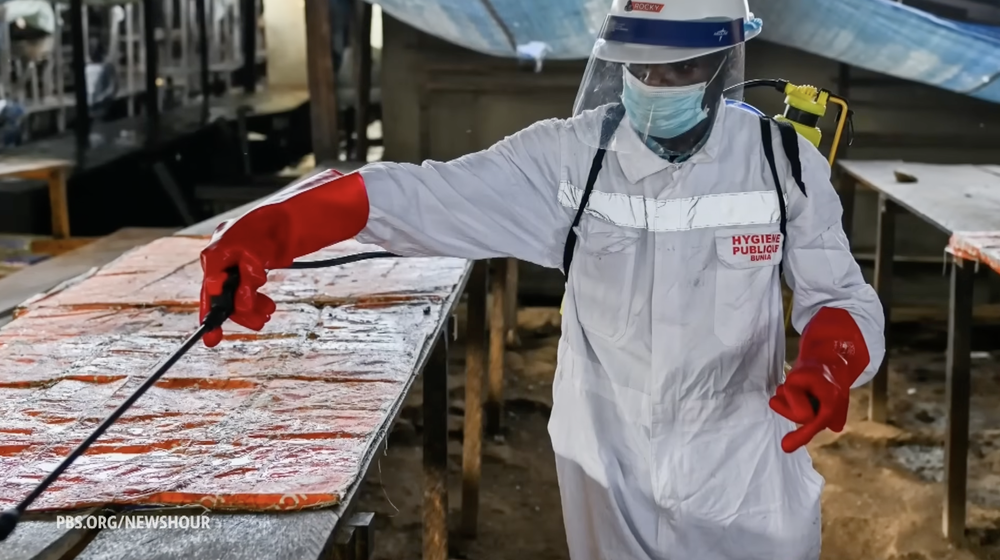
According to the WHO's plan, DDT will be used in a controlled manner, sprayed on the walls and roofs of houses only, instead of mass spraying outdoors.

This technique, called indoor residual spraying, is tentatively endorsed by environment groups like the Environmental Defense, the Sierra Club and the Endangered Wildlife Trust.

4. How is malaria contracted? How does it impact the body?

Humans contract malaria from the bite of a malaria-infected mosquito. Parasites travel from the saliva in the mosquito's mouth into the human blood.

The parasites then travel to the person's liver, where they grow and multiply. The parasites also enter the bloodstream and invade red blood cells, where they multiply again.

Eventually, the red blood cells burst, releasing toxins that cause symptoms such as fever and lack of energy. Malaria may also damage the nervous system and vital organs such as liver and kidney.

There are at least 300 million serious cases of malaria each year worldwide, resulting in more than one million deaths. It is especially deadly to women and children. The disease causes one in every five child deaths in Africa.

5. If there are drugs to treat malaria, why use DDT?

There are some cheap malaria drugs available, but when the same drug is used in a widespread manner to combat a disease, strains of the disease develop resistance to that drug.

As supplying medications that will work becomes more difficult, prevention becomes critical.

6. Why was DDT use banned?

However, in 1962, biologist Rachel Carson wrote a book called "Silent Spring," which helped set off the environmental movement in America by documenting how mass spraying of DDT entered the food chain, causing cancer and genetic damage and threatening to wipe out some bird species, including bald eagles.

The effects on humans are still being debated, but in 1969, the National Cancer Institute released findings suggesting that DDT could cause cancer. The United States banned DDT in 1972, and many other countries followed the example.

In 2004 the global treaty on Persistent Organic Pollutants banned DDT worldwide, except for use in controlling diseases like malaria.

Discussion Activity (more research might be needed):

1. According to group called Beyond Pesticides DDT "causes greater long-tem problems than those that are being addressed in the short-term."

The Sierra Club said, "Malaria kills millions of people and when there are no other alternatives to indoor use of DDT, and where that use will be well-monitored and controlled, we support it."

What do you think? Is this new WHO policy a good one? Why or why not? Explain your reasoning.

2. How does stopping the spread of malaria in Africa impact your life? Should eliminating malaria be important to you? Explain.

3. One problem in the fight against malaria is that when the same drug is used in a widespread manner to combat a disease, strains of the disease develop resistance to that drug. How does this relate to AIDS and other diseases in the United States? Talk a doctor in your community and find out how this problem could affect you and what you can do about it.

Write a 300-500 word essay on any of these topics providing clear examples. Send your completed editorial to NewsHour Extra (extra@newshour.org). Exceptional essays might be published on our Web site.