Using NewsHour Extra Feature Stories


Overview: NewsHour Extra features stories can help students identify and interpret key issues in current events. This activity anticipates one class period, but the follow-up essay might be assigned as homework, or in another period.

Warm Up: Use initiating questions to introduce the topic and find out how much your students know.

Main Activity: Have students read NewsHour Extra's feature story and answer the questions on the reading comprehension handout.

Discussion: Use discussion questions to encourage students to think about how the issues outlined in the story affect their lives and express and debate different opinions.

Follow-up: Students can write an 500-word editorial on the topic expressing their views and send it to NewsHour Extra [extra@newshour.org] for possible publication.

Evaluation: Students are graded on their answers to reading comprehension questions and/or their editorial.


Story: 'Change' Candidates Win Big in Iowa, 01/04/08
http://www.pbs.org/newshour/extra/features/jan-june08/iowa_1-04.html

Initiating Questions:

1. What has happened in the 2008 presidential race thus far?

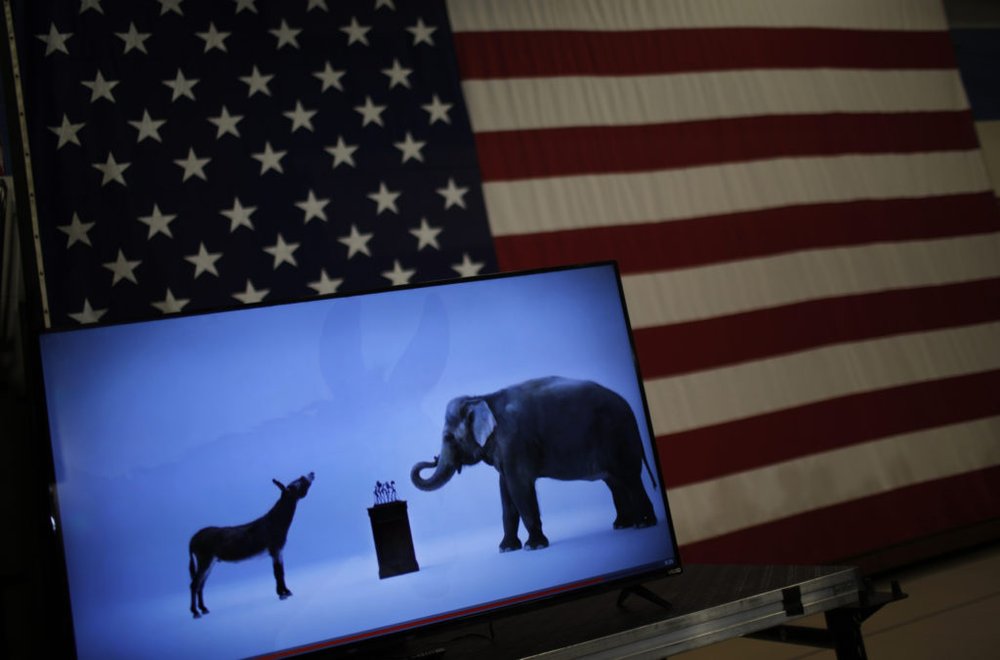
2. What is the difference between the Republican Party and the Democratic Party?

3. How do the parties decide who will be their candidate for president?

4. In what ways might this presidential race be different from past elections?

Reading Comprehension Questions: (click here for printout)

1. Who were the Democratic and Republican winners in the 2008 Iowa caucuses? Why are these victories significant?

Illinois Democratic Senator Barack Obama and former Arkansas Republican Governor Mike Huckabee shocked the political establishment by scoring victories in their respective parties in the race for the White House by winning Thursday's Iowa caucuses.

Until recent weeks, both Obama and Huckabee trailed by significant margins behind rivals in both parties. They came into the first contest of an already hotly contested 2008 nominating process neck-and-neck with other candidates.

2. Who were the top three contenders among the Democrats? What percentage of the vote did each receive?

Obama scored a victory over Democratic rivals John Edwards and Hillary Clinton, capturing 38 percent of the vote, followed by Edwards with 30 and Clinton with 29. Edwards has been visiting Iowa since the 2004 election he lost as a vice presidential candidate, while Clinton seemed like the inevitable winner because of early support and fund raising.

3. Who are the top two contenders among the Republicans in Iowa? What percentage of the vote did each receive?

Huckabee emerged from nowhere to take the lead in the Republican race, breaking his party's mold by blending his Christian conservative message with a more liberal economic message. He beat former Massachusetts Governor Mitt Romney, who outspent Huckabee in the state by millions of dollars, 34 percent to 25 percent.

4. Why do some historians think the Iowa caucus is important?

Only a small percentage of Iowans took part in the caucus, but those who did took it very seriously.
"The first test is this small state where these candidates get vetted by this very active, serious group of people, maybe only 10 percent, but quality rather than quantity. They take this very seriously, and they do a great job," presidential historian Michael Beschloss told the NewsHour.

5. Why is the 2008 primary race especially important?

The 2008 primary race is special because it is the first time since 1928 that an incumbent president or vice president was not running for the nomination of their party. It also comes at a time when the current Republican president and Democratic Congress have some of the lowest popularity ratings in modern history.

6. Describe the voting patterns of younger voters as compared to older voters in Iowa?

Moreover, young voters overwhelmingly went for Obama. Sixty percent of voters under 25 came out for the senator, while 45 percent of voters over 65 supported Clinton, the New York Times reported. More than half of Democratic voters said they were first-time caucus-goers and 40 percent of those voters chose Obama.

Discussion Activity (more research might be needed):

1. What do the results of the Iowa caucus tell you about the 2008 race for the White House thus far? Look at things like voter turnout, voter demographics, and exit polling - why voters said they voted for a particular candidate. Do you notice any trends or emerging themes? You can find information at http://www.pbs.org/newshour/vote2008

2. What do you think of the concept of an "Iowa bounce"? Do you think it will affect upcoming primaries in other states? What do states like Iowa, New Hampshire, Michigan, South Carolina, Wyoming and Florida-the next contests-have in common? How are they different?

3. Make a chart of the upcoming primaries (you can use this map: http://www.pbs.org/newshour/vote2008/primaries/states/
Write down who you think will win the state and why. This can be turned into a game with prizes!

4. Several candidates who did not do well in Iowa dropped out of the presidential race while others with poor showings stayed in the race. Why? What motivates particular candidates to stay in the race? Why do you think this is so?

Write a 300-500 word essay on any of these topics providing clear examples. Send your completed editorial to NewsHour Extra (extra@newshour.org). Exceptional essays might be published on our Web site.