Visit Your Local PBS Station PBS Home PBS Home Programs A-Z TV Schedules Watch Video Donate Shop PBS Search PBS

LESSON PLAN: CONTROLLING NUCLEAR WEAPONS: DEBATING THE NON-PROLIFERATION TREATY

By Lisa Prososki, an independent educational consultant and former middle school and high school social studies, English, reading and technology teacher

Subjects: Social Studies, Government, International Relations

Estimated Time: Three to four 50-minute class periods plus additional time for extension activities

Lesson Objectives:
Students will:

1. Brainstorm about their prior knowledge of nuclear weapons and answer questions related to nuclear
weapons based upon this brainstorming.
2. Formulate opinions about the use and regulation of nuclear weapons and debate these opinions using content from primary sources.
3. Conduct primary source research to learn about nuclear weapons and the international nuclear Nonproliferation
Treaty.
4. Utilize timelines and maps to learn specific information about the nuclear arms race and the
development of nuclear weapons by various countries.
5. Participate in class discussions and debates using research data, facts, reasons and examples
to support their point of view.
6. Compose a written response about what they learned about nuclear weapons and the
Nonproliferation Treaty.
7. Track the outcomes of the Nonproliferation Treaty Review Conference using primary
sources.

To make these lesson plans better SEND US YOUR FEEDBACK

Correlation to National Standards

Background:
Ratified in 1968 by the United States, United Kingdom and Soviet Union, the nuclear Nonproliferation Treaty (NPT), was designed to place controls over the development, spread and use of technology that could be used to create nuclear weapons. Countries already possessing nuclear weapons could not give/sell these weapons to other countries not possessing these types of weapons and were banned from sharing the technological information necessary for the manufacture of such weapons. Countries without nuclear weapons capabilities signed a pact agreeing not to receive or manufacture these types of weapons. Since that time, the International Atomic Energy Agency (IAEA) -- the nuclear watchdog of the United Nations -- has been in charge of enforcing nonproliferation among the 188 countries that have signed the pact.

In May 2005, a conference will take place in New York City with an agenda focused on revising the treaty to address issues that have arisen since the last review meeting in May 2000. Since that time there have been a number of key events that have tested the treaty and various new threats that the treaty would need to address.

Materials Needed:

Procedures:

Part 1: Background and Opinions:

1. To create student interest in the topic of nuclear weapons, have students participate in a short brainstorming exercise. Write the words "nuclear weapons" on the overhead or board. Work for 2-3 minutes to have students discuss what they know about nuclear weapons. Record their responses on the overhead/board.

2. Distribute the Nuclear Weapons Discussion Handout (printer-friendly PDF) to each student. Have them work in pairs or small groups to answer the questions from Part 1 using their prior knowledge. Provide approximately 5 minutes for the completion of this activity.

3. Review the answers to the Part 1 questions, providing historical details from the Key provided (printer-friendly PDF).

4. Distribute and/or read a copy of "A-bomb Survivors" stories available at http://www.csi.ad.jp/ABOMB/hibakusha.html. Students will read/hear firsthand accounts of what happened during the atomic bombing of Hiroshima in Japan.

5. Once stories have been completed, have students work individually to complete the Nuclear Weapons Discussion Handout Part 2 questions. Allow 5-7 minutes for this activity.

6. Once students have answered Part 2 questions, facilitate a short discussion about their answers to each question.

7. Introduce students to the Nonproliferation Treaty using the above background information. Additional details of the treaty can also be found at:
http://www.pbs.org/newshour/bb/international/proliferation/treaties.html

Part 2: Reviewing the NPT

8. Begin by discussing with students the role of the United Nations in reviewing the NPT. Explain that these meetings are used to address issues related to the effectiveness and enforcement of the treaty and take place every five years.

9. Using the timeline available at: http://www.pbs.org/newshour/bb/international/proliferation/map.html, review how the world's supply of nuclear weapons was created during the arms race and how nuclear capabilities have broadened worldwide over time.

10. Using the map also available at: http://www.pbs.org/newshour/bb/international/proliferation/map.html, discuss which countries have nuclear capabilities and which ones are in the process of developing them. While looking at the map, discuss questions such as:

  • Are there any countries on the map that you believe should not be allowed to have nuclear weapons? Why?
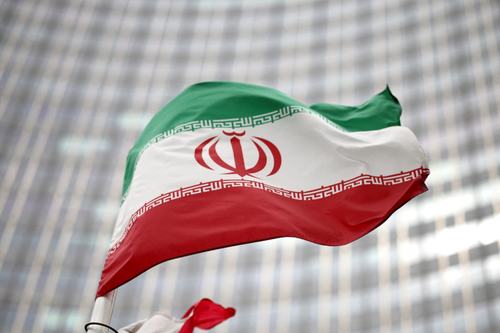
  • What threat does the world face from countries with unconfirmed nuclear weapons or those reportedly developing nuclear weapons (i.e., North Korea and Iran)?
  • Based on this map, what are the "hotspots" in the world for the development of nuclear weapons?

Part 3: Mock U.N. Review Conference

11. Explain to students that in May 2005, the 188 countries who have signed the NPT will meet
to review the treaty. To prepare for this meeting, the director of the IAEA, Mohamed
ElBaradei, has identified seven key areas he believes need to be addressed in the
treaty. These can be found at:

http://www.iaea.org/NewsCenter/News/2005/npt-2005.html

and include:


A. A five-year moratorium on building new facilities for uranium enrichment and plutonium separation. "There is no compelling reason for building more of these proliferation-sensitive facilities, the nuclear industry already has more than enough capacity to fuel its power plants and research facilities," ElBaradei said.

B. Speed up efforts to convert research reactors operating with highly enriched uranium (HEU) to use low enriched uranium, and accelerate technical research to make HEU unnecessary for all peaceful nuclear applications.

C. Establish the "Additional Protocol" as the norm for verifying compliance with the NPT -- a move that would expand IAEA inspectors´ access to facilities and information about nuclear programs.

D. Call on the U.N. Security Council to act swiftly and decisively on the case of any country that withdraws from the NPT.

E. Call on all nuclear weapons states to act on the Security Council's Resolution 1540 to pursue and prosecute any illicit trading in nuclear materials and technology.

F. Call on all five nuclear weapon states party to the NPT to accelerate implementation of their "unequivocal commitment" to nuclear disarmament. "Negotiating a treaty to irreversibly ban the production of fissile material for nuclear weapon programs would be a welcome starting point," ElBaradei said.

G. Acknowledge the volatility of longstanding tensions that give rise to proliferation -- in regions like the Middle East and the Korean Peninsula -- and take action to resolve existing security deficits and, where needed, provide security assurances.


12. Explain to students that with the great number of countries participating in the review, making changes and the discussion surrounding these changes can be difficult.

13. Keeping that in mind, explain to students that they will be working in pairs/small groups to conduct research about how a specific country might react to some of the changes proposed above. They will complete the Individual Country Research Questions (printer-friendly PDF) to prepare to present their country's views on the changes being proposed. Countries represented should include: United States, China, France, Britain, Russia, North Korea, Israel, Iraq, Algeria, Syria, India, Pakistan, Iran, Australia, Libya, Egypt, South Korea, Switzerland, South Africa, Spain, Sweden, Argentina, Romania, Taiwan and Yugoslavia. Additional countries such as Brazil and former Soviet republics can be added if necessary. Allow one class period for the completion of research.

14. Once research has been completed, each pair/group will participate in a mock review conference to state the point of view they believe their country would take on each of the key issues. This mock review conference will help students learn more about each country's point of view as well as illustrate the difficulties that will be faced by the review conference attendees when they meet in May 2005. To facilitate the review conference:

  • place all desks/tables in a circle so students can easily see/hear one another,
  • have each pair/group create a placard with the name of the country they represent,
  • determine, in advance, how review conference outcomes will be decided -- through consensus or by a majority vote,
  • facilitate the discussion/debate of each issue students researched on the Individual Country Research Questions,
  • once debate is completed, have students decide what their solutions to each question presented will be, and
  • assist students with working as a group to write up a formal document describing the outcomes that have been agreed upon.


15. To close the activity, ask students to provide a written response to questions, such as:

  • What did you learn about international relations from completing this activity?
  • What did you learn about negotiating and working with others?
  • What did you learn about nuclear weapons and the threat they pose worldwide?
  • How did participation in this assignment change or reinforce your ideas about nuclear weapons and their regulation?

16. As the May 2005 conference takes place, track news stories and final outcomes of the conference and compare what happens to what took place in the mock conference you conducted. Discuss similarities and differences in topics, points of view and outcomes.


Extension Activities:

1. Have students voice their opinions about nuclear issues by contacting their members of Congress and voicing their concerns and opinions about the U.S. and world nuclear programs and how they should be regulated and addressed.

2. Have students conduct research about the science of nuclear weapons and create a museum or science fair-type of display that addresses questions such as:

  • How are nuclear weapons created?
  • What types of damage do they cause?
  • What are the long-term effects of their use?
  • What are their effects on the environment? on people?
  • Why should they be regulated?

3. Have students research more about the role of the United Nations and specifically the IAEA in the regulation of nuclear weapons and what is being done to ensure there will never be another use of atomic weapons as in Hiroshima and Nagasaki, Japan.

National Standards

McRel Compendium of K-12 Standards Addressed:

World History
Standard 41: Understands the causes and global consequences of World War II
Standard 45: Understands the major global trends since World War II

Language Arts
Writing
Standard 4: Gathers and uses information for research purposes

Reading
Standard 5: Uses the general skills and strategies of the reading process
Standard 7: Uses reading skills and strategies to understand and interpret a variety of informational texts

Listening and Speaking
Standard 8: Uses listening and speaking strategies for different purposes

Thinking and Reasoning
Standard 1: Understands and applies the basic principles of presenting an argument
Standard 6: Applies decision-making techniques

Working with Others
Standard 1: Contributes to the overall effort of a group
Standard 4: Displays effective interpersonal communication skills

Author Lisa Prososki is an independent educational consultant who taught middle and high school social studies, English, reading and technology courses for 12 years. Prososki has worked with PBS TeacherSource and has authored and edited many lesson plans and materials for various PBS programs over the past nine years. In addition to conducting workshops for teachers at various state and national meetings, Prososki works as an editor, creates a wide range of educational and training materials for corporate clients and has authored one book.

To find out more about opportunities to contribute to this site, contact Leah Clapman at extra@newshour.org.

More Media lesson plans from PBS TeacherSource


Copyright © MacNeil-Lehrer Productions All Rights Reserved