Visit Your Local PBS Station PBS Home PBS Home Programs A-Z TV Schedules Watch Video Support PBS Shop PBS Search PBS
       
the Online NewsHour The Web site of the NewsHour with Jim Lehrer
E-mail This Page   Print This Page  
the Online NewsHour EXTRANews for Students AND Teacher Resources MAIN: ONLINE NEWSHOUR
7 - 12 grade level
SEARCH
ALL OR STUDENT VOICES LESSON PLANS VIDEO GO
Main: NewsHour ExtraU.S.WorldScienceHealthArts/MediaStudent VoicesTeacher Center

Lesson Plan
CORRELATION TO NATIONAL STANDARDS

SHARIA LAW

Background, Activities and Critical Analysis
By By Lara Maupin, Thomas Jefferson High School for Science and Technology in Alexandria, Va.
Subject(s)
This lesson is especially relevant in a comparative government, world cultures, or world religions class but may be used in any social studies class in which current events are examined.
Estimated Time
This lesson is intended to take 1 - 2 class periods.
Grade Level
9 through 12
Objective

Students will:

  • Identify key terms associated with fundamental Islamic beliefs and Islamic law.
  • Compare and contrast Sharia with the American legal system and other systems worldwide.

Overview
In the past few years several key cases, including the 2003 case of a Nigerian woman convicted of adultery and sentenced to death by stoning, sparked interest in and criticism of Sharia, or Islamic law. In this lesson, your high school students will examine Sharia in the context of cultural and religious beliefs in Muslim societies and worldwide.

Procedure
1. Background
Provide your students with some background information on Nigeria and Sharia, as well as the 2003 case of Amina Lawal. You may also wish to have your students read Oil and Politics in Nigeria: Sharia Law. http://www.pbs.org/newshour/indepth_coverage/africa/nigeria/sharia.html

Nigeria is Africa's most populous nation - one-fifth of all Africans are Nigerian - and a leading African nation. Nigeria is also the world's sixth largest oil producer, although the majority of Nigerians remain poor. This disparity has been the cause of recent deadly clashes.

For most of the 40 years since Nigeria gained independence from Britain, the country has been ruled by its military. In the summer of 1998 military leaders agreed to an election. In 1999, General Olusegun Obasanjo won the presidential election. In 2003, he was reelected in the first civilian-run election in Nigeria in over 20 years. In 2007, Obasanjo reached his constitutional term limit and will pass the presidency on to the next elected leader.

Muslims account for one-fifth of the world's population. Half of all Nigerians are Muslims and thus Nigeria has the largest concentration of Muslims in Africa. Sharia, the Muslim code for living, was practiced in Nigeria for centuries until the arrival of the British in the early 1900s. In 2000, Muslim-Christian violence was sparked by the reintroduction of Sharia in several Northern states. Although Nigerian Christians (40 percent of the total population) are not subject to Sharia, clashes between Christians and Muslims in recent years have left thousands dead.

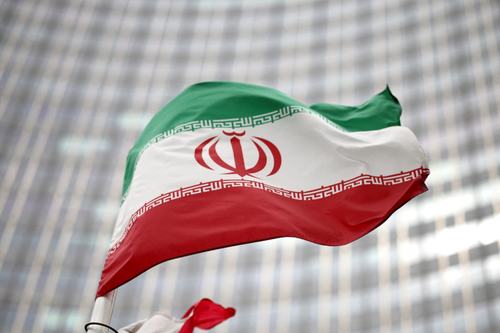
Sharia varies widely in how it is implemented in Muslim societies. As criminal law, it is in practice in only a few predominantly Muslim countries such as Iran, Pakistan, and Saudi Arabia. In Nigeria, its use in criminal cases is considered by some to be a violation of the constitution.

Amina Lawal, a 31 year old divorced Nigerian woman, was sentenced in March 2002 by a Sharia court to death by stoning for committing adultery. The case became a high profile one and a test of the reintroduction of Sharia in 12 predominantly Muslim states in northern Nigeria. She appealed and on September 25 the court ruled to overturn her conviction.

Other significant examples of Sharia law's implementation are the Abdul Rahman case in Afghanistan and the Mirza Tahir Hussain case in Pakistan.

Afghan Abdul Rahman was arrested in February 2006 for converting to Christianity. Formerly a Muslim, Rahman was charged with rejecting Islam but his case was dismissed in March of 2006, after human rights groups and international organizations protested, supposedly because of problems with the prosecutors' evidence. He could have faced the death penalty if convicted.

Mirza Tahir Hussain, a citizen of Great Britain, was convicted in 1989 of murdering a taxi driver in Pakistan, but was cleared in 1996 by a secular court. He was then retried and found guilty in an Islamic one, the Federal Sharia Court, and was sentenced to death. He spent a total of 18 years on death row and was released on November 17, 2006 after international outcry and a plea for clemency by Prince Charles.

2. Article Analysis
Have your students read and discuss the following NewsHour Extra story on Lawal's case [Nigerian Court Frees Woman Sentenced Under Sharia Law]. Use the following questions to spark discussion.

  • What surprised you about this case and its outcome?
  • What do you think about the charges against Amina Lawal and the outcome of her case?
  • Why might people in the predominantly Muslim northern states of Nigeria wish to be governed by Sharia?

3. Key Terms
Provide your students with the following EXCERPTS from Frontline interviews with Akbar Muhammad and Imam Feisal Abdul Rauf and the HANDOUT (a TEACHER KEY is also provided) of key terms. Ask them to identify the terms by reading the interviews. Students may also use their NewsHour Extra articles and the case of Amina Lawal and "Sharia in Nigeria" backgrounder as well as any other sources on Islam you have available. When students have finished, discuss the terms and their importance. Next, ask students to consider the harsh punishments that can be given out according to Sharia (such as cutting off the hand of a thief) and ask them to respond analytically to the following quotes from the interviews.

  • "You cannot judge a whole body of law by one instance of criminal law."
  • "Much of what we see when we hear of events that apply Sharia law, what we see in Nigeria, for instance ... is a desire by the people to see their system of laws be more equitable."
  • "Islamic law is not one thing. It's not monolithic, as American law is not monolithic, as Western law is not monolithic."

4. Compare/contrast
Have your students select one of the following issues to consider and write about for homework. Students then meet in small groups of students who selected the same topics to discuss and share their responses. Students may then add final reflections on their papers and turn them in to you.

Extension Activities
You may extend this assignment by asking your students to do additional research prior to writing their responses or after meeting in small groups for discussion. What other examples from legal systems worldwide can they find to bolster their arguments? For example, you may wish to have your students look more closely at variations in the interpretation and implementation of U.S. law and Sharia as well as other systems of law that value communal order over individual freedoms (e.g. Hong Kong).

a. Legal Interpretation
Legal systems or codes, such as the U.S. Constitution and Sharia law, often vary widely in how they are interpreted and implemented. This makes it difficult to draw conclusions about legal systems from just the written codes themselves or from how they are implemented in one place. One must know more about how the systems are used and interpreted. Consider:

    • The Second Amendment to the U.S. Constitution reads as follows: "A well regulated Militia, being necessary to the security of a free State, the right of the people to keep and bear arms shall not be infringed." Yet, Americans remain divided over the issue of gun control because of varied interpretations of this law. Many other examples of varied interpretations of U.S. laws exist.

    • Criminal offenses are just one part of Sharia, a code for living. If followed, Muslims claim there will be no poverty or crime in their societies. While most Muslims attempt to adhere to Sharia as a way of living, the harshest punishments for certain criminal offenses are carried out in relatively few Muslim societies, such as Saudi Arabia and Iran. In other countries such as Pakistan with Sharia law, it is applied selectively. In predominantly Muslim countries that have secular governments, it has largely been abandoned as a legal system.

    • "Islam is a very flexible system. ... Thus in certain areas of the Sharia, one country may differ from another country. One community may differ from another community, even in the same country. ... But that is not strange. Why should it be? Divorce law in various states of the United States differ. The acceptance of homosexuality, legal acceptance of, permission, etc. differ from one state to the other." - Professor Akbar Muhammad

What can you conclude about Sharia and how it compares to the system of law you may be most familiar with, the American system, in terms of flexibility, interpretation, and implementation? How should moral and legal codes be interpreted?

b. Severe Penalties
Many legal systems allow for severe penalties such as death, bodily injury, or life in prison. Sharia contains the penalties of amputation for theft, flogging for crimes such as alcohol consumption and sex before marriage, and death by stoning for adultery. Officials in Northern Nigeria support the use of harsh Sharia punishments, even while President Obasanjo has called the punishments discriminatory and therefore unconstitutional. Compare and contrast what you know about the most severe penalties allowable under Sharia and the most severe penalty allowed under U.S. Law, the death penalty. Consider:

    • In the United States, 38 states allow the death penalty for crimes such as murder and treason.
    • The most common methods by which people are put to death in the United States are lethal injection and electrocution.
    • Over 300 convicted criminals have been put to death in Texas since 1976, whereas some states that allow the death penalty have not actually put anyone to death in years.
    • Western European nations have abolished the death penalty and the U.N. Commission on Human Rights has called for a moratorium on all executions.
    • Approximately two-thirds of Americans support use of the death penalty.

What can you conclude? What do you think should be allowable forms of punishment for the most severe crimes? Why? Are harsh punishments, such as amputations and death ever justified? Explain. Who should determine what the most serious crimes are and how frequently the most severe punishments should be used?

c. Security vs. Freedom
Experts on Nigeria and Islamic law claim that Nigerian Muslims have supported the reintroduction of Sharia out of a desire for order, safety, and security. Compare this to what many Americans felt after the Sept. 11, 2001, terrorist attacks and the swift passage of the USA Patriot Act to combat terrorism. Consider:

    • One month after 9/11, Congress passed the USA Patriot Act which gives officials greater powers in order to track and fight terrorism. Officials may now more easily access private communications between individuals as well as medical, financial and educational records.
    • President Bush is asking Congress to expand the powers provided in the Patriot Act even further. The administration wants officials to be able to bypass a judge in order to obtain subpoenas in time-sensitive terrorism cases, deny bail to terrorism suspects, and open up the federal death penalty in terrorism cases. Critics, such as the ACLU, claim that the Bush administration is using a national tragedy to take away fundamental rights. Others complain that the act is being used against suspected criminals, not just suspected terrorists.
    • Increased security at airports has been largely accepted as necessary by the American public, although it has led to inconveniences for passengers and has been an additional burden on the struggling airline industry.
    • "Much of what we see when we hear of events that apply Sharia law, what we see in Nigeria, for instance, or even Pakistan, is a desire by much of the population to see the general principles of justice followed… . It is a desire by people to see their system of laws be more equitable. It is a call for correction of the overall system of social justice, of economic justice, which the Quran calls for; and the example the prophet calls for." - Imam Feisal Abdul Raul

What can you conclude about the circumstances under which people favor security and safety over freedom? When should individual freedoms (including freedom from harsh punishments as well as intrusions into one's privacy) be protected, regardless of the costs to society?

Last Updated: August 2009

About the Author

Author Lara Maupin has a master’s in secondary social studies education from George Washington University and a bachelor’s in anthropology and philosophy from Mount Holyoke College.


Additional Lesson Plans

Extra: News for Students
Lesson Plan: Are Nigeria's Elections 'Free and Fair?'
Student Voice: The Paradox of Kabul
Corruption Charges Taint Nigeria's Elections

The Online NewsHour
Oil and Politics in Nigeria: Sharia Law
In Nigeria, Scarce Water Supply and High Food Prices Leave Families Hungry
In depth Coverage: World View

To find out more about opportunities to contribute to this site, contact us.

The Materials You Need

PDF - Nigerian Court Frees Woman Sentenced Under Sharia Law

PDF - Frontline excerpts

PDF - Sharia law handout
PDF - Sharia law handout teacher key

Internet access, including Online NewsHour In-depth Coverage: Oil and Politics in Nigeria


Additional Resources for Teachers
Outside resources that might be of use

Council on Foreign Relations: Governing Under Sharia

BBC Religion and Ethics: Sharia

Send Us Your Feedback
Write Lesson Plans for ExtraContact Us
National Standards

NCSS Thematic Strands:

  • Culture
  • Individuals, Groups, and Institutions
  • Power, Authority, and Governance
  • Global Connections
  • Civic Ideals and Practices


The Online NewsHour
WEDNESDAY'S PROGRAM
Veterans Day
News Wrap
Financial Fix
Troubled States
A Marine's Story
Counseling Veterans
Honor Roll
The Online NewsHour, an hour-long daily news broadcast
Check your Local Listings