Visit Your Local PBS Station PBS Home PBS Home Programs A-Z TV Schedules Watch Video Donate Shop PBS Search PBS

Classroom Activity Header
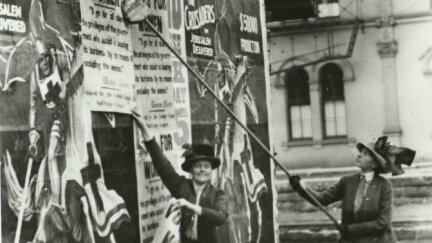
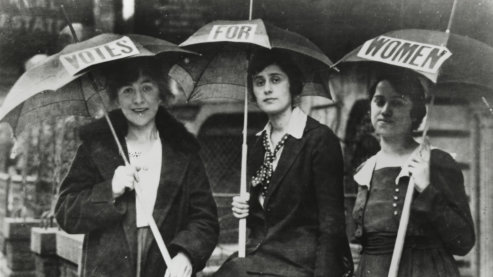
Suffrage parade in New York City, 1912 Suffrage parade in New York City, 1912. Subject Areas
Language Arts, History, Civics, and Government

Objective
Students will use what they have learned from viewing parts of “Not For Ourselves Alone” and completing Internet research to write an editorial about a topic relating to the women’s rights movement and the issues presently surrounding women’s rights in America and around the world.

Materials
Students will need to view parts of “Not For Ourselves Alone.” They will also need access to the Internet and a word processing program.

Procedure
  1. Begin class by telling students they no longer have the right to speak in class. Tell them that instead of discussions, debates, asking questions, and working in groups, the teacher will now be the sole speaker. Advise students that it will be best for them to sit quietly, listen carefully, and let the teacher do all of the talking and decision making. Tell them that if they have an opinion about something, they will have to keep it to themselves. Wait for a short time and give students time to process this. The room should be quiet. Anyone who attempts to object should be ignored or silenced.

  2. Next, tell students to take out a piece of paper and make a list of the feelings they have about this new rule. They may not talk or work together, but they must create the list. Give them about two minutes to do this.

  3. Finally, explain to students that this is NOT a new rule, but it was used to get them in a mindset that would help them relate to the topic of the day. Ask students to share their list of feelings. Discuss why they had they feelings. When this is completed, tell them to imagine what it would be like to be treated this way. Then ask the class to make a list of groups who have been treated this way in the past or are currently treated this way. The key to making the list is that the students must agree that at the time the group was treated this way, it was considered socially acceptable by most people. Some groups who may appear on the list could include: slaves, Native Americans, children, Jews, and women.

  4. Once the list is complete and discussed, tell students you will be focusing on women’s fight for equal rights, in the past and today.

  5. Present students with a brief history of the women’s right movement. This can be found within the PBS site One Woman, One Vote or in chronological order at the following web sites: A History of the American Suffragist Movement, University of Maryland Women’s Studies

  6. With the above information in mind, students should view the following parts of “Not For Ourselves Alone.” While viewing, they should pay attention to and note various issues supported by the Women’s Rights Movement. Some of these might include women’s right to vote, receive an education, own property, testify in court, serve on juries, earn an income and spend it as they see fit, file for divorce, obtain child custody, receive equal pay for equal work, etc. Much of this information can be found in the following segments of the program. They are listed chronologically as they appear in the tapes. All time indicators are approximate.

    Episode 1:
    Revolution (11:40 “I was born...” to 16:40 “...was determined to change all that...)

    Mental Hunger (39:00 “But in the spring...” to 47:10 “...convention adjourned...”)

    Caged Lion (54:20 “During the next several years...” to 59:10 “....great personal cost...”)

    Man’s Sense of Justice (68:20 “Finally in 1860...” to 70:30 “....for decades.”)

    Episode 2:
    Done It! (7:20 “On November 1, 1872... to 14:45 ”...sympathy for women’s suffrage everywhere...”)

    Wedded to an Idea (36:30 “...first International Women’s

    Conference was a success.” to 41:00 “...but in the councils of the nation....”)

  7. Next, students can compare the rights of American women with those of other women throughout the world. The Where Are We Now section of this site will be helpful. In addition, students might research women’s rights on their own.

    PBS Sites:
    Six Billion and Beyond
    Vis a Vis

    Related Sites:
    Amnesty International: Women’s Human Rights
    Bora Laskin Law Library : University of Toronto
    United Nations
    International Women’s Health Coalition

  8. Review editorials, pointing out they are based on opinions. Include the fact that they are usually controversial. Finally, remind students that their arguments need to be supported by reasons, facts, details, and examples.

  9. Once students have had an opportunity to see that women throughout the world do not enjoy many of the rights of American women, they can then move toward choosing a topic for their editorial. They may focus on what Americans can do to help women in foreign countries obtain basic rights, or they may focus on the rights that U.S. women are still fighting for today (i.e. women in combat, lack of education on the importance of women in history, equal opportunity in upper management positions like Fortune 500 companies, women in political office such as the U.S. Presidency, health care and money for research affecting women’s health, etc.). After a topic is chosen, students should begin researching more about that particular idea in order to write an editorial that uses examples, facts, etc.

  10. Once students have gathered adequate information about their subject, they should write their editorials. This should be done using a word processing program. In addition to correct editorial format, spelling, mechanics, and grammar and usage should also be correct.

  11. Upon completion, the editorials could be printed as part of a special section in the classroom or school newspaper, sent to a local newspaper for publication, or sent to a local, state, or national women’s organization. Many communities today have groups who sponsor writing contests with women’s issues as topics. These would be an excellent way to share student editorials in a more public way.

Assessment Suggestions:

  1. Create a scoring guide the covers the following areas: statement of opinion, support of opinion with reasons, facts, examples, and details that are historically accurate, choice of appropriate topic, correct use spelling, mechanics, grammar, and usage. Use this guide to evaluate written work.

  2. Have students present their editorials for the class. Allow the class to use peer evaluation to point out strengths and weaknesses in the editorial and the arguments presented there. If large group is too time consuming, split students into 5-6 small groups and have them present and evaluate one another’s editorials.

Extension Activities

  1. Break students into 5 or 6 small groups. Each group should decide on a topic for their editorial. Half of the group could write on the “pro” side of this issue. The other half could write on the “con” side of the issue. Once both sides have finished their editorials, they could share them with the group. The teacher could then facilitate a classroom debate/discussion about the two different points of view. All students from the class could participate in this part of the activity. This would allow 5-6 different topics/ideas to be debated.

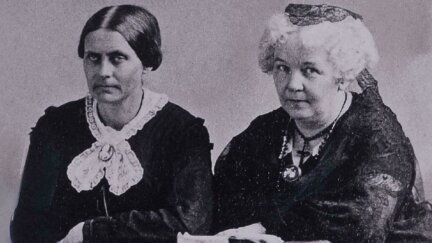
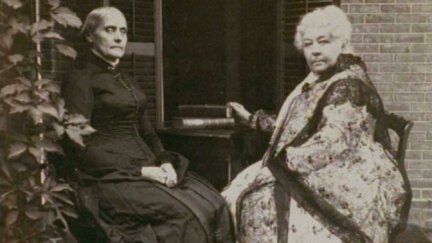
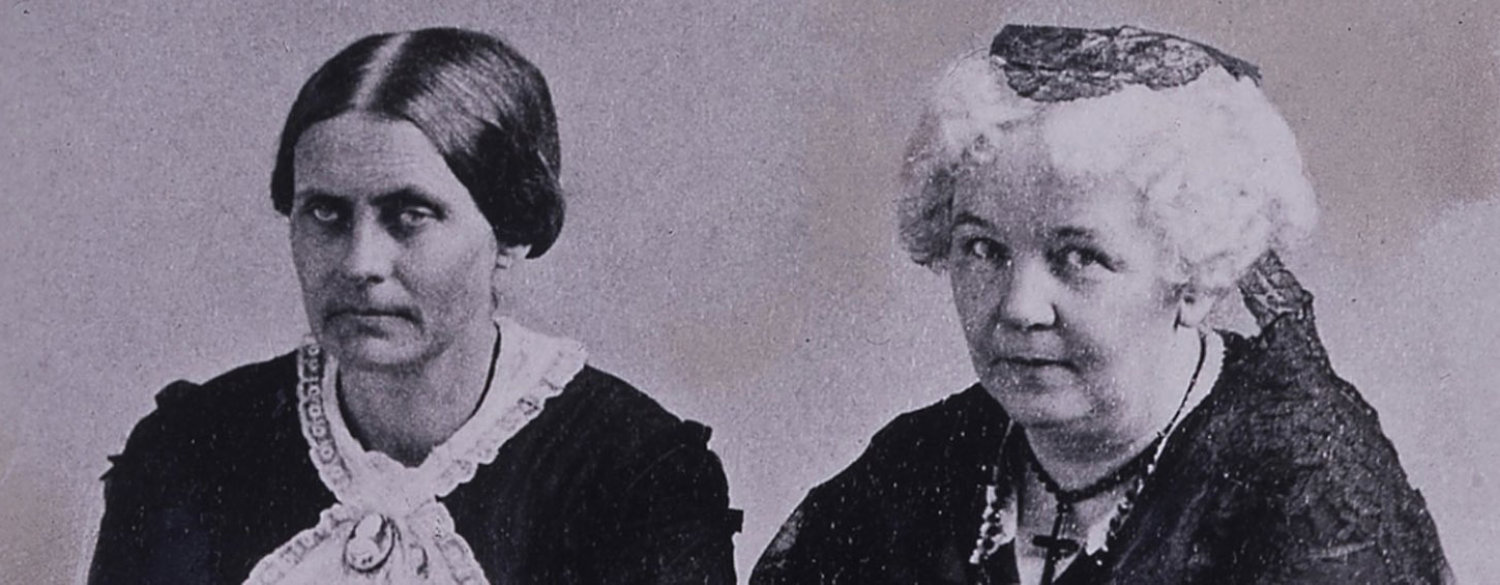
  2. Change the assignment a bit by having the students write a letter to the editor. It should be a letter that supports the work of Susan B. Anthony and Elizabeth Cady Stanton. It should be written from an historical perspective--that is, how men and women of the time would have felt. In this case, it will be important to support opinions with reasons, facts, details, and examples. Upon completion, students could share their work with the class or with small groups.

National Standards
Taken from Mid-continent Research for Education and Learning

Language Arts

  • Demonstrates competence in the general skills and strategies of the writing process
  • Demonstrates competence in the stylistic and rhetorical aspects of writing
  • Uses grammatical and mechanical conventions in written compositions
  • Gathers and uses information for research purposes

Thinking and Reasoning

  • Understands and applies the basic principles of presenting an argument

United States History

  • Understands the struggle for racial and gender equality and for the extension of civil liberties

Historical Understanding

  • Understands the historical perspective

About the Author
Lisa Prososki is a technology and communications teacher at Northgate Middle School in the North Kansas City School District. She has been teaching for 12 years. Lisa was the North Kansas City School District’s Teacher of the Year in 1995, and was named Technology and Learning magazine’s Missouri Technology Teacher of the Year in 1996. She has conducted numerous workshops and been a presenter at many local, state, and national conferences. In her spare time she enjoys athletics, scrapbooking, and spending time with her husband and new baby, Jacob.

Classroom Activities
Women Today: An Editorial
Changes in the Role of Women: An Interview
Women’s Rights and Reform in the 19th Century
Conflict, Consensus, and Conclusion