New York: A Documentary Film (1624-2001)
The history of a great city, and the forces that have shaped it.


Known round the world as "The Big Apple," the thriving metropolis of New York offers everything one could want in a big city -- action, arts, nightlife, culture and more. So how did this city grow from a Dutch trading post into a global and cultural center? The program begins in the early 1600s when the Dutch arrived, and documents the city's development up to the dawn of the 21st century.New York explores the city's role in the American Revolution, and shows how a massive wave of immigrants began the metropolitan melting pot and created new social problems, culminating in Civil War riots. As the city grew, it experienced a new political corruption and a new-found wealth. As the 20th century approached, more immigrants arrived, skyscrapers rose from the ground, and the subway roared into action. New York became a nucleus of cultural activity blazing with glamour and excitement. The program provides an extraordinary view of the 20th century's major events, from the Depression to the New Deal, economic and population booms to social revolution, rebuilding and resurgence.Through unparalleled archival paintings, portraits, photographs and newsreels, and through interviews with celebrated and ordinary citizens, the film paints a brilliant picture of America's biggest city.

The Great Fever (1693-1905)
In 1900 Major Walter Reed and his medical team prove that yellow fever was spread by mosquitoes. The eradication of the disease that had terrorized the U.S. for centuries began with an aggressive public health campaign to rid the city of New Orleans of m


In June 1900, Major Walter Reed, Chief Surgeon of the U.S. Army, led a medical team to Cuba on a mission to investigate yellow fever. For more than two hundred years the disease had terrorized the United States, killing an estimated 100,000 people in the nineteenth century alone. Shortly after Reed and his team arrived in Havana they began testing the radical theories of Carlos Finlay, a Cuban doctor who believed that mosquitoes spread yellow fever. This AMERICAN EXPERIENCE production documents the heroic efforts of Reed's medical team, some of whom put their own lives on the line to verify Finlay's theory. Eventually, their discovery enabled the United States to successfully eradicate the disease among workers constructing the Panama Canal, making possible the completion of one of the most strategic waterways in the world. When yellow fever struck New Orleans in 1905, an aggressive mosquito eradication campaign successfully ended the epidemic. It was the last yellow fever outbreak in the United States, and the first major public health triumph of the 20th century.

New Orleans (1718-2005)
Focusing primarily on the century from Reconstruction to school desegregation in the 1960s, the film offers a portrait of New Orleans that both explores its unique and distinctive culture and illuminates its central place on the American landscape.


New Orleans: the utterly original American city that lies at the mouth of the mighty Mississippi and at the beating heart of the great American experiment. Walled in on almost all sides by water, pressed together by the demands and dangers of geography, the crowded streets of New Orleans have always been a laboratory where the social forces that characterize American life play out in dramatic and, at times, disastrous fashion. Over the course of two provocative hours, American Experience tells the story of this remarkable city. Focusing primarily on the century from Reconstruction to school desegregation in the 1960s, the film offers a portrait of New Orleans that both explores its unique and distinctive culture and illuminates its central place on the American landscape. Featuring the city's rich archival resources and a remarkable collection of on-camera commentators, the film also includes a series of veritŽ-style portraits of New Orleans residents. The resulting cinematic narrative is a dialogue between past and present that highlights New Orleans' particular brand of humor, fatalism, and wry rebelliousness, while raising critical questions about what lies ahead for the city and the nation.

John and Abigail Adams (1735-1826)
This film explores the remarkable characters and tumultuous times of John and Abigail Adams, using excerpts from their many letters to bring their story to life.
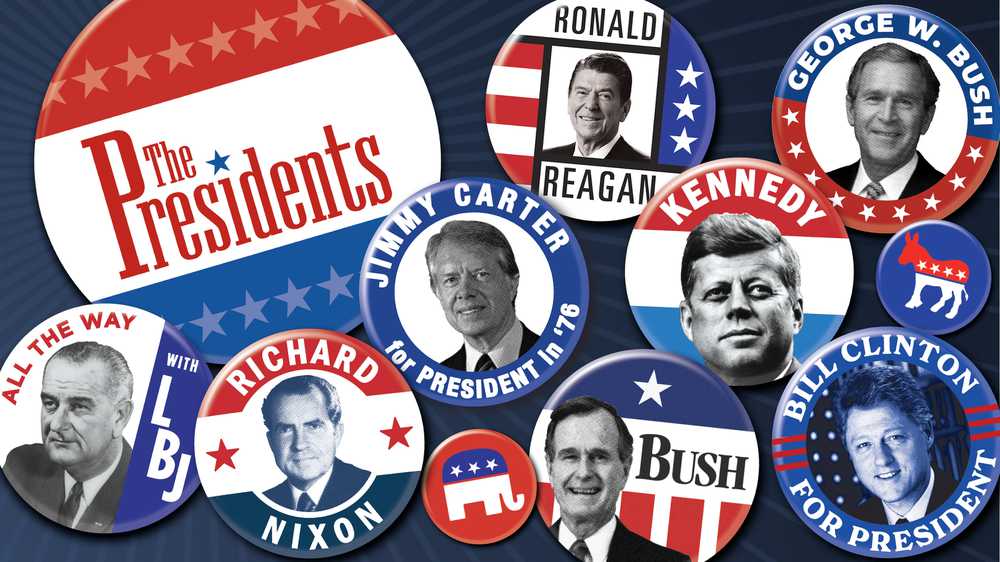
(More about John Adams on The Presidents Web site)


John and Abigail Adams played a critical role in many of the pivotal events of their era: he was a vociferous participant at the Continental Congress; she was an important eyewitness reporter during the Siege of Boston; he was an important wartime emissary to France. In the post-war era, first as vice president, then as president, Adams was caught up in the increasing political divisiveness that characterized the 1790s when rifts in the country almost pulled the fledgling nation apart.Opening a window onto the revolutionary era, John and Abigail's story provides a strikingly intimate look inside a marriage of true companions, for whom life included not just the great events of history, but also laughter, loneliness, affection, and family tragedy.

Alexander Hamilton (1755-1854)
This two-hour AMERICAN EXPERIENCE tells the story of Alexander Hamilton, the underappreciated genius who laid the groundwork for the nation's modern economy - including the banking system, Wall Street, and an "opportunity society" in which talent and hard


One of the most controversial men of his age, Alexander Hamilton was a gifted statesman brought down by the fatal flaws of stubbornness, extreme candor, and arrogance. His life and career were marked by a stunning rise to power, scandal, and tragedy. He had one of the most notorious love affairs of any public figure in American history, and met his death in a startling act of political violence -- the famous duel with Aaron Burr. But his contributions as a statesman survive. As first Secretary of the Treasury during the tumultuous early years of the republic, Hamilton led the transformation of the young country into a commercial and industrial powerhouse. He was the one founder who had a vision, not of what America was, but of what it could become. This two-hour AMERICAN EXPERIENCE tells the story of the underappreciated genius who laid the groundwork for the nation's modern economy - including the banking system, Wall Street, and an "opportunity society" in which talent and hard work, not birth, determined success.
George Washington -- The Man Who Wouldn't Be King (1774-1775)
(no website available)
The little known story of our first president.


He was bumbling, yet ambitious. He volunteered to serve his country, but insisted on being reimbursed for expenses. He was the most famous general of the Revolution but a dismal tactician on the battlefield. Greedy and selfish, service to the colonies would profoundly change him. The man who came to symbolize the American Revolution could also be incredibly brave, generous and an inspirational leader who scorned attempts to participate in any system but a democratic one.

War Letters (1775-1991)
From the American Revolution to Desert Storm -- newly discovered stories of courage, longing, and sacrifice.


Based on newly discovered personal correspondence from the Revolutionary War to the Gulf War, this program brings to life vivid eyewitness accounts of famous battles, intimate declarations of love and longing, poignant letters penned just before the writer was killed, and heartbreaking "Dear John" letters from home.The best of these letters transcend the subject of war; they are about love, perseverance, honor, passion, and faith. Most are unpublished, many rescued from oblivion in attics and basements. Read by a cast of celebrity actors, they are illustrated with a blend of dramatic archival footage and photographs, evocative recreations, and images of those who wrote, and those who read, letters from American battlefronts.
Patriots Day (1775-2003)
(no website available)
In 1775, local American militias routed the British at the Battle of Lexington and Concord -- but 65 men of His Majesty's 10th Regiment and 67 American rebels are still fighting today.


In 1775, local American militias routed the British at the Battle of Lexington and Concord -- but 65 men of His Majesty's 10th Regiment and 67 American rebels are still fighting today. Who are they, and what has taken them on their personal journeys into the American past?Among the characters on the British side is one-time Off-Broadway theater director turned electrical engineer, Paul Hutchinson, who assumes the role of Major John Pitcairn. Leading the defense of Lexington is 54-year-old Skip Hayward, who plays the militia's Chief of Staff. Among the supporting characters are Henry Liu, a Chinese American banker, Mike Coppe, a pediatric dentist, and Dan Feen, a self-described "forensic historian" who leads discussions about historical accuracy.The film follows the reenactors as they shuffle between their 18th and 21st century lives. It captures them building sets, planning military engagements, drilling, rehearsing battles as well as celebrating Thanksgiving, moving house and working. In the end it celebrates their patriotism, love of costumes, civic duty, willingness to perform, and passion for history.

Remember the Alamo (1795-1871)
In the early 1830s Texas was about to explode. Under Mexican rule, the region was home to more than 20,000 U.S. settlers, and 4,000 Mexican Texans or Tejanos. With war on the horizon, the Tejanos had to pick a side.


In the early 1830s Texas was about to explode. Although under Mexican rule, the region was home to more than 20,000 U.S. settlers agitated by what they saw as restrictive Mexican policies. Mexican officials, concerned with illegal trading and immigration, were prepared to fight hard to keep the province under their control. Caught in the middle were the area's 4,000 Mexican Texans or Tejanos.With war on the horizon, the Tejanos had to pick a side. Many chose to fight with their Anglo neighbors against an army sent by Mexico City. The conflict pitted brother against brother and devastated the community. The Tejano gamble for a more prosperous future in an independent Texas proved tragic. Following the revolution, the Tejanos were overwhelmed by a surge of Anglo immigration leaving them foreigners in a land they had fought to defend.

The Mormons (1805-2007)
This film presents a complex portrait of Mormonism. It digs deep into the Mormon past to understand the church today. It neither vilifies the church nor extols it, and in doing so it shows that the Mormon story is an American story and that Mormonism is p


An AMERICAN EXPERIENCE/FRONTLINE co-productionMormons have always had a strange hold on the American imagination as licentious polygamists and pioneer heroes, subversives and super patriots, hard workers and possessors of dark secrets. Yet though Mormons have been persecuted more than any other religious group in the nation's history, and though Mormonism is one of the fastest growing faiths, most Americans know little about the religion. In this revealing, provocative two-part documentary, filmmaker Helen Whitney digs deep into the Mormon past to understand the church today. As she reveals, though the Mormons' early story is gaudy, extravagant and scandalous, it is also inspiring and the basis of their theology. At a crossroads, the Mormon Church is now finally confronting its history-what is fact and what is myth?-and reconciling scientific and historic truth with religious doctrine. With unprecedented access to church archives and with the cooperation of church leadership, Whitney paints a more complex portrait of Mormonism than ever before, a portrait that neither vilifies the church nor extols it, and in doing so she reveals that the Mormon story is an American story and that Mormonism is perhaps the most American of religions.

Walt Whitman (1819-1892)
Today one of the most-recognized figures in American literary history, poet Walt Whitman was denounced by critics in his own time.


On a hot summer day in 1855, a 36-year-old writer emerged from an undistinguished printer's shop in Brooklyn, New York, carrying a slim volume of his work. To family, friends and neighbors, Walter Whitman, Jr., may have been just a too-old bachelor who lived in his parents' attic, but as he walked the city streets that day, he knew something of himself they could not imagine. With his book of a dozen poems, Leaves of Grass, he was about to introduce America to a savior. Ominous events were on the horizon in America, and Walt Whitman offered up his poetry and his persona as a perfect reflection of the America he saw; it was daring, noble, naive, brutish, sexual, frightening and flawed.