Docs Reveal FBI Used Muslim Outreach As Guise to Collect Intel
March 28, 2012
Share
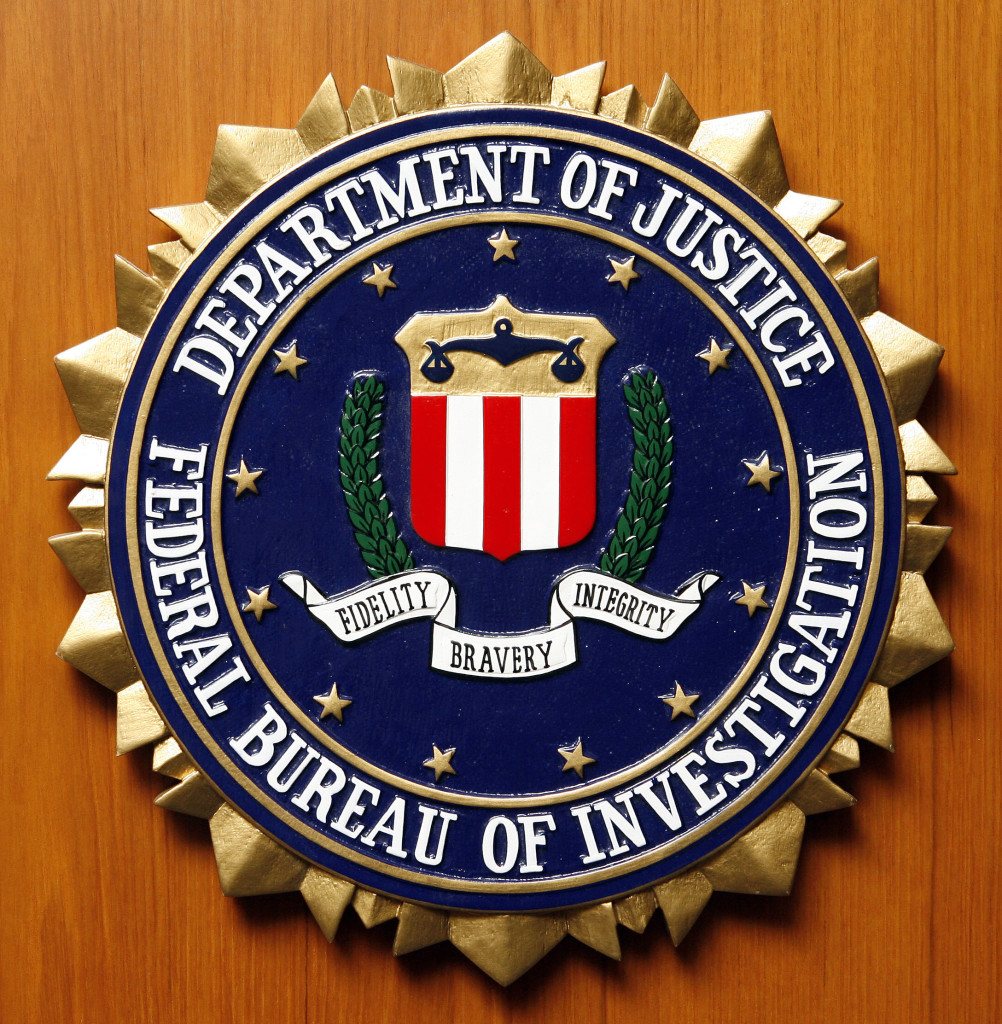
For at least four years, federal agents used “community outreach” meetings at mosques in Northern California as a guise to collect intelligence and catalog the identities, personal information, religious views and travel of religious leaders and congregants, according to new FBI documents obtained by the American Civil Liberties Union (ACLU).
According to the ACLU:
Some of these documents indicate that the FBI begins its “outreach” with questions about possible hate crimes against the Muslim community, but none of the documents appear connected to a mosque protection effort initiated after 9/11 by the FBI Civil Rights Unit to guard against anti-Muslim hate crimes.
The ACLU said many of the documents, which were written between 2004 and 2008, had been disseminated outside the FBI, making their way into the databases of other law enforcement agencies, “despite lack of information related to crime or terrorism.” None of the documents indicate that the FBI informed the Muslims they interviewed that the information was for intelligence purposes and would be recorded or disseminated, the rights group added.
“The FBI’s targeting of Muslim Americans for intelligence gathering was not connected to any evidence of criminality, but instead targeted an entire group based on religion,” ACLU attorney Julia Harumi Mass told The Los Angeles Times. She called the surveillance “an affront to religious liberty and equal protection of the law.”
Beyond concerns that the surveillance violates First Amendment rights, critics say using outreach as a guise to gather intelligence undermines efforts to engage Muslims in the fight against terror.
“By exploiting the good faith of Muslim groups and their members, the FBI is undermining community support for the government’s legitimate law enforcement activities,” ACLU policy counsel and former undercover FBI agent Mike German said in a statement.
Last fall, in a letter to John Brennan, President Obama’s counterterrorism adviser, the Senate Homeland Security Committee emphasized the importance of creating partnerships with American Muslims in countering extremism.
“Muslim Americans are critical to our success, and we should better empower communities to counter the Islamist ideology,” wrote committee leaders Joe Lieberman (I-Conn.) and Susan Collins (R-Maine).
In December 2011, the ACLU previously documented the FBI using community outreach for intelligence gathering [PDF], calling on the bureau to end the practice and disclose to community organizations what information is collected during meetings.
FBI Assistant Director Michael Kortan defended the bureau in a statement. “Since that time, the FBI has formalized its community relations program to emphasize a greater distinction between outreach and operational activities,” he said.
The ACLU’s report comes as the FBI concludes an inquiry into its counterterrorism training, after training materials made public by DangerRoom came under criticism for promoting stereotypes and bigoted information about Islam. As Spencer Ackerman explains, the six-month review — which revealed training materials that warned agents against shaking hands with “Asians” and said Arabs had “Jekyll & Hyde temper tantrums” — resulted in no disciplinary action for any instructors. He also notes that it did not mandate any retraining for agents who had been exposed to inappropriate materials.
“It’s stunning that these things could be said to members of our FBI in training,” Sen. Richard Durbin (D-Ill.), who is a member of the Senate Judiciary Committee, which oversees the FBI, told Ackerman. “It will not make them more effective in their work and won’t make America safer.”
Bonus: America and Muslims: By the Numbers
Ten years after 9/11, there’s an abundance of research on the makeup and attitudes of America’s Muslims. Drawing from a number of recent studies, polls and research,we compiled how the data breaks down.
Latest Documentaries


Related Stories

Top Secret America
Are We Safer?
Related Stories
Top Secret America
Are We Safer?
Explore
Policies
Teacher Center

Jon and Jo Ann Hagler on behalf of the Jon L. Hagler Foundation
Corey David Sauer
Koo and Patricia Yuen
FRONTLINE is a registered trademark of WGBH Educational Foundation. Web Site Copyright ©1995-2025 WGBH Educational Foundation. PBS is a 501(c)(3) not-for-profit organization.
Funding for FRONTLINE is provided through the support of PBS viewers and by the Corporation for Public Broadcasting, with major support from Ford Foundation, and The Fialkow Family Foundation. Additional funding is provided the Abrams Foundation, Park Foundation, John D. and Catherine T. MacArthur Foundation, Heising-Simons Foundation, and the FRONTLINE Trust, with major support from Jon and Jo Ann Hagler on behalf of the Jon L. Hagler Foundation, and Corey David Sauer, and additional support from Koo and Patricia Yuen. FRONTLINE is a registered trademark of WGBH Educational Foundation. Web Site Copyright ©1995-2026 WGBH Educational Foundation. PBS is a 501(c)(3) not-for-profit organization.