How Much Do Insurance Companies Profit After a Natural Disaster?
May 24, 2016
Share
In partnership with:

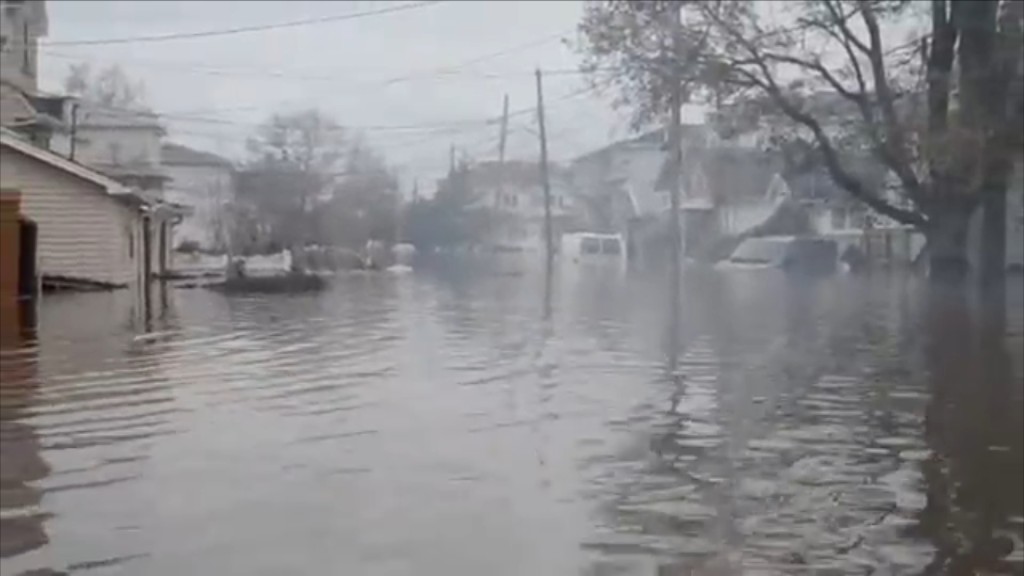
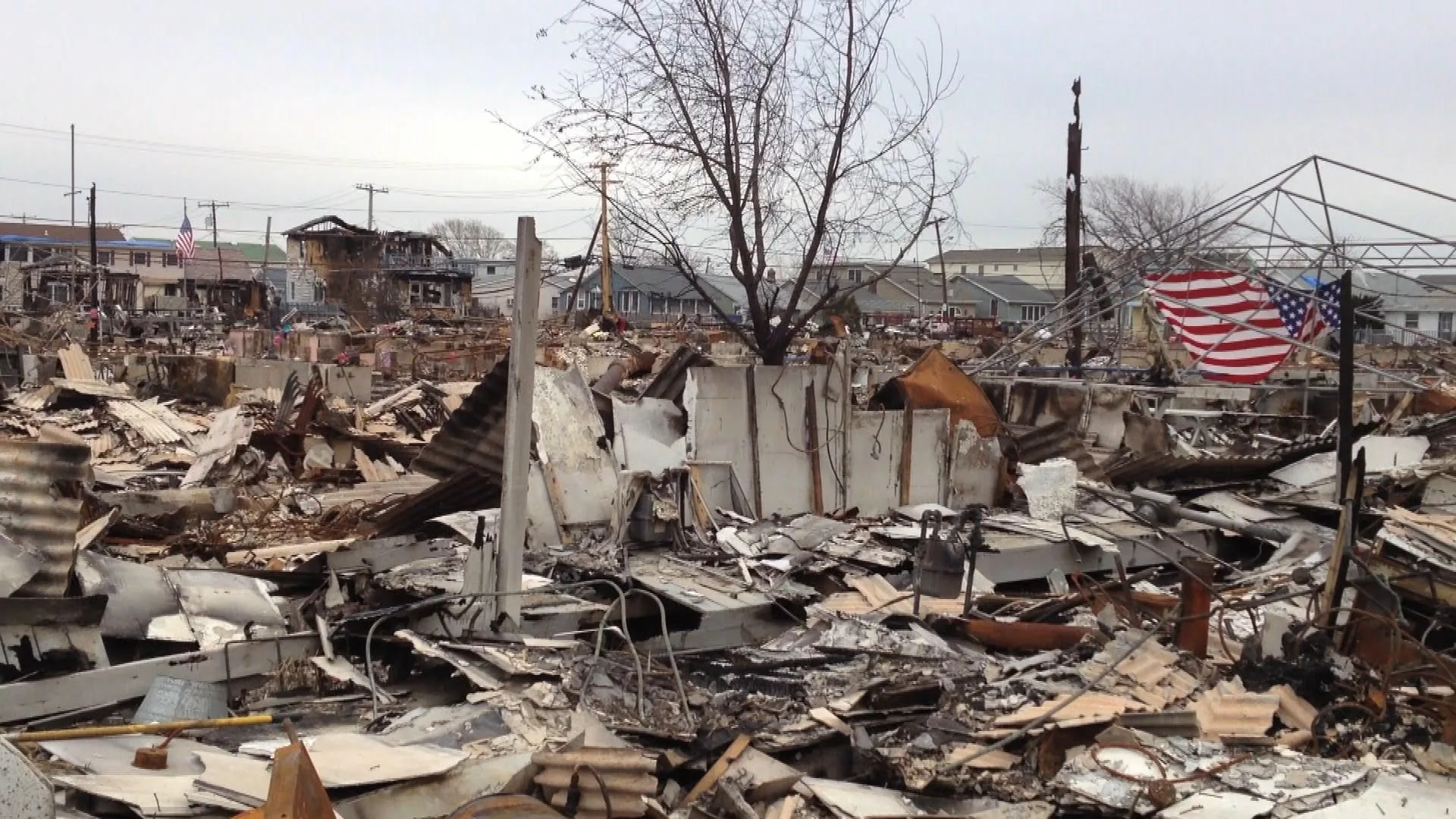
When Superstorm Sandy made landfall in October of 2012, the historic natural disaster killed more than 100 people and caused catastrophic damage along the Eastern seaboard.
More than three years later, thousands of survivors are still not home — despite billions of dollars spent on recovery efforts.
Where did those dollars go?
It’s a question that’s proven surprisingly difficult to answer, as FRONTLINE and NPR found while reporting Business of Disaster, a joint investigation that premieres today both on-air and online.
Nearly a year in the making, Business of Disaster puts two key parts of the disaster recovery system under scrutiny: the special housing aid Congress gives to local governments after major disasters, and the National Flood Insurance Program that’s run by the Federal Emergency Management Administration.
Unlike other forms of homeowners’ insurance, most flood insurance is run by a government program created decades ago, after the industry said floods were simply too risky to cover. Under the program, the government pays roughly 80 private insurance companies fees to sell policies and settle claims. The premiums from those policies are meant to cover losses, but when a disaster becomes too costly, it’s the taxpayers, not the insurers, who make up the difference. In recent years, the program has fallen deeply in debt. By the time Sandy struck, it was nearly $18 billion in the red.
Each year, the companies take about a third of the premiums they collect as fees for running the program. The rest goes to settling claims. Those fees come to about $1 billion a year, according to the investigation. But as FRONTLINE and NPR found, determining how much of that $1 billion translates into profit for the insurers is complicated. It’s a question that even the head of the flood program could not answer in an interview with Laura Sullivan of NPR.
“I’ve never looked at the book of business to understand their profits,” says Roy Wright, who took over as head of the NFIP in 2015, in the below excerpt from tonight’s documentary, adding that “you’d need to go specifically to the companies to understand those numbers.”
“That’s a big statement for somebody that is giving insurance companies more than in excess of a billion dollars a year, to not know what their profit structure would be on that,” a surprised Sullivan says to Wright.
The major insurance companies declined to be interviewed, but FRONTLINE and NPR spent months working to track their profit numbers down. What we found unfolds today and tomorrow in Business of Disaster. With storms expected to grow in frequency and intensity, this joint investigation is a must-watch and must-listen for millions of homeowners — and it raises troubling questions about disaster relief in America.
Watch Business of Disaster starting Tues., May 24 at 10 p.m. EST on FRONTLINE (check local PBS listings), and listen on May 24 on NPR’s All Things Considered and May 25 on Morning Edition.
Senior Digital Writer, FRONTLINE
Related Documentaries
Latest Documentaries



Related Stories
Business of Disaster
Related Stories
Business of Disaster
Explore
Policies
Teacher Center

Jon and Jo Ann Hagler on behalf of the Jon L. Hagler Foundation
Corey David Sauer
Koo and Patricia Yuen
FRONTLINE is a registered trademark of WGBH Educational Foundation. Web Site Copyright ©1995-2025 WGBH Educational Foundation. PBS is a 501(c)(3) not-for-profit organization.
Funding for FRONTLINE is provided through the support of PBS viewers and by the Corporation for Public Broadcasting, with major support from Ford Foundation, and The Fialkow Family Foundation. Additional funding is provided the Abrams Foundation, Park Foundation, John D. and Catherine T. MacArthur Foundation, Heising-Simons Foundation, and the FRONTLINE Trust, with major support from Jon and Jo Ann Hagler on behalf of the Jon L. Hagler Foundation, and Corey David Sauer, and additional support from Koo and Patricia Yuen. FRONTLINE is a registered trademark of WGBH Educational Foundation. Web Site Copyright ©1995-2026 WGBH Educational Foundation. PBS is a 501(c)(3) not-for-profit organization.