The Robot Defense: How Google Saw Privacy Before Snowden

May 20, 2014
Share
What’s the view from inside Google when it comes to your privacy?
Former California State Sen. Liz Figueroa got an answer in 2004, when she proposed legislation that would allow users to opt out of targeted advertising in free email services, like Gmail.
“We think it’s an absolute invasion of privacy. It’s like having a massive billboard in the middle of your home,” she told Reuters news agency at the time.
Figueroa was summoned to a meeting with the company’s founders, Sergey Brin and Larry Page, to address her concerns. As she retells the story in the below excerpt from the FRONTLINE investigation United States of Secrets, Brin tried to allay her concerns with a unique anecdote involving an imploding robot:
On its website, Google notes that “ad targeting in Gmail is fully automated, and no humans read your email.” Still, that promise has done little to ease concerns over how the web giant might be used to aid government surveillance.
“Gmail was a privacy disaster,” Chris Hoofnagle, director of Berkeley Center for Law & Technology, told FRONTLINE. “The moment you allow people to look at the content of your communication for some advertising purpose is the moment that the government is going to come along and say, ‘If you’re going to let them listen in for advertising, why don’t you let us listen in for anti-terrorism or for serious crimes?'”
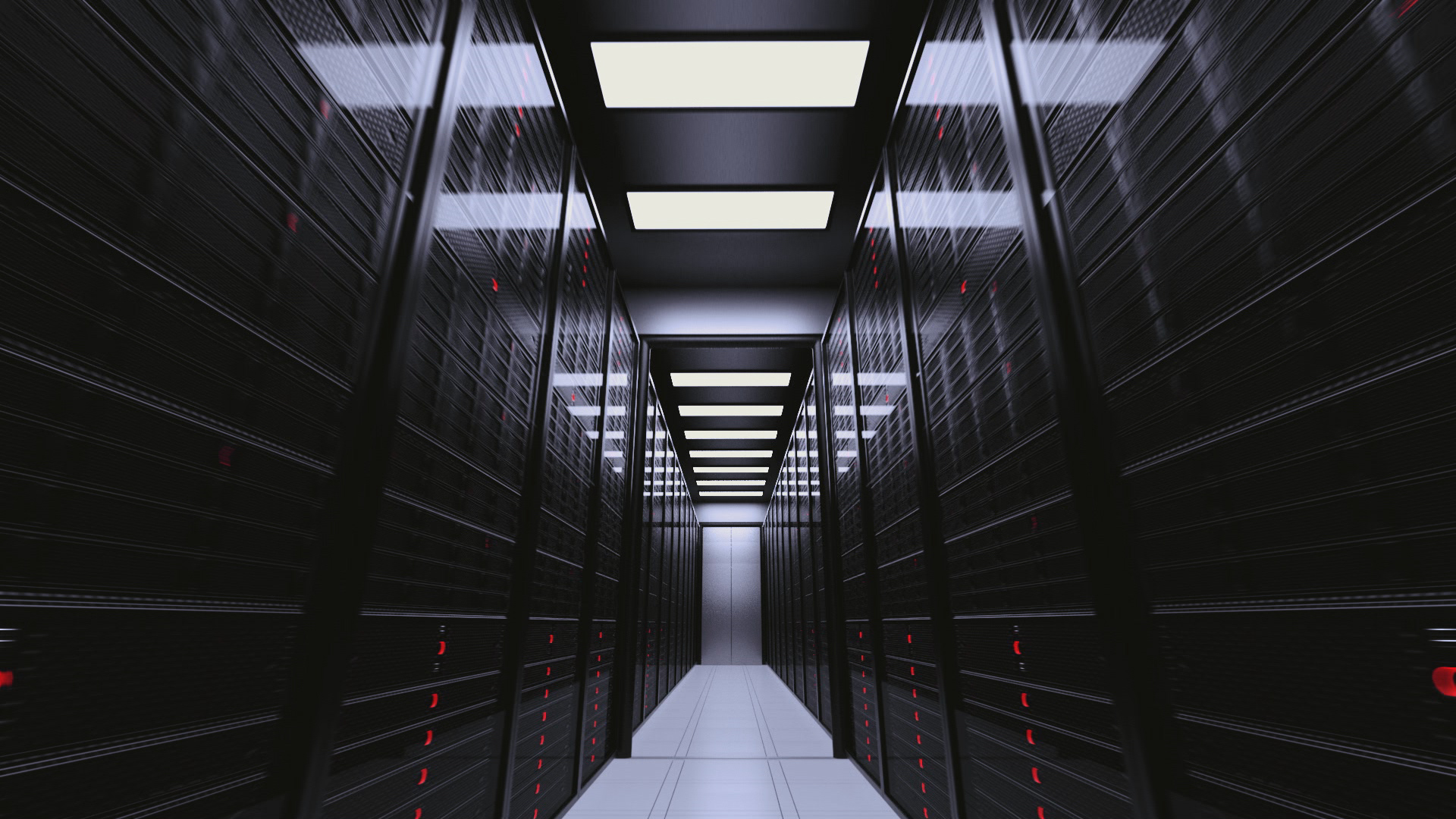
As the Edward Snowden leaks revealed, that’s exactly what happened. In December, The Washington Post reported that the NSA was secretly piggybacking on a Google-specific tracking tool in order to bolster its own surveillance capabilities. Four months earlier, the paper discovered that the agency was tapping directly into the central servers of nine leading U.S. Internet firms. Google was on the list, as was Facebook, Apple, Yahoo, YouTube, Microsoft, Skype, AOL and PalTalk.
In Part Two of United States of Secrets, FRONTLINE producer Martin Smith investigates Silicon Valley’s role in the dragnet. How did the nation’s biggest tech companies react when the government asked them to turn over data on millions of ordinary Americans? And what do companies like Google, Facebook and Yahoo really know about you?
The film premieres on-air and online tonight, starting at 10 p.m. EST (check local listings). You can watch part One of United States of Secrets, FRONTLINE told the inside story of how the U.S. came to spy on millions of ordinary Americans.

Former Digital Editor
Related Documentaries
Latest Documentaries







Related Stories
Related Stories
Explore
Policies
Teacher Center

Jon and Jo Ann Hagler on behalf of the Jon L. Hagler Foundation
Corey David Sauer
Koo and Patricia Yuen
FRONTLINE is a registered trademark of WGBH Educational Foundation. Web Site Copyright ©1995-2025 WGBH Educational Foundation. PBS is a 501(c)(3) not-for-profit organization.
Funding for FRONTLINE is provided through the support of PBS viewers and by the Corporation for Public Broadcasting, with major support from Ford Foundation, and The Fialkow Family Foundation. Additional funding is provided the Abrams Foundation, Park Foundation, John D. and Catherine T. MacArthur Foundation, Heising-Simons Foundation, and the FRONTLINE Trust, with major support from Jon and Jo Ann Hagler on behalf of the Jon L. Hagler Foundation, and Corey David Sauer, and additional support from Koo and Patricia Yuen. FRONTLINE is a registered trademark of WGBH Educational Foundation. Web Site Copyright ©1995-2025 WGBH Educational Foundation. PBS is a 501(c)(3) not-for-profit organization.