The State of America’s Middle Class in Eight Charts
July 9, 2013
Share
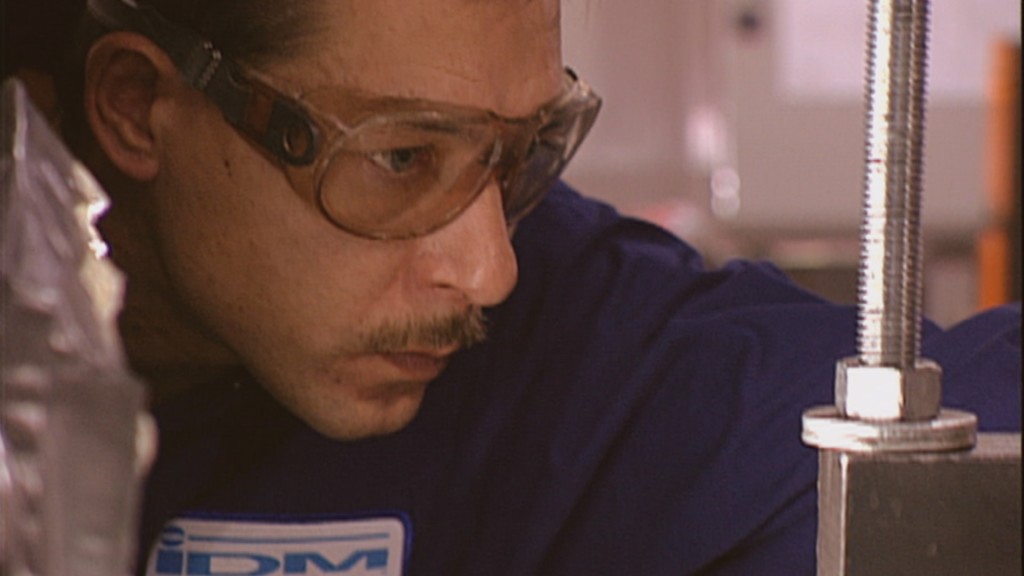
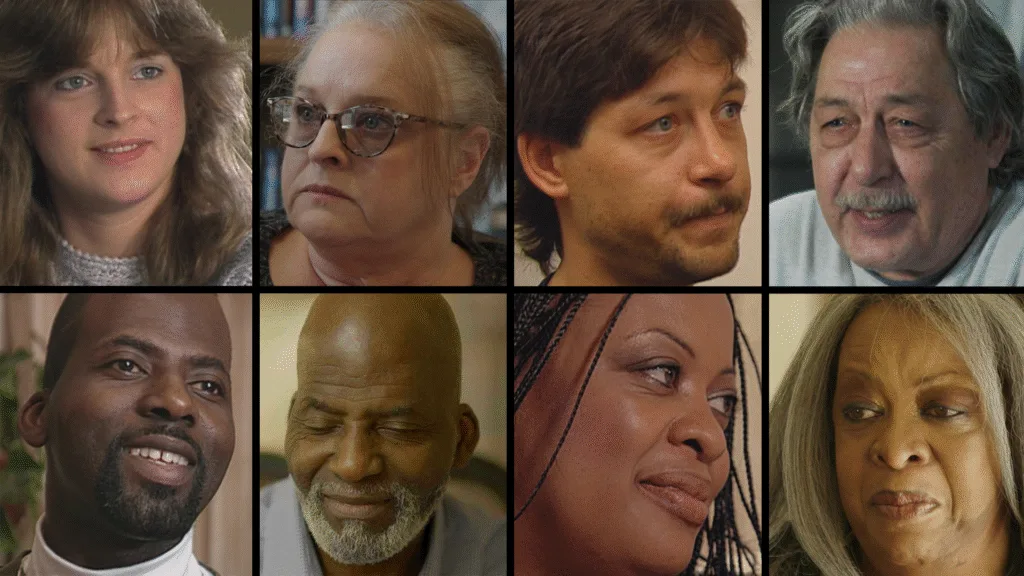
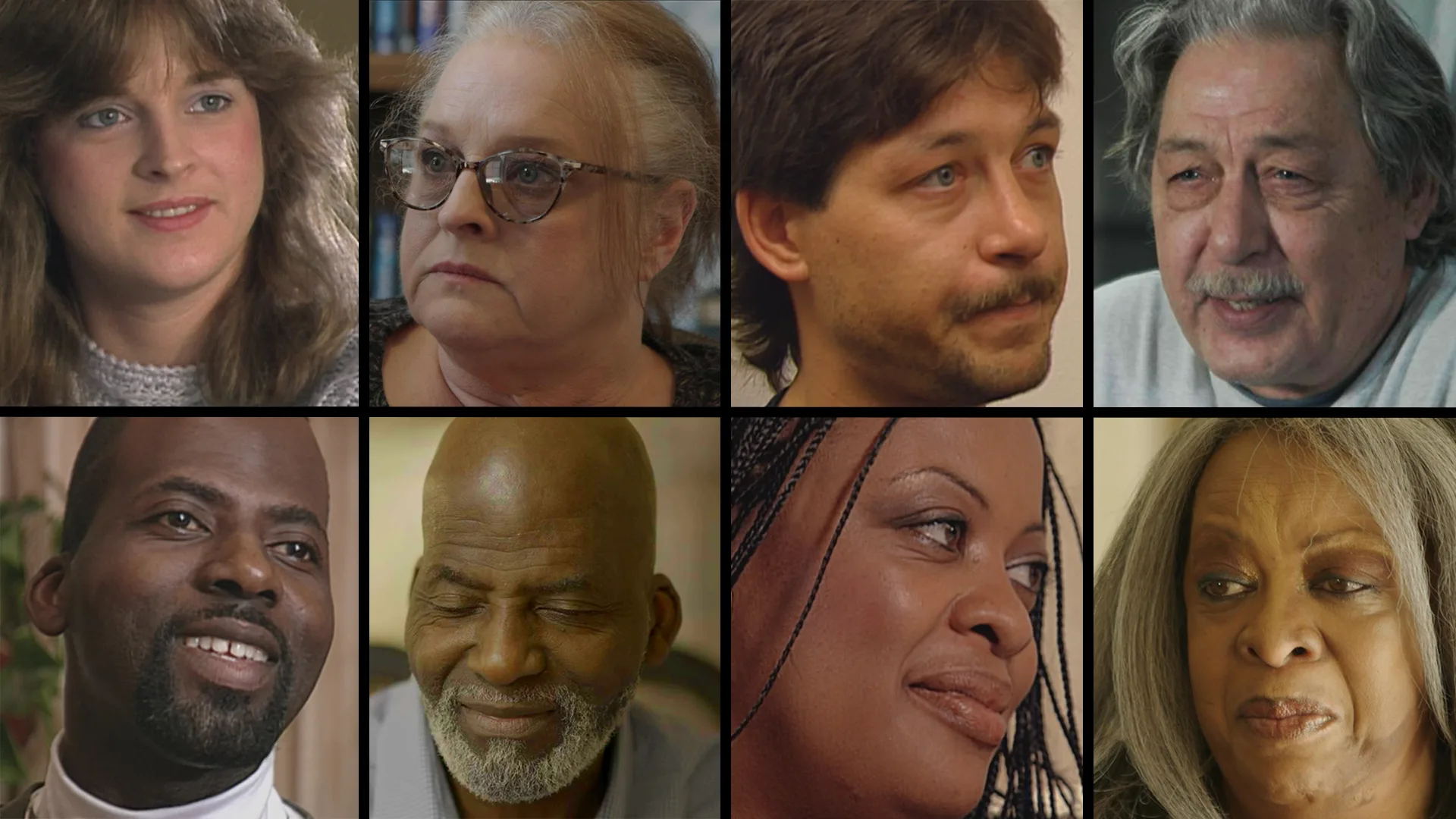
In 1992, both Tony and Claude had recently lost their manufacturing jobs. For the next 20 years, our cameras followed them and their families as they struggled to avoid poverty. When they could find work, it was often for longer hours, less pay and no benefits. Bills piled up, tensions rose and relationships became strained.
Of course, their story is far from unique. Over the last several decades, the middle class has struggled to keep pace with smaller paychecks, mounting debt and shrinking opportunities for steady work. The following eight charts offer a brief snapshot:
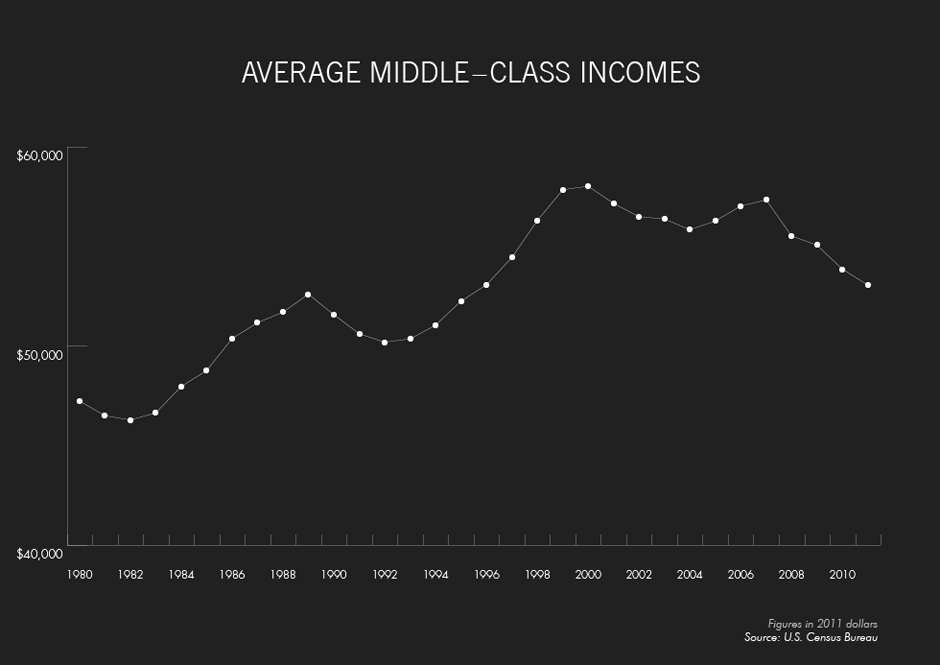
#1: Wages are down
Middle class incomes have shrunk 8.5 percent since 2000, after enjoying mostly steady growth during the previous decade. In 2011, the average income for the middle 60 percent of households stood at $53,042, down from $58,009 at the start of the millennium.
#2: Less income for the middle class
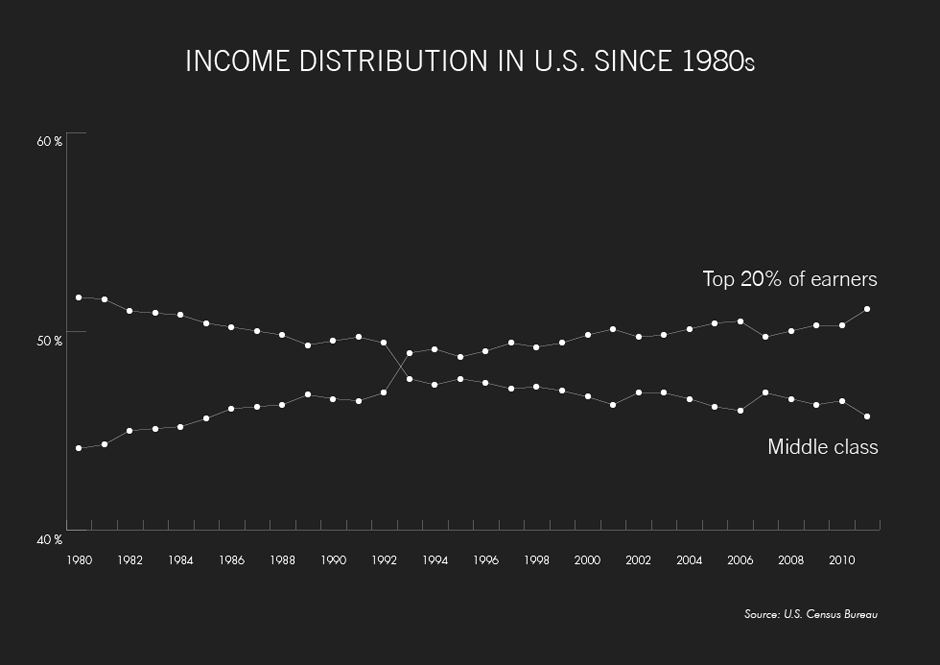
Partly as a result of lower pay, the middle class’s share of the nation’s total income has been falling. In 1980, the middle 60 percent of households accounted for 51.7 of the country’s income. By 2011, they were less than half. Meanwhile, the top fifth of households saw their slice of the national income grow 16 percent, to 51.1 percent from 44.1 percent.
#3: Union positions are shrinking
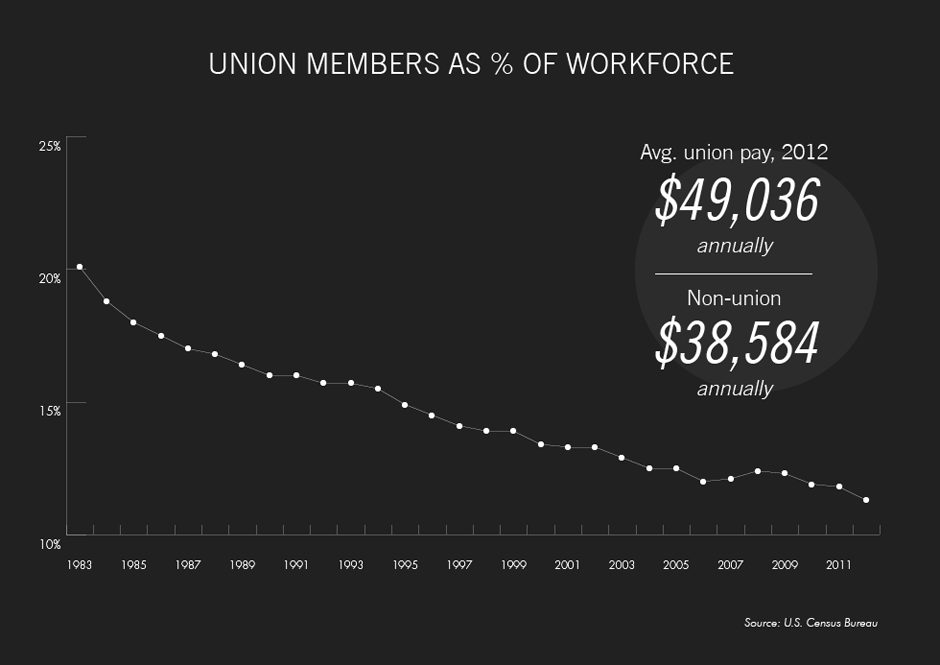
One factor behind the decline in income has been a drop-off in the number of workers earning union salaries. In 2012, the median salary for a unionized worker stood at roughly $49,000. The median pay for their non-union counterparts was just shy of $39,000. Since 1983, however, the share of the population belonging to a labor union has gone from one-in-five workers to just over one-in-ten.
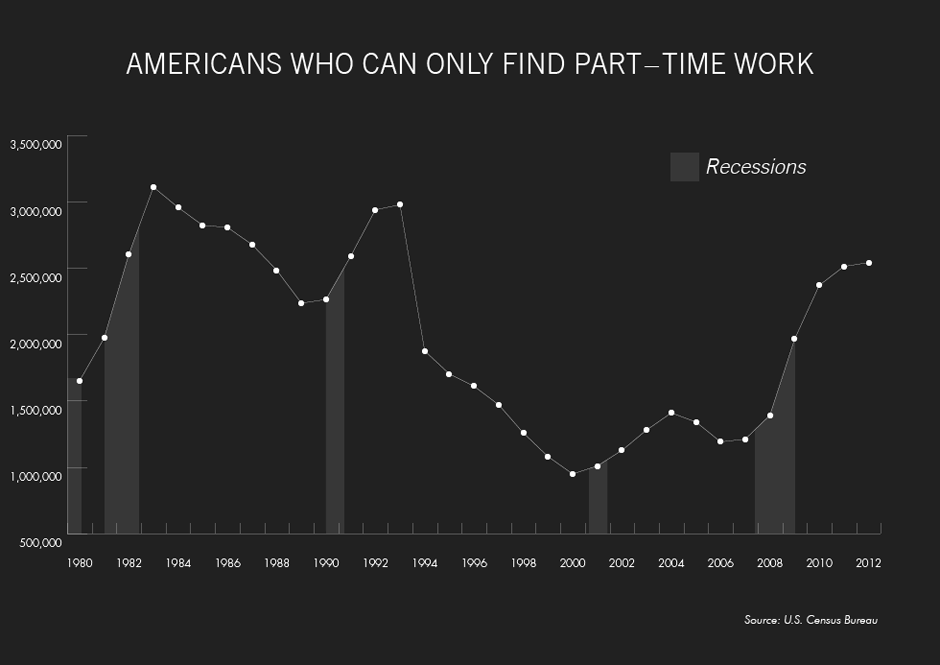
#4: More workers stuck in part-time jobs
A second factor weighing down pay is the rise in the number of Americans stuck in part-time jobs. In 2012, more than 2.5 million Americans worked part-time jobs because they could not find a full-time position, the most since 1993.
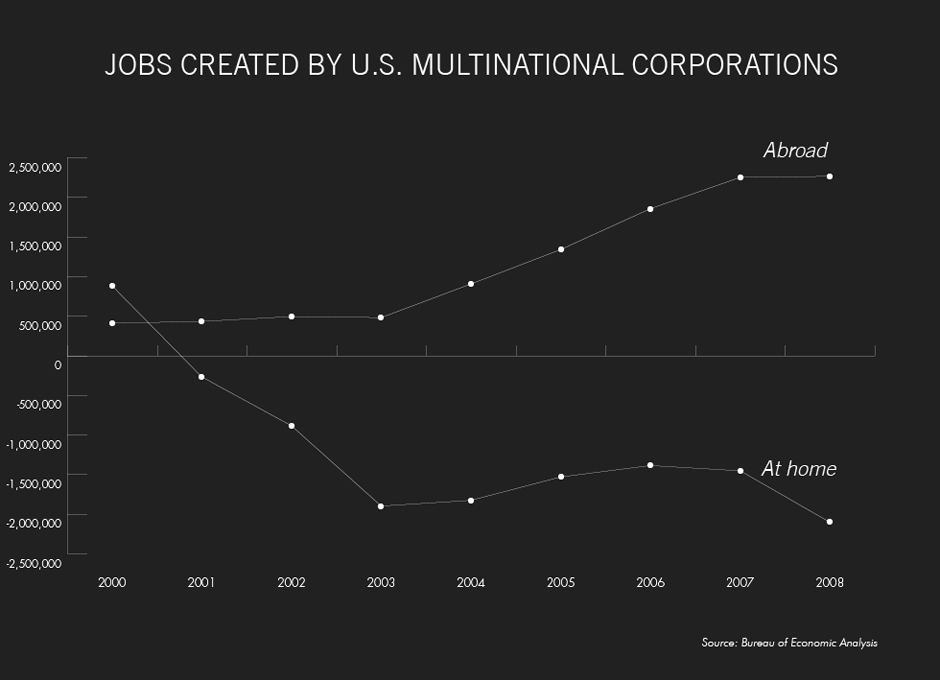
#5: Fewer jobs from U.S.-based multinationals
Part of the challenge for job seekers is that U.S. multinational corporations having been hiring less at home. These large, brand-name firms employ roughly a fifth of American workers, but from 1999 to 2008 they shed 2.1 million jobs in the U.S. while adding more than 2.2 million positions abroad.
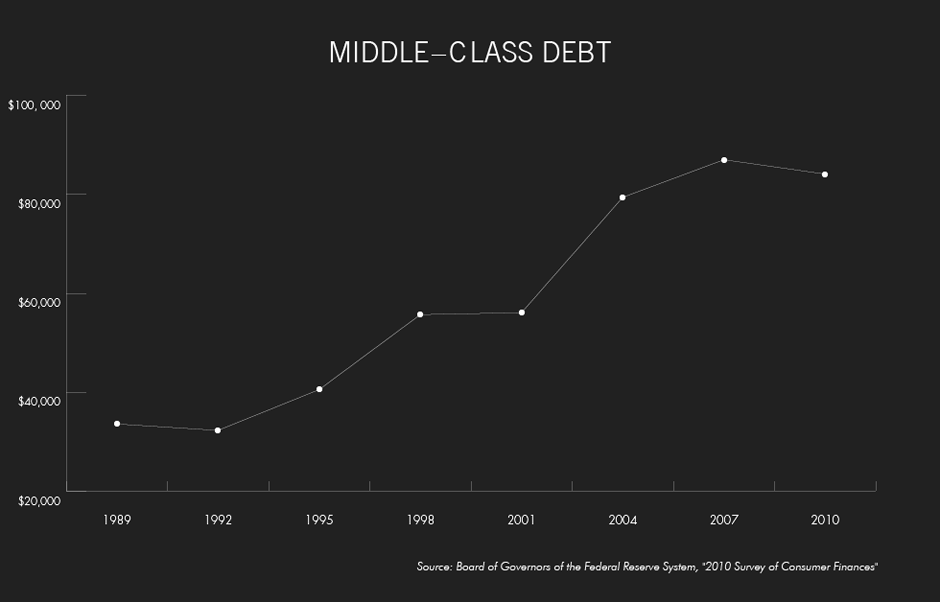
#6: Rising debt
Predictably, the economic pressures facing the middle class have left families deeper in debt. . In 1992, the median level of debt for the middle third of families stood at $32,200. By 2010, that figure had swelled to $84,000, an increase of 161 percent.
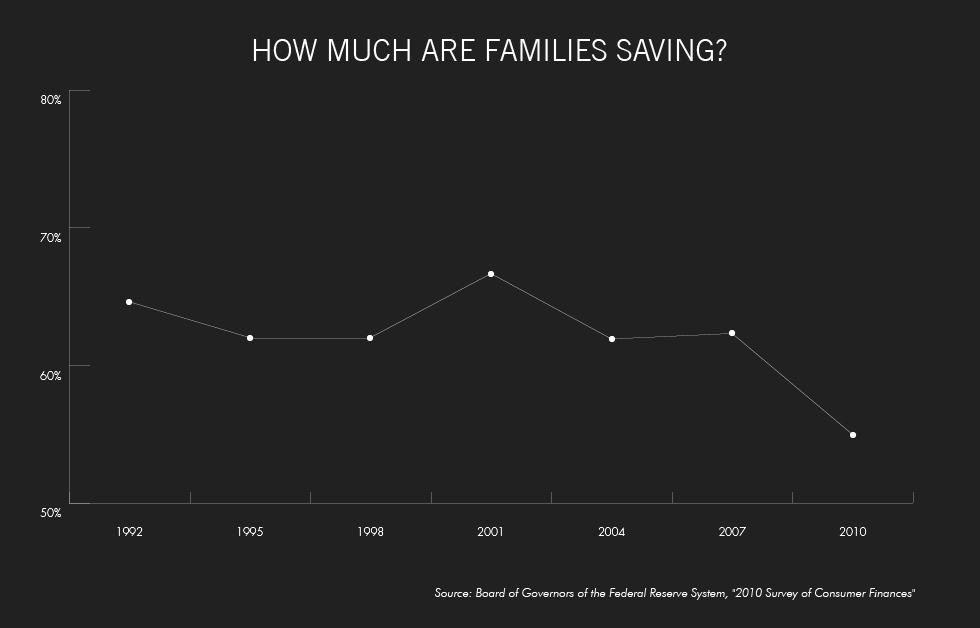
#7: Families are saving less
The rise in debt has meant fewer families have the ability to put away money for things like retirement or a child’s tuition bills. In 2001, more than two-thirds of middle class families said they were able to save money in the preceding year. By 2010, that figure was below 55 percent.
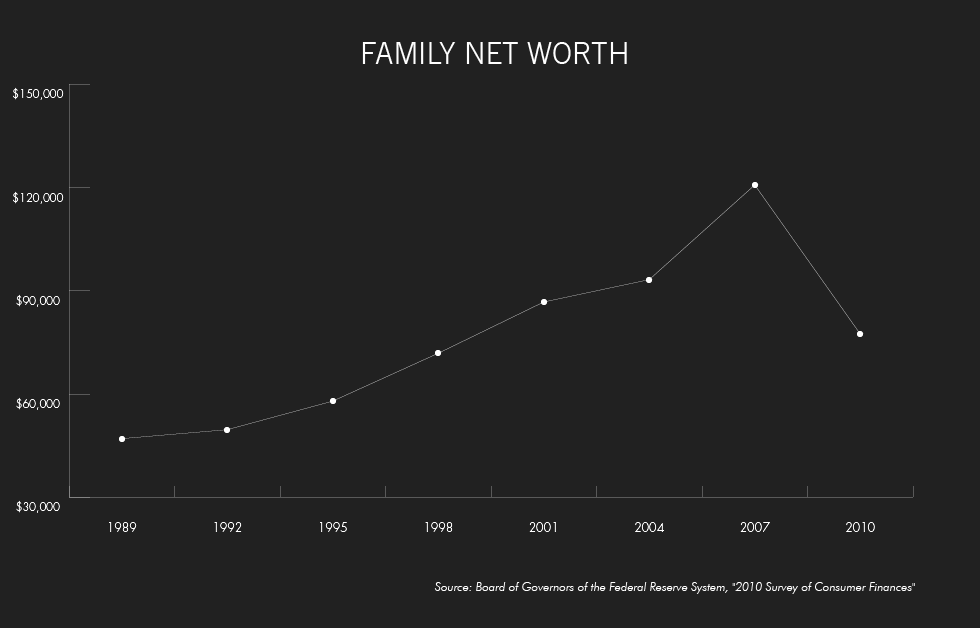
#8: Net worth has plunged
The impact on family net worth — the amount by which assets exceed liabilities — has been painful. In 2007, median net worth peaked at $120, 600. Then came the financial crisis, which pushed millions of Americans into joblessness and home foreclosure. By 2010, net worth had plummeted 36 percent, to $77,300.

Former Digital Editor
Related Documentaries
Latest Documentaries







Related Stories
Two American Families
Related Stories
Two American Families
Explore
Policies
Teacher Center

Jon and Jo Ann Hagler on behalf of the Jon L. Hagler Foundation
Corey David Sauer
Koo and Patricia Yuen
FRONTLINE is a registered trademark of WGBH Educational Foundation. Web Site Copyright ©1995-2025 WGBH Educational Foundation. PBS is a 501(c)(3) not-for-profit organization.
Funding for FRONTLINE is provided through the support of PBS viewers and by the Corporation for Public Broadcasting, with major support from Ford Foundation, and Fialkow Family Foundation. Additional funding is provided the Abrams Foundation, Park Foundation, John D. and Catherine T. MacArthur Foundation, Heising-Simons Foundation, and the FRONTLINE Trust, with major support from Jon and Jo Ann Hagler on behalf of the Jon L. Hagler Foundation, and Corey David Sauer, and additional support from Koo and Patricia Yuen. FRONTLINE is a registered trademark of WGBH Educational Foundation. Web Site Copyright ©1995-2026 WGBH Educational Foundation. PBS is a 501(c)(3) not-for-profit organization.