“Unprecedented” Number of Restrictive Voting Laws Being Introduced
May 31, 2012
Share
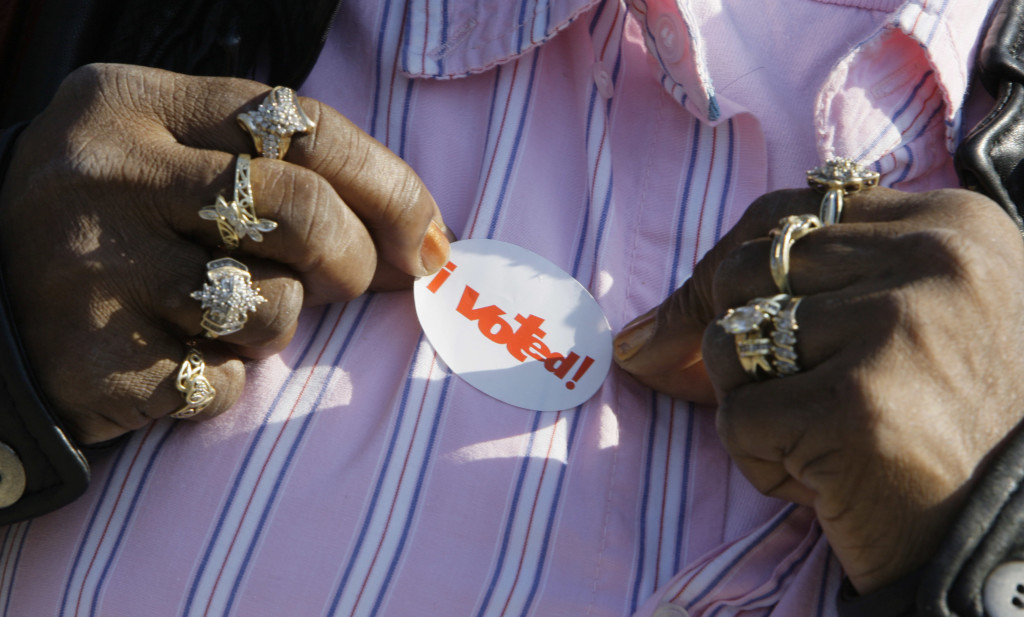
Nearly every state — 41 so far — has introduced some kind of restrictive voting legislation since the beginning of last year, and 18 have succeeded in passing laws, some of which could have a direct impact on the 2012 election, according to a recent analysis from the nonpartisan Brennan Center for Justice at New York University’s School of Law.
“This is almost unprecedented,” said Lawrence Norden, deputy director of the Brennan Center’s Democracy Program, which tracks voting laws and which published the analysis. “We have not seen this number of restrictive voting laws pass probably since the end of the 20th century. Certainly, this is the biggest rollback since the civil-rights era in terms of voting rights.”
The type of restriction varies by state: Some require voters to show photo ID or proof of citizenship, while others have introduced restrictions on voter registration, or early or absentee voting.
The shift toward more restrictive legislation began after the 2000 election was decided by a razor-thin margin, when political operatives realized that small shifts in voting laws could potentially alter the outcome of an election, according to Norden. “This realization that changing the rules can have an impact on results has politicized election administration in ways that you hadn’t seen in the U.S. in a very long time,” he said.
The breakdown is largely partisan: 12 of the 18 states that have passed new voter restrictions are controlled by Republicans. (Wisconsin’s law was recently ruled unconstitutional.)
The Justice Department is currently battling South Carolina and Texas in court over voting laws they’ve put forward. Attorney General Eric Holder told members of the Conference of National Black Churches earlier this week that the “sacred” right to vote was threatened by some of these laws.
According to the Brennan Center’s analysis:
- Five of the 10 states with the highest black turnout in 2008 have passed restrictive voting laws.
- Seven of the 12 states that have seen the biggest growth in the Latino population in the last decade have passed restrictive voting laws.
Most of the new laws were established ostensibly to curb voter fraud, which analysts say [PDF] is rare.
But supporters of these laws argue that voter fraud is a real problem. Reince Priebus, the chairman of the Republican National Committee, backed the laws in an editorial that cites multiple examples of alleged fraud. Voter ID laws, he said, were based on a “common-sense proposal [that] seeks to further preserve the sanctity of our elections by ensuring that only eligible voters vote in American elections.” (He stressed his concern about voter fraud more recently on Wednesday in Wisconsin.)
Hans von Spakovsky, a former Justice Department official under former President George W. Bush who is now at the Heritage Foundation, also rejects the idea that the laws are discriminatory. “The Justice Department and other outspoken opponents of voter ID should stop standing in the way and allow states to implement reasonable and demonstrably nondiscriminatory laws that are intended to ensure the integrity and security of the election process,” he recently wrote.
Von Spakovsky, Priebus and others have argued that the laws don’t present an undue barrier to minorities, in part because they say it shouldn’t be difficult to procure a photo ID. An April Rasmussen poll that found that 73 percent of likely voters agree.

Former Series Senior Editor, FRONTLINE
Latest Documentaries





Explore
Policies
Teacher Center

Jon and Jo Ann Hagler on behalf of the Jon L. Hagler Foundation
Corey David Sauer
Koo and Patricia Yuen
FRONTLINE is a registered trademark of WGBH Educational Foundation. Web Site Copyright ©1995-2025 WGBH Educational Foundation. PBS is a 501(c)(3) not-for-profit organization.
Funding for FRONTLINE is provided through the support of PBS viewers and by the Corporation for Public Broadcasting, with major support from Ford Foundation, and Fialkow Family Foundation. Additional funding is provided the Abrams Foundation, Park Foundation, John D. and Catherine T. MacArthur Foundation, Heising-Simons Foundation, and the FRONTLINE Trust, with major support from Jon and Jo Ann Hagler on behalf of the Jon L. Hagler Foundation, and Corey David Sauer, and additional support from Koo and Patricia Yuen. FRONTLINE is a registered trademark of WGBH Educational Foundation. Web Site Copyright ©1995-2026 WGBH Educational Foundation. PBS is a 501(c)(3) not-for-profit organization.