Watch a Cop’s Surprising Interaction with a Heroin User
February 23, 2016
Share
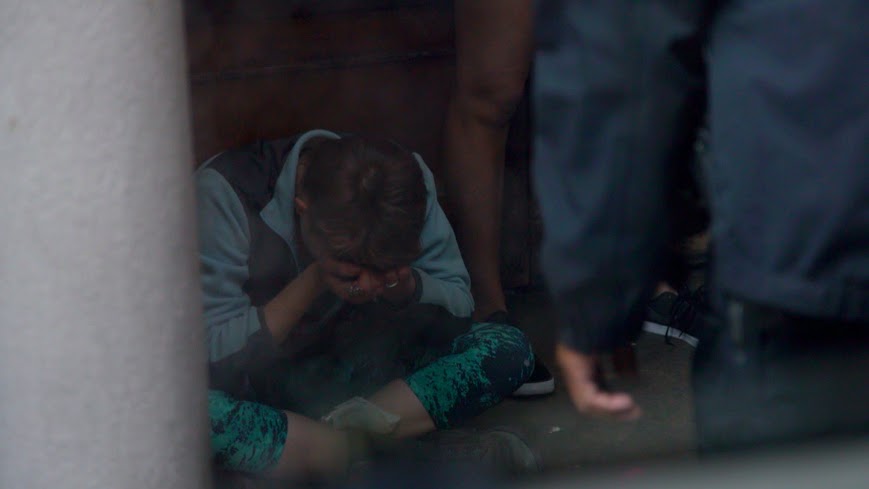
“Stop crying, babe. We don’t care … I’m not putting you in jail.”
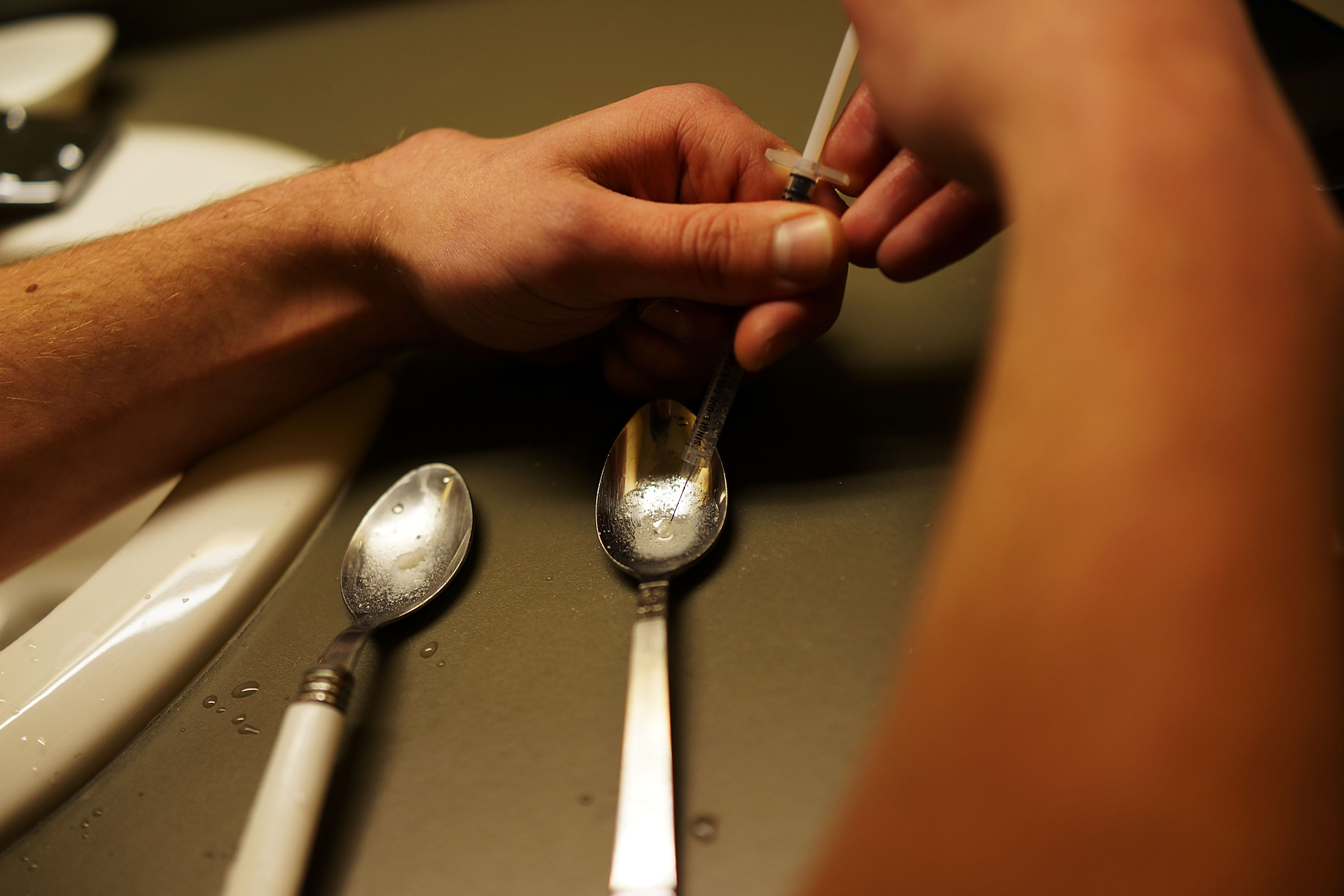
Those aren’t words you’d expect to hear from a police officer who has just encountered someone shooting heroin on the street.
But that’s exactly what Lt. Leslie Mills of the Washington State Department of Corrections says to a heroin user in a surprising scene from tonight’s new FRONTLINE documentary, Chasing Heroin — going on to offer the young woman the chance to eat something, get help and call her parents, rather than locking her behind bars.
This unexpected interaction reflects an about-face in the relationship between law enforcement and addicts that has characterized much of the country’s decades-long war on drugs, and is part of a bold experiment in Seattle called Law Enforcement Assisted Diversion, or LEAD.
Launched in 2011, LEAD gives police officers the discretion to either arrest low-level drug offenders, or divert them to counseling, social services or treatment.
“We could not incarcerate people or arrest our way out of the problem,” Mills tells FRONTLINE. As Chasing Heroin explores, more and more communities across the country are now thinking the same way, in the face of a heroin and prescription opioid crisis that has been called the worst drug epidemic in United States history.
“We wanted to investigate how we reached this potentially transformative moment, and explore what happens when addiction is treated like a public health crisis, not a crime,” says award-winning producer Marcela Gaviria, who previously chronicled U.S. drug policy in the acclaimed FRONTLINE series Drug Wars.
To make Chasing Heroin, Gaviria and her team, including correspondent Martin Smith, spent nearly a year investigating how the heroin epidemic as we know it came to be. In addition to raw, individual stories of addiction, the documentary paints a bigger picture about opioid abuse — investigating big pharma’s push to popularize opioid painkillers like Oxycontin, which are described by one interviewee as “heroin prep school.”
With toughness and clarity, tonight’s two-hour special investigates how pills and heroin began taking a toll in new communities, largely white and suburban; how the national conversation around addiction is being reframed from a criminal justice issue, to a public health one; and how cities across the country are now reimagining the war on drugs and experimenting with radical new approaches like LEAD.
Chasing Heroin begins Tues., Feb. 23, on PBS and online at a special time: 9 p.m. EST/8 p.m. CST. Check your local PBS station for details.
Senior Digital Writer, FRONTLINE
Related Documentaries
Latest Documentaries





Related Stories
Related Stories
Explore
Policies
Teacher Center

Jon and Jo Ann Hagler on behalf of the Jon L. Hagler Foundation
Corey David Sauer
Koo and Patricia Yuen
FRONTLINE is a registered trademark of WGBH Educational Foundation. Web Site Copyright ©1995-2025 WGBH Educational Foundation. PBS is a 501(c)(3) not-for-profit organization.
Funding for FRONTLINE is provided through the support of PBS viewers and by the Corporation for Public Broadcasting, with major support from Ford Foundation, and The Fialkow Family Foundation. Additional funding is provided the Abrams Foundation, Park Foundation, John D. and Catherine T. MacArthur Foundation, Heising-Simons Foundation, and the FRONTLINE Trust, with major support from Jon and Jo Ann Hagler on behalf of the Jon L. Hagler Foundation, and Corey David Sauer, and additional support from Koo and Patricia Yuen. FRONTLINE is a registered trademark of WGBH Educational Foundation. Web Site Copyright ©1995-2026 WGBH Educational Foundation. PBS is a 501(c)(3) not-for-profit organization.