Why Hasn’t Syria’s Assad Been Labeled A War Criminal?

February 29, 2012
Share
Syria’s embattled president Bashar al-Assad could fit the category of a war criminal, Secretary of State Hillary Clinton said yesterday. But officially designating him one, she added, could “complicate” options for persuading him to step down from power.
She made the comments during a Senate Appropriations subcommittee hearing yesterday in response to Sen. Lindsey Graham (R-S.C.), who asked if Assad “should be viewed by the international community as a war criminal.”
“I think based on definitions of war criminal and crimes against humanity, there would be an argument to be made that he would fit into that category,” she responded. “I also think from long experience that that can complicate the resolution of a difficult, complex situation because it limits options perhaps to persuade leaders to step down from power.”
Charging and prosecuting individuals in the International Criminal Court (ICC), which is tasked with prosecuting the most senior leaders accused of crimes against humanity, is no smooth or fast feat. Ten years after its creation, the ICC has yet to deliver its first verdict, which it announced today will happen soon in the case against a Congolese militia leader.
Bringing an investigation of war crimes in Syria to the ICC is also complicated by the fact that, according to the Associated Press, “Damascus does not recognize the court’s jurisdiction and the Security Council has not referred the case to the court.” Both Russia and China have twice now vetoed U.N. resolutions aimed at addressing the crackdown.
Last week a panel of independent U.N. investigators released a report concluding that the Syrian state has committed “gross human right violations” amounting to crimes against humanity. The investigators gave a list of commanding officers and officials responsible for the crimes to the U.N. High Commissioner for Human Rights and called for their prosecution.
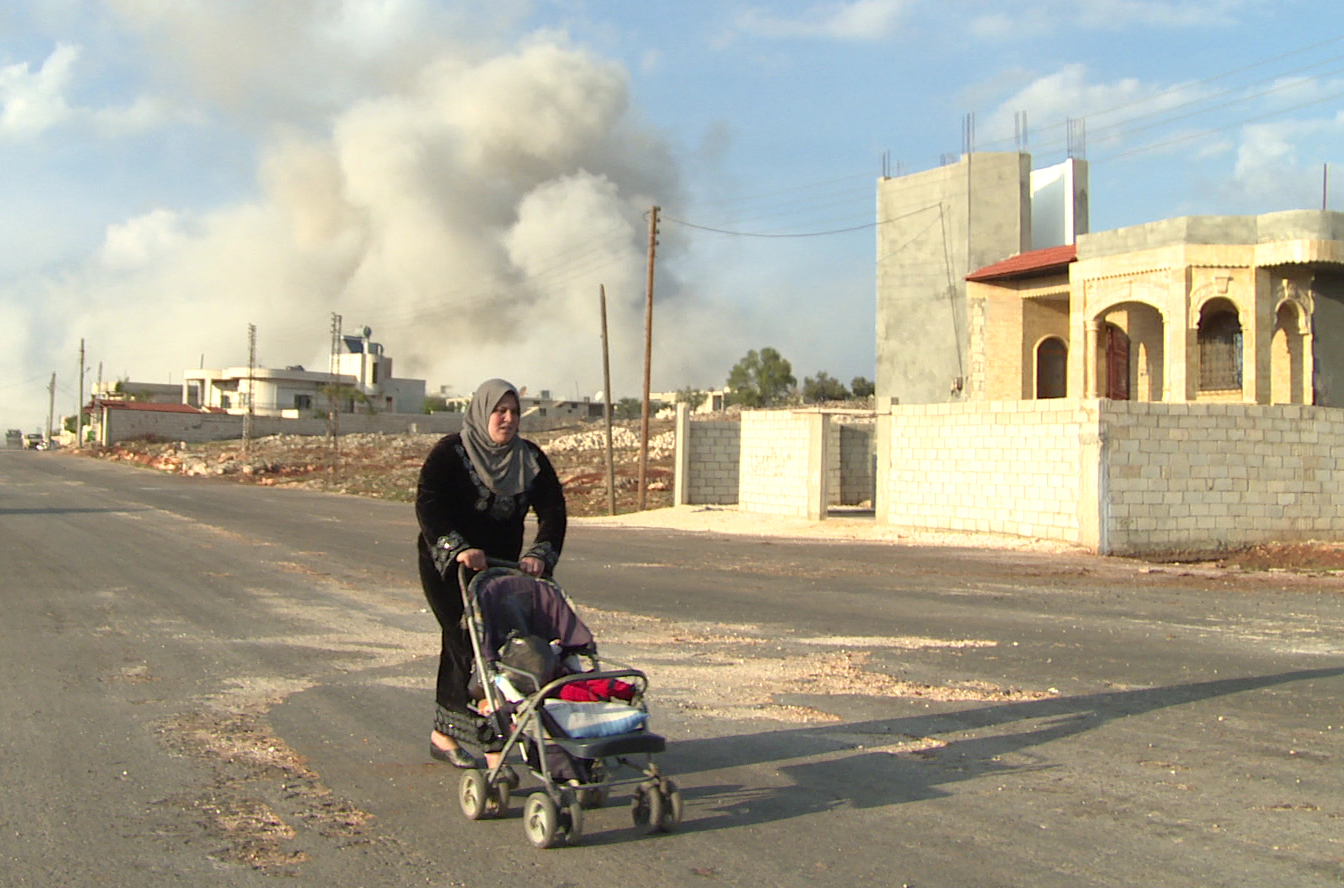
The U.N. estimates more than 7,500 people have been killed in Syria since the uprising broke out nearly a year ago. Today, Syrian troops moved to retake the central rebel-held city of Homs, where activists say a brutal military assault has killed scores of civilians. A Syrian official told the AP the besieged enclave of Baba Amr within the city would be “cleaned” within hours.
Bonus: Anger and Despair in Video Messages from Homs
“Are we animals dying here? Are we supposed to live like this our whole lives? This is Syria, Homs. This is one neighborhood, Baba Amr. Imagine what’s going on all over Syria then,” Danny Abdul Dayem, a British citizen of Syrian descent, said in a video he recorded from the besieged Syrian city of Homs. Watch his and other video messages from Homs at The New York Times‘ Lede blog.
Related Documentaries



Latest Documentaries







Related Stories
Obama at War
Syria Behind the Lines
The Regime Responds

The Battle for Syria
Syria Undercover

The Regime
Related Stories
Obama at War
Syria Behind the Lines
The Regime Responds
The Battle for Syria
Syria Undercover
The Regime
Explore
Policies
Teacher Center

Jon and Jo Ann Hagler on behalf of the Jon L. Hagler Foundation
Corey David Sauer
Koo and Patricia Yuen
FRONTLINE is a registered trademark of WGBH Educational Foundation. Web Site Copyright ©1995-2025 WGBH Educational Foundation. PBS is a 501(c)(3) not-for-profit organization.
Funding for FRONTLINE is provided through the support of PBS viewers and by the Corporation for Public Broadcasting, with major support from Ford Foundation, and The Fialkow Family Foundation, as part of the Plum Bush Foundation. Additional funding is provided the Abrams Foundation, Park Foundation, John D. and Catherine T. MacArthur Foundation, Heising-Simons Foundation, and the FRONTLINE Trust, with major support from Jon and Jo Ann Hagler on behalf of the Jon L. Hagler Foundation, and Corey David Sauer, and additional support from Koo and Patricia Yuen. FRONTLINE is a registered trademark of WGBH Educational Foundation. Web Site Copyright ©1995-2025 WGBH Educational Foundation. PBS is a 501(c)(3) not-for-profit organization.