Why Is Julian Assange Seeking Asylum in Ecuador?
June 20, 2012
Share
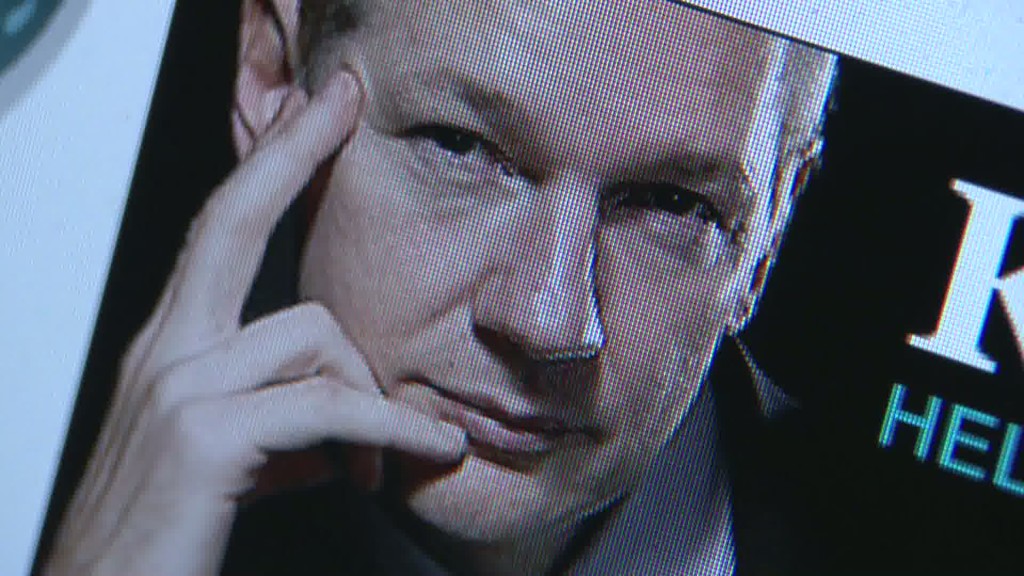
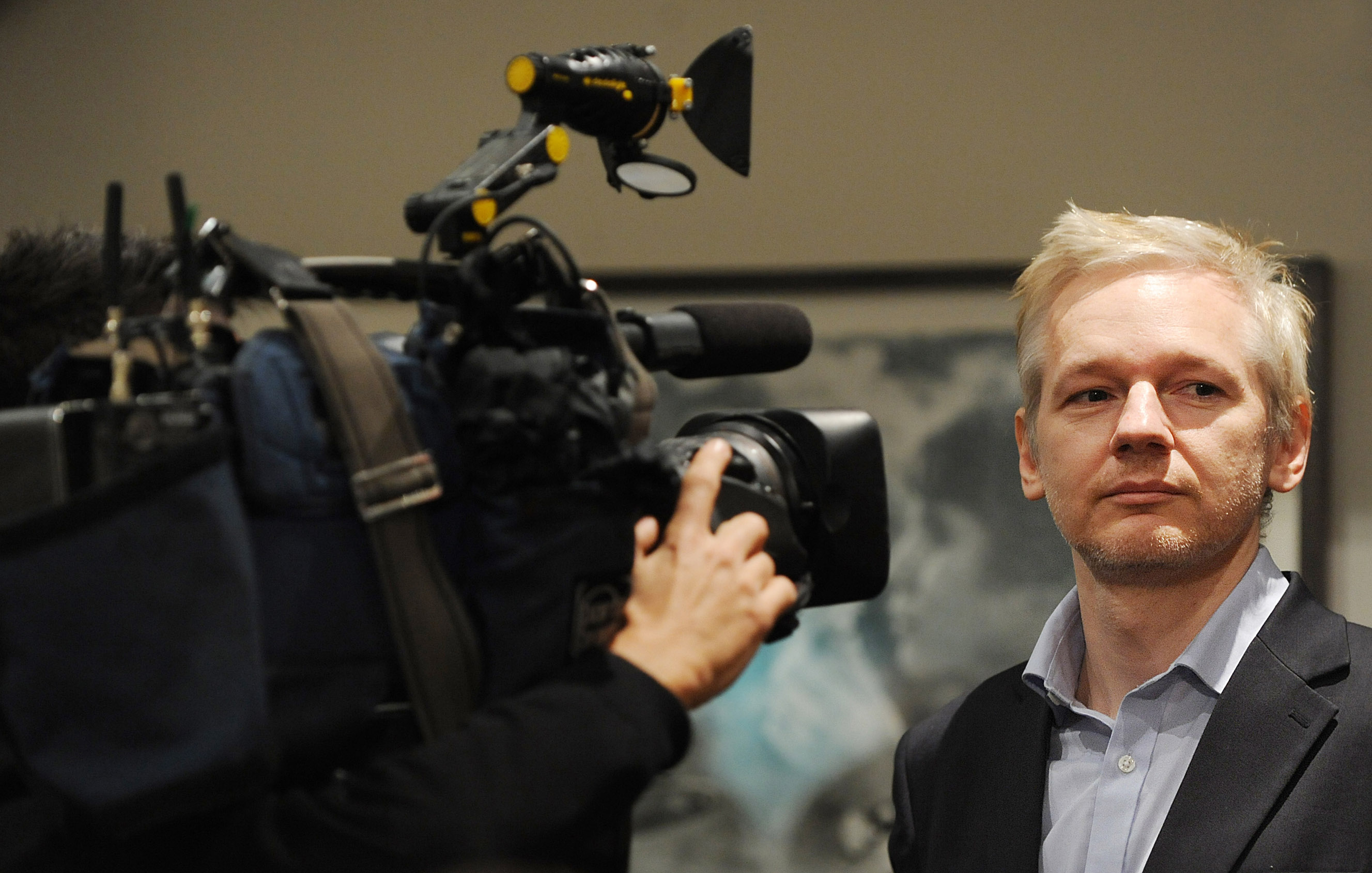
Julian Assange, the founder of WikiLeaks, is believed to be hunkered down at Ecuador’s embassy in London, seeking asylum in the South American nation. This move comes after the leaker lost a long court battle to avoid extradition to Sweden to face sexual assault allegations.
Assange claims he’d be under threat if he lands in Sweden, in part because he fears the Swedish government might then turn him over to American authorities to face espionage charges related to the leaking of hundreds of thousands of classified diplomatic cables. Under such charges, he says, he could face the death penalty.
Details of Assange’s asylum bid are changing by the minute; follow The Guardian’s live blog for coverage events as they happen.
But one of the more interesting questions related to today’s surprising turn of events is: Why Ecuador? To answer this question you have to go back to a (now much-watched) interview Assange did with the country’s president, Rafael Correa on his TV talk show broadcast on a Kremlin-funded Russian TV station:
The AP reports that Assange was first offered entrance into Ecuador during that interview, during which Assange and Correa discussed U.S policy in Latin America and why Correa kicked out Heather Hodges, the U.S. ambassador to Ecuador, after the publication of the diplomatic cables.
“Your WikiLeaks have made us stronger,” Correa told Assange, and described how his country’s media “reached an agreement not to air their dirty linen in public” for fear of being discredited.
But Ecuador isn’t exactly a haven for freedom of the press: The country was featured in a September 2011 Committee to Protect Journalists report that called out President Correa for turning Ecuador into “one of the hemisphere’s most restrictive nations for the press.” It was ranked 104th out of 179 countries in Reporters Without Borders press freedom index for 2011-12.
And last year, the part owner of a newspaper in Ecuador sought asylum in at Ecuador’s Panamanian Embassy after Correa levied a $40 million fine and a three-year prison sentence against him and another owner for defamation, according to The Wall Street Journal. The president later forgave the fine and punishment.
The diplomatic cables WikiLeaks published in 2010 also offer insights into the type of environment Assange could enter, reports The Guardian. In one, from 2009, Ambassador Hodges wrote that “over the past year the government has launched three ‘public’ media outlets that in theory report on citizens’ business, but in practice mainly report favorably on government actions.”
If asylum is denied, and Assange leaves the embassy, he will likely face re-arrest in Britain for violating his bail conditions. He is scheduled to be extradited to Sweden by midnight on July 7.
Related Documentaries
Latest Documentaries
Related Stories
WikiSecrets
Related Stories
WikiSecrets
Explore
Policies
Teacher Center

Jon and Jo Ann Hagler on behalf of the Jon L. Hagler Foundation
Corey David Sauer
Koo and Patricia Yuen
FRONTLINE is a registered trademark of WGBH Educational Foundation. Web Site Copyright ©1995-2025 WGBH Educational Foundation. PBS is a 501(c)(3) not-for-profit organization.
Funding for FRONTLINE is provided through the support of PBS viewers and by the Corporation for Public Broadcasting, with major support from Ford Foundation, and Fialkow Family Foundation. Additional funding is provided the Abrams Foundation, Park Foundation, John D. and Catherine T. MacArthur Foundation, Heising-Simons Foundation, and the FRONTLINE Trust, with major support from Jon and Jo Ann Hagler on behalf of the Jon L. Hagler Foundation, and Corey David Sauer, and additional support from Koo and Patricia Yuen. FRONTLINE is a registered trademark of WGBH Educational Foundation. Web Site Copyright ©1995-2026 WGBH Educational Foundation. PBS is a 501(c)(3) not-for-profit organization.