The Long March of Newt Gingrich: Part Three
December 20, 2011
Share
“He tended to politicize everything then, and he — you know, this brash, very capable, cocky, very self-confident. … The French have a [word] engagement. He loved engagement, to engage. He loved combat, intellectual combat. He still does.”
— Pierre Laurent, Newt’s thesis adviser at Tulane University
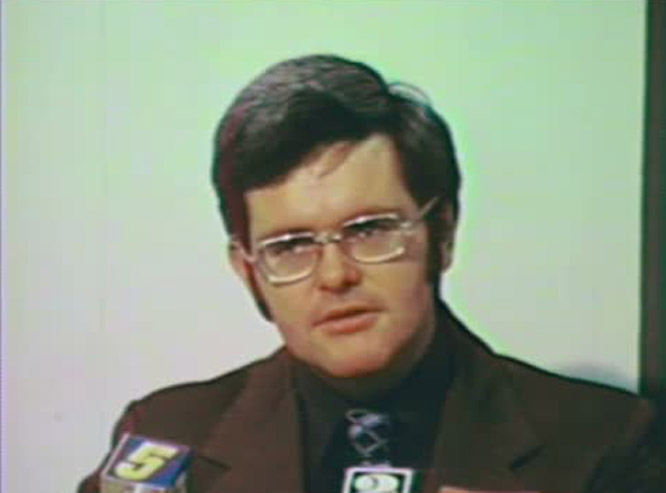
By the mid-1960s, Newt was living with his wife and two little girls in New Orleans, working on a PhD in history at Tulane. The 1960s pushed him towards the liberal end of the Republican Party; as a professor, he became a devotee of futurist Alvin Toffler, taught a course at the Free University, helped organize a protest against censorship and worked on Nelson Rockefeller’s campaign against his old hero Richard Nixon.
Newt’s academic colleagues were surprised when he left Tulane to take a teaching job at West Georgia College, but his decision was calculated: Georgia’s sixth congressional district would be the perfect place from which to launch his political career.
In 1974, Newt launched his first campaign, running as a liberal Republican reformer, embraced by environmentalists, against Democratic incumbent Jack Flynt, who was entrenched in the Southern Democratic establishment. Newt lost the election, but won 49 percent of the vote. He lost a second close race against Flynt in 1976, swept aside in Jimmy Carter’s southern landslide.
By 1978, Jack Flynt had retired; his new opponent was moderate Democrat Virginia Shapard. Newt called in professional consultants from Washington, recasting himself as a conservative and launching a ruthless campaign. He outlined his new vision of politics in a speech to College Republicans:
The great strength of the Democratic party in my lifetime has been that it has always produced young, nasty people who had no respect for their elders. Jimmy Carter, who, at 51 thought that Hubert Humphreys at 66 was over the hill. Jody Powell and Hamilton Jordan, who at 29 and 30 thought they could beat the pros. And I think that one of the great problems we have in the Republican Party is that we don’t encourage you to be nasty. We encourage you to be neat, obedient, and loyal and faithful and all those Boy Scout words, which would be great around the camp fire, but are lousy in politics.
Gingrich relentlessly attacked Shapard, accusing her of coddling welfare cheaters and exploiting her announcement that if elected, she would commute to Washington by having his wife Jackie write a letter to voters saying that Newt was a good husband who would take his family with him to D.C. At the time, their marriage was falling apart and several campaign workers say Newt was seeing other women. A little more than a year after the election, Newt demanded a divorce. Six months later he married his second wife, Marianne Ginther.
Bonus: Vanity Fair‘s Gail Sheehy interviewed Gingrich and his family for “The Inner Life of Newt Gingrich,” a September 1995 profile of Newt’s wars, his women and his contract with himself.
Produced by Steve Talbot, The Long March of Newt Gingrich was a co-production with the Center for Investigative Reporting.

Former Managing Editor, Digital, FRONTLINE
Support provided by:
Learn More
Related Documentaries
Latest Documentaries










Related Stories
The Long March of Newt Gingrich
Related Stories
The Long March of Newt Gingrich
Explore
Policies
Teacher Center

Jon and Jo Ann Hagler on behalf of the Jon L. Hagler Foundation
Corey David Sauer
Koo and Patricia Yuen
FRONTLINE is a registered trademark of WGBH Educational Foundation. Web Site Copyright ©1995-2025 WGBH Educational Foundation. PBS is a 501(c)(3) not-for-profit organization.
Funding for FRONTLINE is provided through the support of PBS viewers and by the Corporation for Public Broadcasting, with major support from Ford Foundation, and Fialkow Family Foundation. Additional funding is provided the Abrams Foundation, John D. and Catherine T. MacArthur Foundation, Park Foundation, Heising-Simons Foundation, and the FRONTLINE Trust, with major support from Jon and Jo Ann Hagler on behalf of the Jon L. Hagler Foundation, and Corey David Sauer, and additional support from Koo and Patricia Yuen. FRONTLINE is a registered trademark of WGBH Educational Foundation. Web Site Copyright ©1995-2026 WGBH Educational Foundation. PBS is a 501(c)(3) not-for-profit organization.