What’s the Status of the Dodd-Frank Financial Overhaul?
May 10, 2012
Share
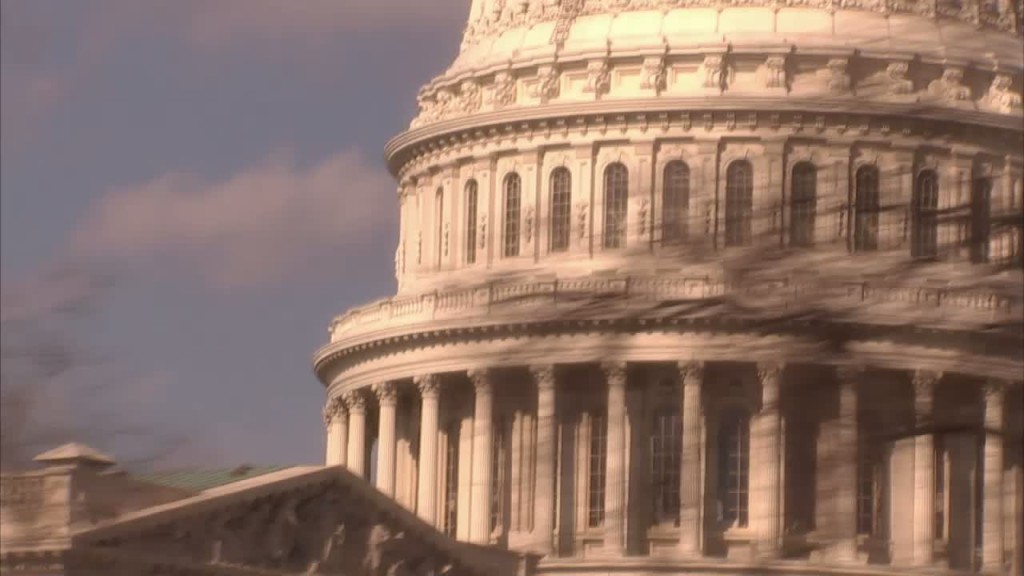
In July 2010, President Barack Obama signed what became known as the Dodd-Frank bill, aimed at overhauling the financial regulatory system and ending the risky practices that led to the 2008 crisis.
The legislation — more than 2,300 pages long — included some rules against risk-taking by banks, new consumer protections and additional powers for regulators. Some aspects of the overhaul — including the creation of the Consumer Financial Protection Bureau (CFPB) and the Financial Stability Oversight Council (FSOC); increasing capital requirements for banks; making executive compensation more transparent; and capping the fees companies can charge on debit card transactions — have already gone into effect.
But much of the rulemaking is ongoing, and progress has been slow. Critics warn that as powerful industry lobbyists wield their influence, the final regulations won’t go far enough. As Jared Bernstein, former economic adviser to Vice President Biden, told FRONTLINE:
I think the weakness is that in order to get it over legislative hurdles, there were so many I’s and T’s left un-dotted and crossed that big decisions that are actually of great importance are still being made. And they’re being made in a climate where they’re not necessarily under public scrutiny, where the lobbyists have a chance to get in and sway things their way.
Here’s a closer look at three Dodd-Frank provisions currently under scrutiny in Washington DC.
The Volcker Rule
A centerpiece of the reform bill is a rule proposed by former Federal Reserve chief Paul Volcker that would bar banks from proprietary trading — or making trades for their own benefit — using customer funds.
After extensive industry lobbying by the banks, which see a threat to some of their most profitable activities, the rule has ballooned from 10 pages to almost 300 pages of exemptions and loopholes. After initial fears that the lobbying would delay the completion of the rules, some officials say it could could be completed by September or even as early as this summer. (The legislation set a deadline of July 2012.)
Banks are concerned about the Volcker Rule’s possible constraints on market-making; there’s also a lot of confusion over when the rules go into effect.
Dig Deeper:
- Volcker Rule Comments: The Good, the Bad, and the Ridiculous — CNN Money looks at some of the more than 16,000 comments submitted to the SEC about the Volcker Rule, including a 20-page letter by Credit Suisse (PDF) warning the rule could result in job losses; a 54-page letter by Senators Jeff Merkley (D-Ore.) and Carl Levin (D-Mich.), who authored the rule, this letter by Robert Johnson of the Roosevelt Institute and Nobel Prize-winner Joseph Stiglitz, and the 325-page comment letter submitted by Occupy the SEC, a wonky policy offshoot of the Occupy Wall Street movement, that looks at loopholes and parts they argue are unnecessary or can be improved.
- Whale of a Problem: Regulators Subvert Will of Congress — According to ProPublica’s Jesse Eisinger, regulators have taken Dodd-Frank’s “clear and simple intent and made it muddy and complicated,” while banks attempt to game the Volcker Rule and mask their proprietary trading.
- Living Under the Volcker Rule: A Preview for Banks — The New York Times‘ DealBook weighs some of the arguments banks have made that the rule could threaten the financial system.
Derivatives Regulation
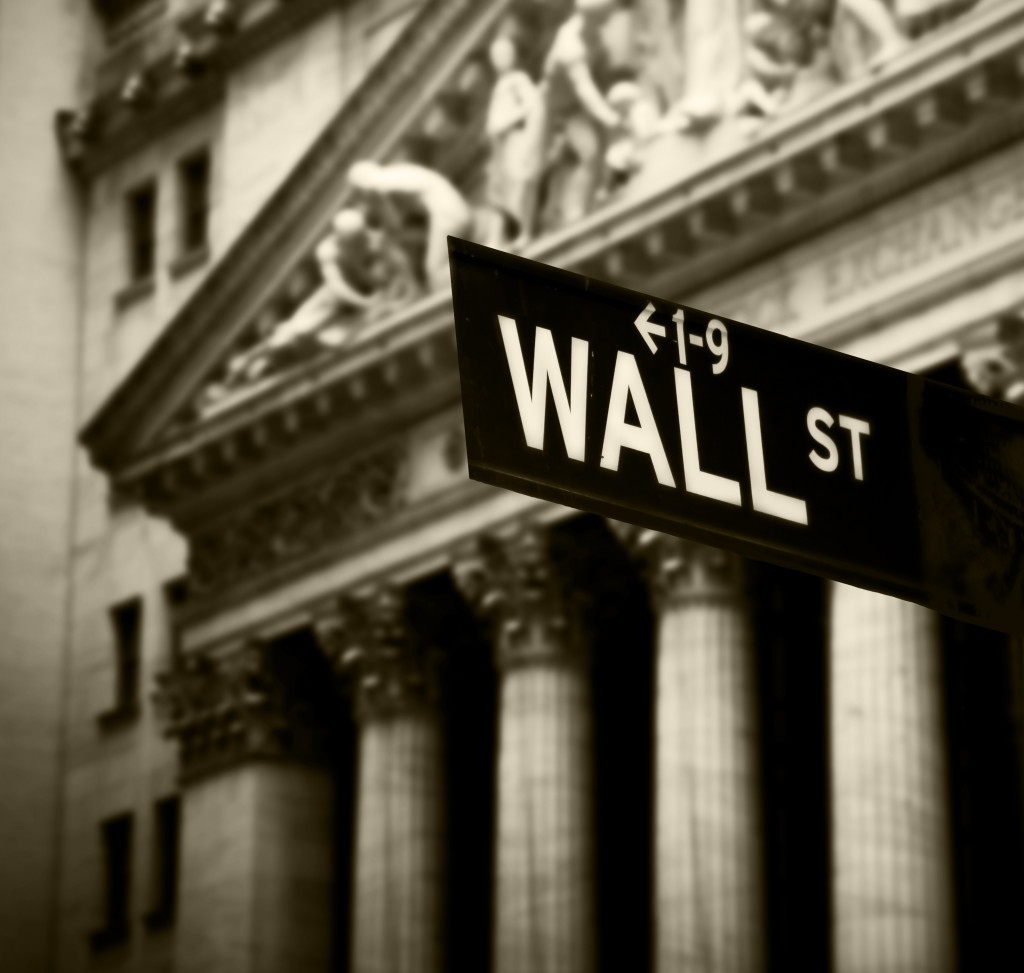
Title VII of the Dodd-Frank bill aimed to increase the transparency of the secretive, multitrillion-dollar derivatives market, whose crash helped trigger the financial collapse in the fall of 2008.
Derivatives can be many things, but are basically contracts or bets that derive their value from the performance of something else — an interest rate, a bond or stock, a loan, a currency, a commodity, virtually anything. Because most derivatives are not traded on a regulated exchange, their prices and fees are not reported publicly, making it easier for institutions to charge higher rates.
Part of the derivative reforms — requiring that most derivative transactions go through a central clearinghouse, or a third party that can guarantee them if one party defaults and thus absorb the risk — has already gone into effect. But many rules in Title VII are still being hammered out by the Commodities and Futures Trading Commission (CFTC) and the Securities and Exchange Commission (SEC), including the definition of swap products and the requirement that most derivatives be traded on an open exchange so that prices are public.
Derivatives defenders say the instruments are smart, innovative risk-management tools that shouldn’t be written off or overly regulated. But critics warn that derivatives are dangerously risky, and just too lucrative for banks not to use their power to fight regulations — or pre-empt them with other legislation.
Dig Deeper:
- Derivatives Lobby Has U.S. Regulators on the Run — Veteran financial journalist Roger Lowenstein looks at the power of the derivatives lobby, arguing that the industry is “squeezing Washington like a python” by threatening to take regulatory agencies — equipped with far fewer resources — to court over the specific rules it doesn’t want.
- Dodd-Frank’s Derivatives Reforms: Clear As Mud — ProPublica’s Jesse Eisenger examines problems with rules on derivatives clearinghouses and argues that no one really knows if the new regulations make the derivatives market less risky.
- Study: Derivatives Rules Would Cost Banks Billions — A study published by Bernstein Research in 2010 concluded that derivatives reform would costs big banks billions of dollars. Cyrus Sanati examines the estimates for DealBook.
- Parsing Banks Lobbyists’ Dire Warnings on Derivatives Rules — DealBook looks at the banks’ argument against a rule intended to prevent large banks from becoming overexposed to each other.
- A Secretive Banking Elite Rules Trading in Derivatives — Louise Story’s lengthy December 2010 look at how a few big banks are working together in secret to try to control clearinghouses derivatives transactions are subject to.
Resolution Authority
Dodd-Frank lays out a mechanism for resolving (or closing down) failing banks and certain non-bank financial institutions deemed too systemically risky for traditional bankruptcy. Essentially the Federal Deposit Insurance Corporation (FDIC) can draw from the U.S. Treasury to resolve an institution and then repay taxpayers by selling off the failed firm’s assets, and through additional fees.
Though the legislation has already gone into effect — today the FDIC announced details about plans to dismantle failing banks — House Republicans recently moved to repeal resolution authority, claiming doing so would save taxpayers $22 billion over 10 years.
Dig Deeper
- The Myth of Resolution Authority — Baseline Scenario‘s Simon Johnson argues that the resolution authority “approach to dealing with very big banks has, in effect, failed before it even started” because it applies only domestically and doesn’t extend internationally to resolve big institutions with cross-border operations. He also warns there’s little evidence the authority could be used preemptively, before losses threaten the system.
- Would Repeal of Key Dodd-Frank Provision Really Save $22 Billion? — The Wall Street Journal‘s Victoria McGrane examines some of the assumptions behind Republicans’ calculation that repealing resolution authority would in fact save taxpayers billions of dollars. “If the law works as it is supposed to,” she writes, “in the end the total cost to taxpayers would be zero — not $22 billion.”
- Top Fed Official: “The Moment Is Now” to Break Up Big Banks — While Dodd-Frank proposes giving the government “resolution authority” to dismantle a big bank, Dallas Fed CEO and president Richard W. Fisher tells FRONTLINE a better solution is to not allow banks to get so big in the first place.
Can Dodd-Frank Work?
Watch and read analysis from FRONTLINE interviews for Money, Power and Wall Street about whether the Dodd-Frank legislation goes far enough, how it will affect banks, what’s missing from the bill and the power of the Wall Street lobby to affect its outcome.
Related Documentaries
Latest Documentaries








Related Stories
Money, Power and Wall Street
Related Stories
Money, Power and Wall Street
Explore
Policies
Teacher Center

Jon and Jo Ann Hagler on behalf of the Jon L. Hagler Foundation
Corey David Sauer
Koo and Patricia Yuen
FRONTLINE is a registered trademark of WGBH Educational Foundation. Web Site Copyright ©1995-2025 WGBH Educational Foundation. PBS is a 501(c)(3) not-for-profit organization.
Funding for FRONTLINE is provided through the support of PBS viewers and by the Corporation for Public Broadcasting, with major support from Ford Foundation, and Fialkow Family Foundation. Additional funding is provided the Abrams Foundation, Park Foundation, John D. and Catherine T. MacArthur Foundation, Heising-Simons Foundation, and the FRONTLINE Trust, with major support from Jon and Jo Ann Hagler on behalf of the Jon L. Hagler Foundation, and Corey David Sauer, and additional support from Koo and Patricia Yuen. FRONTLINE is a registered trademark of WGBH Educational Foundation. Web Site Copyright ©1995-2026 WGBH Educational Foundation. PBS is a 501(c)(3) not-for-profit organization.