CORRESPONDENT
John Hockenberry
WRITTEN BY
Catherine Upin and John Hockenberry
PRODUCED AND DIRECTED BY
Catherine Upin
NEWSCASTER: Chicago is now under full national security.
NEWSCASTER: A no-fly zone is in effect.
JOHN HOCKENBERRY, PRI’s The Takeaway: [voice-over] It was a big weekend in Chicago. Last spring, the president was in town, along with the leaders of NATO, to discuss threats to global security and nuclear proliferation. At a huge convention center, the eyes of the world were watching.
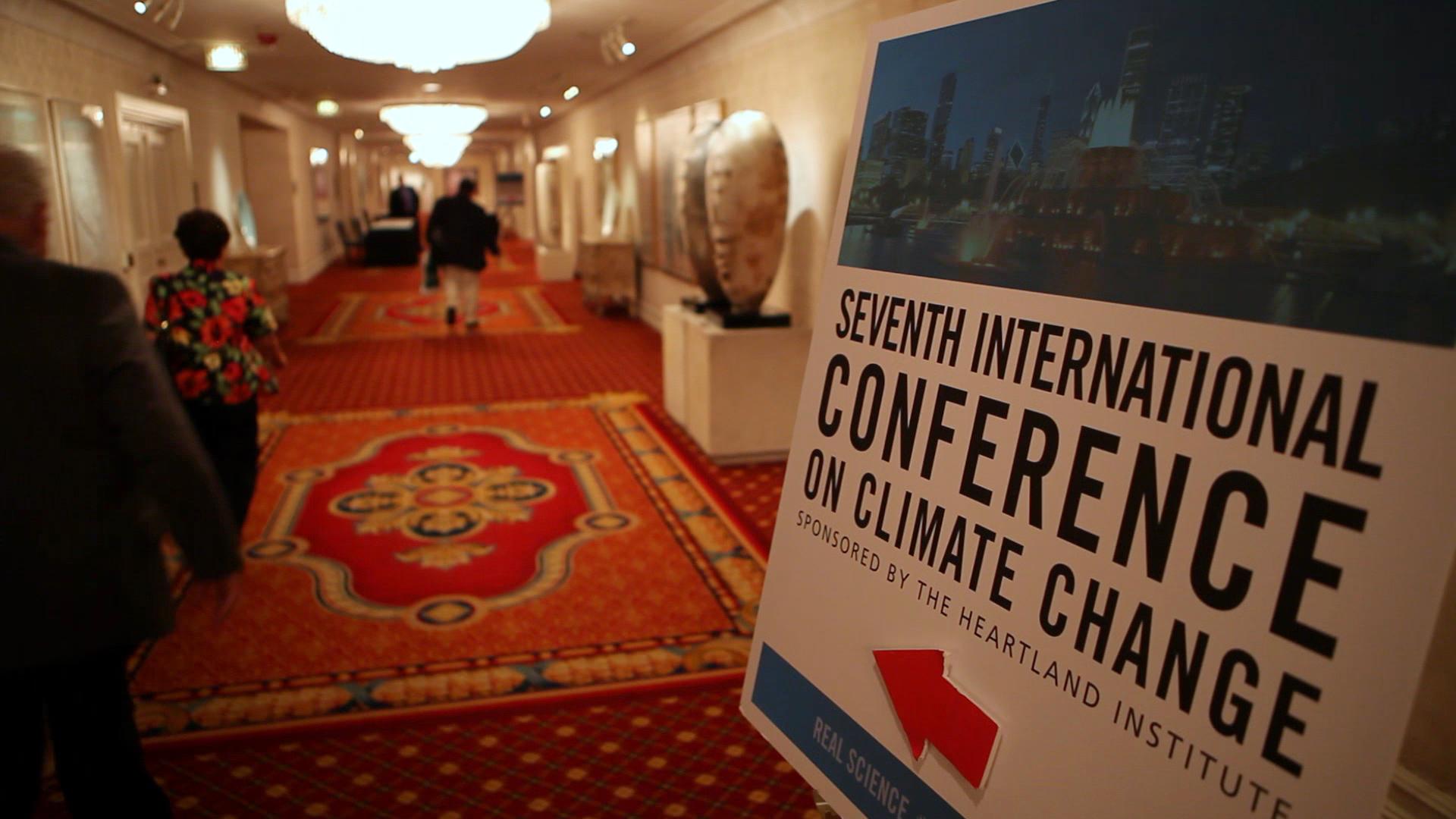
But across town in a small hotel ballroom, the fate of the world was also on the agenda. The eyes of the world might have missed this gathering.
SPEAKER: Get ready for your Al Gore snow job!
JOHN HOCKENBERRY: The message here is that man-made global climate change is a myth, a hoax. This conference is an annual pilgrimage for the key skeptics. We came here to understand how they have made their views a mainstream fact of American politics.
They think of themselves as rebels up against the biggest players in science, government and the media.
JOE BAST, President, Heartland Institute: —wind and solar are based on public fear of global warming, and the mainstream media has pretty much given up its role as an independent reporter on these things and has become an advocate.
MYRON EBELL, Competitive Enterprise Institute: If you add up all of the resources of our side of the debate and all of the resources of the other side of the debate, this is a David versus Goliath story.
JOHN HOCKENBERRY: [on camera] You’re doing pretty well.
MYRON EBELL: There are holdouts among the urban bicoastal elite, but I think we’ve won the debate with the American people in the heartland, the people who get their hands dirty, people who dig up stuff, grow stuff and make stuff for a living, people who have a closer relationship to tangible reality, to stuff.
We need to keep banging away on the science—
JOHN HOCKENBERRY: [voice-over] Myron Ebell chairs a group called the Cooler Heads Coalition, one of a team of skilled policy advocates driving a remarkable turnaround that has already changed the U.S. political landscape.
CHRISTOPHER MONCKTON, Science and Public Policy Institute: Warming isn’t, in fact, accelerating. In fact, there’s been none for 15 years.
JOHN HOCKENBERRY: There’s Christopher Monckton, a big draw at these meetings, who brings the skeptics to their feet every time.
CHRISTOPHER MONCKTON: God bless America!
JOHN HOCKENBERRY: Republican congressman James Sensenbrenner of Wisconsin, vice chairman of the House Science Committee.
Rep. JAMES SENSENBRENNER (R-WI), Vice Chair, Cmte. on Science, Space & Technology: Paul Krugman accused my colleagues and me of treason against the planet. [laughter]
JOHN HOCKENBERRY: There’s Chris Horner from the Competitive Enterprise Institute, and James Taylor, senior fellow at the Heartland Institute, organizer of this gathering.
JAMES TAYLOR, Heartland Institute: The debate indeed is over!
In the years prior to 2007, the 2008 elections, we actually heard from many folks that we should tone it down on global warming, we should not talk about the issue, because the court of public opinion had already decided and we were on the losing end. But we believe that if we present the case to the American people and it resonates, if they get it, then that’s going to work its way up the political stepladder.
JOHN HOCKENBERRY: [on camera] You’ve really changed the game on global warming.
JAMES TAYLOR: Oh, I certainly hope so.
JOHN HOCKENBERRY: [voice-over] These political messengers rely on a small group of outspoken scientific contrarians, like climatologist Pat Michaels of the libertarian Cato Institute.
PATRICK J. MICHAELS, Cato Institute: Every paragraph can be contested.
JOHN HOCKENBERRY: Willie Soon is an astrophysicist who studies the sun and stars.
WILLIE SOON: —mechanism to transport anything from the tropics to the arctic—
JOHN HOCKENBERRY: And Fred Singer, the veteran scientist at these proceedings. He’s a retired physicist once responsible for government weather satellites, who tells people the climate needs no help from worried humans.
FRED SINGER, Founder, Science and Env. Policy Project: Climate, to me, has become a non-issue. It’s a phantom issue. There’s nothing wrong with climate. It will change no matter what we do. It’ll get colder. It’ll get warmer. We just have to wait a little.
JOHN HOCKENBERRY: Singer says he’s dedicated to explaining his theories about global warming.
[on camera] What keeps you going? What’s your motivation?
FRED SINGER: Basically, I like to see good science being done and protected. I think I’m fighting here for scientific truth. That’s important to me.
JOHN HOCKENBERRY: Do you think the science is being hyped on global warming?
FRED SINGER: Oh, very definitely, yes.
JOHN HOCKENBERRY: [voice-over] Armed with that conviction, this team of skilled political messengers and contrarians has certainly changed the game. In just four years, the number of Americans who agree global warming is manmade has dropped to about half. It’s a message that is inspiring a new generation of skeptics.
CONFERENCE GOER: I would like to really listen to these scientists who came and talked and have dedicated their lives to debunking this fallacy, so to speak.
JOHN HOCKENBERRY: Once upon a time, what these people call a fallacy had another name, the truth.
AL GORE, Fmr. Vice Pres.: [“Inconvenient Truth”] You’ve heard of off the charts. Within less than 50 years, it’ll be here. The so-called skeptics—
JOHN HOCKENBERRY: In 2006, the film An Inconvenient Truth told a disturbing story and galvanized public awareness about the climate.
BRIAN WILLIAMS, NBC News: And now to a new report on global warming from a prestigious panel of scientists convened by the U.N.—
WOLF BLITZER, CNN: There’s a new grim report out today from—
JOHN HOCKENBERRY: This comprehensive report in 2007 took it to another level. Scientists from 30 nations concluded that global warming is unequivocal and that human activity is mostly the cause.
SAM CHAMPION, ABC News Weather Editor: It is the definitive report on global warming, and it’s frightening.
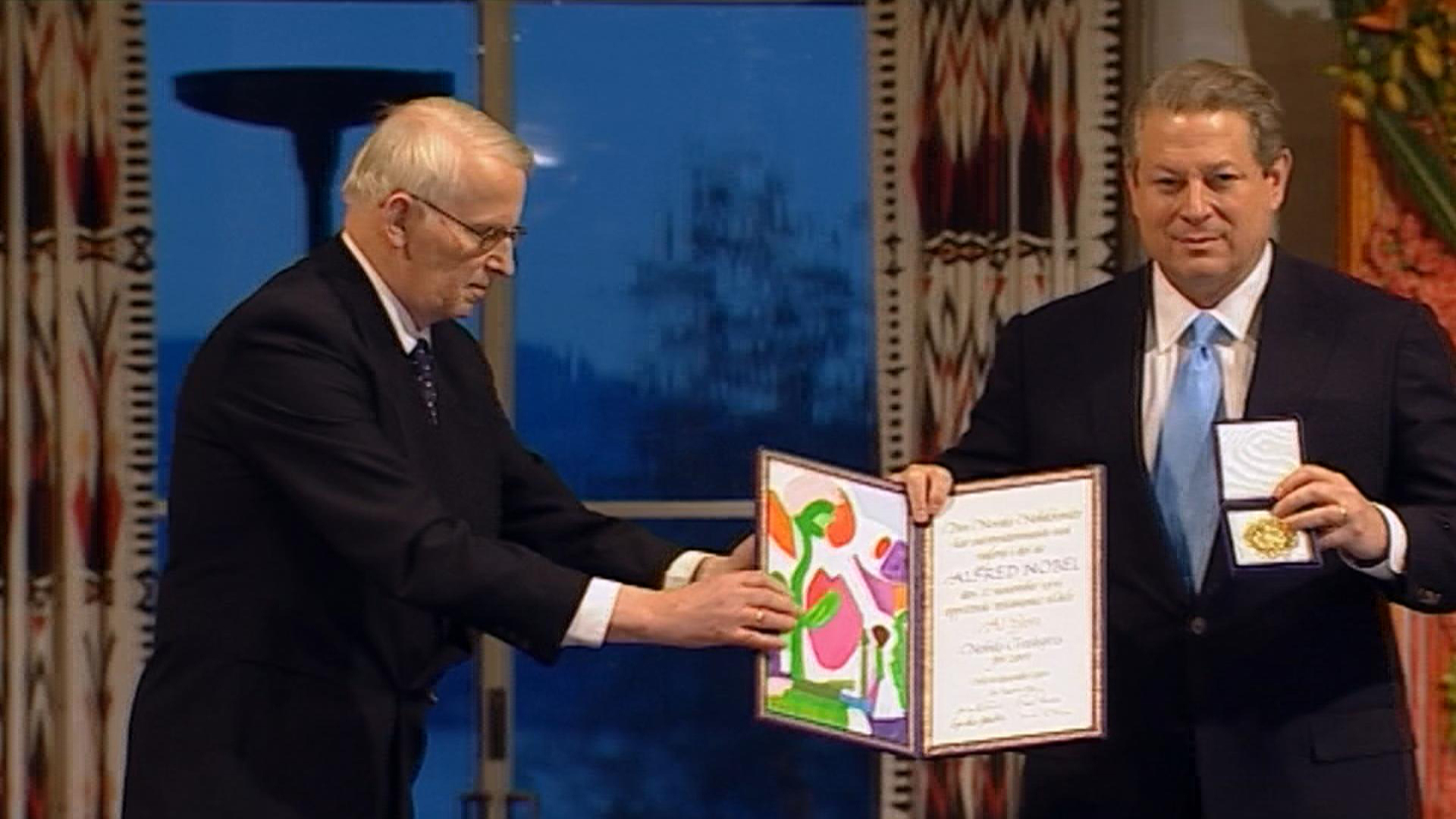
NOBEL CEREMONY: I call upon the Peace Prize laureate for 2007, Al Gore, to come forward—
JOHN HOCKENBERRY: The U.N. scientists and former vice president Al Gore would share the Nobel Peace Prize. The cause had a consensus and a credible leader. The skeptics would take on both.
JAMES TAYLOR: I think Al Gore was probably the best thing that could happen to global warming skeptics.
MYRON EBELL: From my perspective, Al Gore was the perfect proponent and leader of the global warming alarmists because he’s very politically divisive and controversial.
TIM PHILLIPS, Pres., Americans for Prosperity: I think it was his tone and manner. He did at a certain point come across as holier than thou. And that’s another thing about Americans. They’re not really big on holier than thou.
SEAN HANNITY, Fox News Channel: Now, that is a G2-V aircraft—
JOHN HOCKENBERRY: Personalizing the attacks was part of an approach that was immediately embraced and amplified by friendly media.
SEAN HANNITY: And that is the former vice president getting off that plane, into a Town Car, by the way, not a hybrid!
CHRIS HORNER, Competitive Enterprise Institute: He equates the failure to recycle aluminum cans with the Holocaust!
MYRON EBELL, Competitive Enterprise Institute: He wants to be a superhero action figure.
JOHN HOCKENBERRY: Myron Ebell was acting on a broad strategy he helped create more than a decade ago. In this 1998 action plan, “Victory will be achieved,” it said, when the public “recognizes uncertainties in climate science.”
Today at the Washington, D.C., headquarters of the Competitive Enterprise Institute, a free market think tank, you can see Myron Ebell’s philosophy proudly displayed on the walls.
MYRON EBELL: They’re all CEI authors. What we’re fighting is the expansion of government. And there are many pretexts for expanding government.
JOHN HOCKENBERRY: Opposing government action on climate change to defend American freedom is a perfect fit.
MYRON EBELL: We felt that if you concede the science is settled and that there’s a consensus, you cannot— the moral high ground has been ceded to the alarmists.
JOHN HOCKENBERRY: [on camera] So you had to go to work and break down this consensus.
MYRON EBELL: Yes. And we did it because we believed that the consensus was phony. We believed that the so-called global warming consensus was not based on science, but was a political consensus, which included a number of scientists.
JOHN HOCKENBERRY: [voice-over] In 2009, agreement on global warming seemed part of the solid wave of enthusiasm that elected Barack Obama. With the changing of the guard in Washington, there was a bipartisan call to action, a sense of inevitability.
HOUSE SERGEANT AT ARMS: Madam Speaker, the president of the United States!
JOHN HOCKENBERRY: An idea that for years had struggled for attention in Congress would get its moment of truth.
Pres. BARACK OBAMA: So I ask this Congress to send me legislation that places a market-based cap on carbon pollution—
JOHN HOCKENBERRY: The president backed the so-called cap-and-trade approach, a system of regulations and financial incentives to eventually reduce the emission of carbon into the atmosphere.
[on camera] It seemed there was consensus on climate change.
Sen. JOHN KERRY (D), Massachusetts: There was an uneasy consensus, but the people who have always objected to change had not yet really engaged. And because of the consensus, because there was a sense that there was going to be movement, that galvanized the action of the people who oppose it.
MYRON EBELL: The American people hadn’t focused on these issues until it actually came to a vote in Congress on a bill to implement these policies.
JOHN HOCKENBERRY: [voice-over] The soft consensus for taking action ran into the bitter partisan divisions in Congress. Congressional hearings on cap-and-trade would become a stage where opposing views would get equal time.
Rep. EDWARD MARKEY (D-MA), Chair, Subcmt. on Energy & Environment: Professor Schrag, you’ve just heard what Dr. Michaels said—
JOHN HOCKENBERRY: Pro cap-and-trade lawmakers would call leading climate scientists and policy makers to make the argument for action now.
Prof. DANIEL SCHRAG, Earth and Planetary Sciences, Harvard Univ.: It’s very clear from that estimate that, in fact, we’re in for bigger trouble.
THOMAS R. KARL, Dir., NOAA’s National Climatic Data Center: One of the things that we’ve already seen is many observed changes in the climate—
Gen. GORDON R. SULLIVAN (Ret.), Assn. of the United States Army: Global climate change is a serious threat to our national security.
JOHN HOCKENBERRY: The skeptics had their own witnesses. They testified that nothing was settled and that global warming might actually be good for the planet.
Rep. JOHN SHIMKUS (R), Illinois: Say that again? Carbon dioxide is what?
CHRISTOPHER MONCKTON: It’s plant food.
Rep. JOHN SHIMKUS: It’s plant food.
CHRISTOPHER MONCKTON: Yes.
JOHN HOCKENBERRY: The testimony of the skeptics argued for a timeout. There was enough uncertainty, they said, to justify delay.
CHRISTOPHER MONCKTON: The right response to the non-problem of global warming — first slide, please — is to have the courage to do nothing.
E. CALVIN BEISNER, Cornwall Alliance for the Stewardship of Creation: But the fear of catastrophic man-made global warming is mistaken.
PATRICK MICHAELS: This demonstration shows that the oft-reported mantra in Washington, quote, “The science is settled,” is not true at all.
JOHN HOCKENBERRY: Skeptics had found a seat at the table, but the scientific consensus still had the momentum. When cap-and-trade came up for a vote in the House in 2009, it passed with eight Republicans on board.
PRESIDING OFFICER: The bill is passed!
MYRON EBELL: The Waxman-Markey cap-and-trade bill passed the House very narrowly, 219 to 212. The members of the Senate, who were going to take it up in July, went home for the 4th of July recess, and they got an earful from their constituents.
Sen. CLAIRE McCASKILL (D), Missouri: You don’t trust me?
CROWD: No!
CONSTITUENT: Let’s talk about some of your other votes, such as cap-and-trade.
CONSTITUENT: We are not for more government!
JOHN HOCKENBERRY: The Tea Party saw a frightening expansion of government in the health care plan and the push for cap-and-trade.
CONSTITUENT: You’re a traitor, Lindsey Graham! You’ve betrayed this nation and you betrayed the state!
Rep. JAMES SENSENBRENNER (R), Wisconsin: The people of this country were really not concerned one way or the other on this issue until the economy started going south in 2008.
JOHN HOCKENBERRY: [on camera] Was that an opportunity to push back on climate change, the recession?
Rep. JAMES SENSENBRENNER: It sure was.
TIM PHILLIPS: [rally] I’m Tim Phillips, president of Americans for Prosperity. We’re here in Billings, Montana—
JOHN HOCKENBERRY: What part did you play?
TIM PHILLIPS: We certainly did TV ads, radio ads, social media. We did rallies, events. We launched something we called Hot Air.
And we’re sending a message to Senator Baucus and Senator Tester to vote no on this job-killing, tax-increasing cap-and-trade!
We got up a hot-air balloon, put a banner on the side of it that said, “Cap-and-trade means higher taxes, lost jobs, less freedom.” And we went all over the country doing events and stirring up grass roots anger and frustration, concern.
TELEVISION COMMERCIAL: Cap-and-trade will slow the economy and cost American jobs.
JOHN HOCKENBERRY: [voice-over] Americans for Prosperity’s well-financed campaign was an aggressive one, ads that went after cap-and-trade policy—
TELEVISION COMMERCIAL: America can’t afford the cap-and-trade tax.
JOHN HOCKENBERRY: —and said the science was a hoax.
TELEVISION COMMERCIAL: Congress should stop wasting our money and focus on real problems!
TELEVISION COMMERCIAL: Isn’t it time Congress listened to the rest of us?
JOHN HOCKENBERRY: In the Tea Party’s anti-tax, anti-big government message, you could now hear the skeptic mantra attacking climate science and cap-and-trade.
TEA PARTY RALLY SPEAKER: —cap-and-trade and taxing America to death and our children—
JOHN HOCKENBERRY: At some Tea Party events, global warming skeptics were a big draw.
TEA PARTY SPEAKER: It gives me great pleasure to welcome Lord Monckton!
JOHN HOCKENBERRY: Introduced like a professional wrestler, Christopher Monckton is a former British journalist who admits he has no scientific qualifications.
CHRISTOPHER MONCKTON, Competitive Enterprise Institute: Now we are met on a great battlefield of a new civil war!
JOHN HOCKENBERRY: But here, whipping up the crowd is his indisputable expertise.
CHRISTOPHER MONCKTON: —know that in American-speak, you have a word for global warming. Can someone tell me what it is?
CROWD: Bull-[expletive deleted]!
CHRISTOPHER MONCKTON: All together! Global warming is?
CROWD: Bull-[expletive deleted]!
JOHN HOCKENBERRY: Events like these fertilized the growing public doubt about climate change that was beginning to register with senators. With widespread anxiety over a shrinking economy, cap-and-trade was tabled in the Senate. The momentum towards action on global warming was vanishing.
TIM PHILLIPS, Pres., Americans for Prosperity: I often say if you ever wonder as an activist on our side, are you making a difference, just look at cap-and-trade. January of ‘09, we had a president with 60 votes in the Senate and then Speaker Pelosi with a 50-plus seat majority. And cap-and-trade was at the top of their agenda. And in the end, they were beaten.
JOHN HOCKENBERRY: [on camera] You’ve said, “If we win the science argument, I think it’s game set and match.”
TIM PHILLIPS: Uh-huh.
JOHN HOCKENBERRY: Why do you want to win the science argument?
TIM PHILLIPS: If the science argument is won, I do think it would, you know, pull out the final underpinning of this legislative effort and this regulatory effort the left is undertaking.
JOHN HOCKENBERRY: [voice-over] Diminish the credibility of the scientific consensus, and action on climate change grinds to a halt. At a conference in Long Island, we witnessed how these skeptics build their message of doubt. We once again saw Fred Singer—
FRED SINGER, Founder, Science and Env. Policy Project: This is a conference mainly for medical doctors—
JOHN HOCKENBERRY: —delivering his message to a group of physicians who seemed eager to hear it.
FRED SINGER: —tell me that there hasn’t been any perceptive trend. We essentially get no warming trend—
In the last 10 years, there hasn’t been a warming. We don’t know why that is. But one doesn’t see any warming in the observations. There simply is no trend.
JOHN HOCKENBERRY: No warming in the last 10 years? No long-term trend? Climate scientists would say that’s playing games with the data.
ANDREW DESSLER, Climate Scientist, Texas A&M University: You can, if you want, very carefully select the end points of your time series, the starting month and the ending month, and you can come up with— maybe you can come up with something that shows no warming.
JOHN HOCKENBERRY: In a sense, what Dessler saying is that you can do this at home. On a complex chart, depending on the beginning points X and ending points Y, you can select a trendline that does indeed show temperature going down.
[on camera] Could I pick 10 years of world history and show a climate cooling?
GAVIN SCHMIDT, Climate Scientist, NASA Goddard Institute: Oh, you could totally do that! In fact, you could take the entire climate history that we have in the instrumental record and you could find cooling trends every 10 years.
JOHN HOCKENBERRY: [voice-over] Cooling trends between 1958 and 1969, 1969 and 1978, 1978 and 1987, and so on. Scientists have a name for this. They call it “going down the up escalator.”
GAVIN SCHMIDT: You pick the end points and you could find any particular year as part of a cooling year. But actually, the whole thing has been moving up.
ANDREW DESSLER: If you look at all of the data, it’s quite clear that the warming is continuing.
KATHARINE HAYHOE, Climate Scientist, Texas Tech Univ.: So the 2000s was the warmest decade on record. The 1990s was the warmest decade before that, the 1980s before that. And most of us in the field of climate science expect, but we can’t be sure— we expect that the 2010s will be warmer than the 2000s.
JOHN HOCKENBERRY: Against the backdrop of all the pressure from skeptic groups, Congress ordered a comprehensive review of climate change research by the National Academy of Sciences. The findings came back even stronger on human-caused climate change, and a subsequent study showed 97 percent of active climate scientists agreed.
[on camera] What’s settled here on climate change?
RALPH CICERONE, Pres., National Academy of Sciences: Virtually every place on earth is warming up. And people who have tried to go back and scrub the data — like, is there a mistake with the way they’re making these measurements — they’ve all concluded, no, the people who are doing this work at the key places around the world are agreeing with each other.
JOHN HOCKENBERRY: What’s the bottom line, though, on human-caused global warming? I raise my hand in a high school science class and you’re the teacher. Are humans causing the global warming we’re seeing? What’s your answer?
RALPH CICERONE: Mostly. Yeah. Scientists are trying to shoot it down all the time, and in years and years and years, nobody’s been able to. So at some point, you have to say maybe it’s right.
JOHN HOCKENBERRY: [voice-over] Here’s what the National Academy of Sciences report actually says.
[on camera] “Climate change is occurring and is largely caused by human activities and poses a significant risk for a broad range of human and natural systems.” You say that’s false?
FRED SINGER, Founder, Science and Env. Policy Project: Yes.
JOHN HOCKENBERRY: False?
FRED SINGER: False.
JOHN HOCKENBERRY: And if most of the climate scientists believe that statement, they’re deluded?
FRED SINGER: Yes.
JOHN HOCKENBERRY: And you’re seeing something they’re not seeing?
FRED SINGER: Yes.
JOHN HOCKENBERRY: So it’s 97 percent of them and one of you?
FRED SINGER: Oh, well, you can put it that way if you like, but I don’t think that’s the way it works. There’s hundreds of us— hundreds, thousands of us. Look, 31,000 scientists and engineers signed a statement to the contrary to what you just read.
JOHN HOCKENBERRY: The Oregon petition?
FRED SINGER: Yes.
JOHN HOCKENBERRY: [voice-over] The 14-year-old petition is not exactly an exclusive club. A bachelor of science degree is all it takes to get you on the list. This document, skeptics claim, counters the scientific consensus on global warming.
[on camera] Now, are they all scientists?
FRED SINGER: Yes. One third of them have Ph.D.s. Look, they are not specialists in climate.
JOHN HOCKENBERRY: Well, some were celebrities and— right?
FRED SINGER: Oh—
JOHN HOCKENBERRY: [voice-over] It’s a time-honored tactic by the skeptics, authentic-looking documents and reports that don’t stand up to independent scrutiny. Singer also signed the Oregon petition, and this is not his first time going up against accepted science.
[on camera] Was the science around chlorofluorocarbons hyped, the science around secondhand smoke hyped, the science around the ozone layer hyped, going back 10, 15, 20 years?
FRED SINGER: I’m happy to discuss all of these since I’ve been deeply involved in all these topics that you mention. Let me start with secondhand smoke—
ANDREW DESSLER: Fred Singer is, I think, a professional contrarian. When I was in graduate school, I worked on stratospheric ozone depletion. And Fred would call me when I was in grad school and talk to me about how he didn’t think humans were depleting ozone.
And before that, he had real questions about whether humans were causing acid rain. And he didn’t think that nuclear winter was sound science. And he really criticized the work that connected secondhand smoke to health impacts. And now he doesn’t think global warming is an issue.
WOLF BLITZER, CNN Anchor: —Al Gore making his case. So is global warming fact or fiction? Let’s get to a debate—
JOHN HOCKENBERRY: [voice-over] But Fred Singer’s case was bolstered when in November of 2009, the skeptics got a break that would put climate scientists on the defensive.
CHRIS HORNER, Competitive Enterprise Institute: They falsified results. It’s the fraud, stupid, to oversimplify it. That’s what we’re talking about.
JOHN HOCKENBERRY: An apparent scandal, and skeptics made the most of it.
CHARLIE GIBSON, ABC News: —some stolen emails—
JOHN HOCKENBERRY: It erupted out of more than a thousand hacked emails which included scientists’ internal conversations about global temperature data.
CHRIS HORNER, Competitive Enterprise Institute: These people have already been revealed as not having any honor. Now they’re being revealed as not having a sense of shame.
JOHN HOCKENBERRY: A few suspicious-seeming emails, taken out of context, would become “climate-gate.” Even though nine subsequent investigations would find no tampering with data, the impact of these emails would live on.
KATHARINE HAYHOE, Climate Scientist, Texas Tech Univ.: Even the lady in the supermarket has heard of the “climate-gate” emails that purport to show that scientists have fabricated data or manipulated data and that the whole idea of global warming has been proven to be a hoax.
That is completely ridiculous. Continuing to use those emails as evidence that global warming is not real is inaccurate. By continuing to use those emails to slander the scientific reputation not only of those individual scientists, but of a field as a whole, is irresponsible.
TALK RADIO HOST: —thousands of documents and internal emails coming out—
JOHN HOCKENBERRY: Katharine Hayhoe personally felt the effects of “climate-gate.” A climate scientist at Texas Tech in the panhandle, she’s the lead author of a federal research report detailing the impact of global warming in the U.S.
TALK RADIO HOST: The emails are real! Read the—
JOHN HOCKENBERRY: She spends every Sunday in the church where her husband preaches.
PREACHER: You’ve heard this verse, maybe some of us, since you were this high—
KATHARINE HAYHOE: I think the perception is often that climate scientists are godless, tree-hugging liberals out to suck all the money out the average person and use it all to fund all of this research.
JOHN HOCKENBERRY: [on camera] How much of this is a part of your worldview?
KATHARINE HAYHOE: My faith is integral to who I am. That’s what defines me, not what I do on a day-to-day basis. And so when I study the planet, I feel as if I’m studying something that God created.
JOHN HOCKENBERRY: [voice-over] After she wrote a chapter on climate change for a book on environmental policy, a private group suddenly requested her emails.
KATHARINE HAYHOE: Just before Christmas this past year, I got my first Freedom of Information Act request. And it was a bit of a shock.
JOHN HOCKENBERRY: [on camera] The charge is that you used taxpayers’ money to engage in your personal activism about climate change.
KATHARINE HAYHOE: Every single professor, when invited to write a submitted chapter for an edited volume to be published by an academic press pro bono, would say, “Yes, that’s part of our resume, that’s part of what we’re asked at the end of each year, did you write any edited book chapters.” So it’s part of our job to do that.
JOHN HOCKENBERRY: To write stuff?
KATHARINE HAYHOE: Yes.
ATI VIDEO: American Tradition Institute, restoring science, accountability—
JOHN HOCKENBERRY: [voice-over] The group requesting Katharine Hayhoe’s emails is the American Tradition Institute.
CHRIS HORNER: [ATI video] There was a lot of the argument behind the climate movement that didn’t withstand scrutiny generally.
JOHN HOCKENBERRY: Here is their chief lawyer, Chris Horner, who wrote the request. Chris Horner would not speak with FRONTLINE on camera, but ATI told us they were just looking for insights into how scientists made their deliberations.
Texas A&M scientist Andrew Dessler is an expert on how clouds relate to climate change. He became a target of the American Tradition Institute after one quote in a front page New York Times article. Dessler received a legal request for emails the next morning.
ANDREW DESSLER: And I actually had the first quote in the story. And within hours of that story coming out, the university received an FOIA request for my email. The goal of this was to try to find something in the emails that would be used to embarrass climate science. They were just rolling the dice. It was completely random. They had no reason to think that there was anything improper, but they were hoping to hit the jackpot like they did with “climate-gate.”
JOHN HOCKENBERRY: As we began our reporting, ATI requested emails climate scientists might have sent to FRONTLINE.
ANDREW DESSLER: You know, I don’t let it stop me. I fully expect that after this program airs, I’ll get another FOIA request for all of my emails with you. And you know, I’ll just deal with that.
As a climate scientist, I think a lot about the future. It goes with the job. And I want to make sure that in 50 years or 100 years or 200 years, nobody can ever say we didn’t warn them.
[www.pbs.org: More from Dessler]
JOHN HOCKENBERRY: This summer at the Washington, D.C., Defending the Dream summit for the group Americans for Prosperity, they have their own warning— beware the leftist agenda that they believe underlies the climate change movement. Reducing emissions is cover for reducing freedom, they say. And they have the means to carry their free market message anywhere in the U.S.
TIM PHILLIPS: This is our sixth annual Defending the American Dream summit. We launched these in the fall of 2007. It’s a great way to bring activists together from around the country to kind of bond with the organization. And also, it’s good to have a bunch of free market conservatives in D.C. occasionally, as well.
JOHN HOCKENBERRY: [on camera] How does free market conservatism relate to climate change and the scientific argument over—
TIM PHILLIPS: It doesn’t to the scientific side. It very much so relates to the policies that the left pushes in the name of global warming. I mean, every once in a while, I’ll make a statement about the science, but that’s a tiny percentage of what we do and how we spend our money.
JOHN HOCKENBERRY: Oh, you win on the policy, you win on the science.
TIM PHILLIPS: I think so. I do.
JOHN HOCKENBERRY: [voice-over] This is a community of skeptics. At the AFP rally, I ran into Myron Ebell, a supportive attendee and a speaker.
[on camera] Why are you here?
MYRON EBELL: Well, these are the grass roots that, you know, support our side. This is essentially a more organized form of a Tea Party group, right? A better funded.
JOHN HOCKENBERRY: You said we’ve made great headway. What it means for candidates in the Republican side is if you buy into green energy or you play footsie on this issue, you do so at your political peril.
TIM PHILLIPS: You do. Absolutely. And that’s the big change, and it is important. Again, I remember four, five or even three years ago, John, a lot of Republicans, they would. They would play games with this. They’d say, “OK, oh, well, gosh, I think I need a green energy agenda. But I won’t go all the way and support cap-and-trade.” They did. They tried to walk down the middle, and that’s wrong.
I think it’s philosophically inconsistent, but it’s also politically disadvantageous. And we’ve worked hard to make that so, by the way.
VIDEO AT AFP CONFERENCE: The left has had the edge as long as I can remember. They march out to the town, whatever they’re told to do, under the direction or the coercion of the union leadership—
TIM PHILLIPS: One thing we’ve changed with AFP is we now have an army, too. And we can do calls and emails and letters and rallies, events and pressure, and I think that’s made a big difference. Our side didn’t have that five or six years ago on this issue. We do now. And I do think it’s a new day for that reason.
[www.pbs.org: More from Phillips]
JOHN HOCKENBERRY: [voice-over] This new day has dramatically transformed the way lawmakers approach global warming on Capital Hill. Suddenly, the news was who wasn’t talking about it.
CORAL DAVENPORT, National Journal: Fred Upton, who is chairman of the House Energy and Commerce Committee— he’s charged with writing regulations that would control climate change emissions. And when I asked him this question, “Do you think climate change is causing the earth to become warmer,” and he smiled — nice guy — and said, “I’m sorry, I’m just not going to answer that.” And he turned around and went onto the House floor, where as a reporter I’m not allowed to go.
JOHN HOCKENBERRY: Coral Davenport reports on energy and environmental issues for The National Journal.
[on camera] For him to say, “I don’t want to talk about this,” is that like the chairman of the Armed Services Committee saying, “I don’t want to talk about Pentagon”?
CORAL DAVENPORT: Absolutely. Yes. But I should say that that does seem to be a change in Chairman Upton’s views before he took on this leadership. Fred Upton, you know, has long been a moderate who’s worked on this issue, who’s reached across the aisle on these issues. Before he became chairman of the House Energy and Commerce Committee, on his Web site he had the phrase that “climate change is a problem.” That was deleted after he became chairman of the House Energy Committee. So we’re definitely seeing a shift on this.
JOHN HOCKENBERRY: [voice-over] Chairman Upton declined FRONTLINE’s request for an interview. But the congressman wasn’t the only one not talking. In 2011, The National Journal tried to poll all GOP lawmakers on climate change.
CORAL DAVENPORT: I came up with the idea to ask every Republican member of Congress three simple questions about climate change. They were very simple. They were basically, you know, “Do you think that climate change is causing the earth to become warmer?”
JOHN HOCKENBERRY: [on camera] Straightforward.
CORAL DAVENPORT: “How much, if any of that, do you think is attributable to human activity?” And “What’s the appropriate government response?” And normally, lawmakers love to answer questions. They love to opine.
This was amazing. Members of Congress did not want to answer the questions. They— in some cases, they just said straight up, “I’m not going to answer that.” In some cases, what was really amazing is they literally ran into an elevator, and an— you know, and the elevator closed when I asked.
JOHN HOCKENBERRY: [voice-over] With their majority in the House, GOP lawmakers took steps to keep the issue from coming up at all, including dissolving the official House Committee on Global Warming.
[on camera] Why did you reach out only to Republicans on this?
CORAL DAVENPORT: It’s rare to find a Democrat who will outright flatly question or deny the basic scientific precepts of climate change.
JOHN HOCKENBERRY: [voice-over] This new political environment has been an opportunity for lawmakers like Republican James Sensenbrenner of Wisconsin to claim they are the new mainstream view on global warming.
[on camera] Do you believe global warming is caused by the activity of human beings?
Rep. JAMES SENSENBRENNER (R-WI), Vice Chair, Cmte. on Science, Space & Technology: Partially, but not completely.
JOHN HOCKENBERRY: Percentage?
Rep. JAMES SENSENBRENNER: Can’t predict that.
JOHN HOCKENBERRY: Thirty percent, fifty percent?
Rep. JAMES SENSENBRENNER: Well, I know it’s not zero and I know it’s not 100. I can’t tell you what number it is in between.
JOHN HOCKENBERRY: If 97 percent of scientists say it is mostly or significantly caused by human activity, what do you say to that?
Rep. JAMES SENSENBRENNER: They are entitled to their opinion. But they are going to have to—-
JOHN HOCKENBERRY: Do you think this will ever be settled scientifically, if 97 percent consensus doesn’t settle it for you?
Rep. JAMES SENSENBRENNER: Well, I— you know, I think that it’s up to the scientists and their supporters to convince the public that this is the right thing to do. And the supporters of that side of the argument in the Congress have been a huge flop.
JOHN HOCKENBERRY: [voice-over] I visited one of the key Democrats on this issue, Massachusetts Senator John Kerry. What had happened to all the momentum of four years ago?
Sen. JOHN KERRY (D), Massachusetts: Well, American politics is being completely defined by huge sums of money. We had really a very broad coalition of people who believed that we ought to move forward and do something. But as the campaign and the fear built up, people began to retreat.
They spent huge sums of money in a campaign of major disinformation that had an impact, had a profound impact. And it has now made many people in public life very gunshy because they’re afraid of having those amounts of money spent against them.
JOHN HOCKENBERRY: [voice-over] This is what they fear, what happened in 2010 to six-term South Carolina Congressman Bob Inglis, a Republican who once thought he was a safe incumbent in his solidly red state.
BOB INGLIS (R), Fmr. Congressman, South Carolina: You know, I’m pretty conservative fellow. I got a 93 American Conservative Union rating, 100 percent Christian Coalition, 100 percent National Right to Life, A with the NRA, zero with the ADA, Americans for Democratic Action, a liberal group, and 23 by some mistake with the AFL-CIO. I demand a recount. I wanted a zero.
JOHN HOCKENBERRY: But Inglis does accept the scientific consensus on global warming and favors legislation to curb the effects of CO2 in the atmosphere. He faced a Tea Party rebellion in his primary.
BOB INGLIS: I had a big tent gathering in Spartanberg County, a bunch of Republicans underneath a great big tent. Comes a question to me, “Yes or no, do you believe in human causation on climate change?” Well, I had a bad habit of answering questions, so I said yes. Boo, hiss, comes the crowd. I was blasted out from underneath the tent. And so— I mean, there were a couple of hundred, 300 people there. I mean, it was intense.
JOHN HOCKENBERRY: He was pounded in commercials and on talk radio.
BOB INGLIS: It became an oft-repeated theme on talk radio, and that is a major source of information, of course, for Republican primary voters. They were hearing, “Inglis has left the reservation. He’s over there somewhere with Al Gore.”
So how are things around here?
STORE OWNER: Slow. The economy’s way off and—
BOB INGLIS: When you get the financial collapse going, that’s what made it possible for some well-spent money to blow doubt into the science because, you know, the bankers failed us, the federal government is failing us, it’s spending too much money, and these scientists who are funded by that federal government, they’re probably in it, too. And besides, they’re godless liberals.
JOHN HOCKENBERRY: Inglis was defeated.
MYRON EBELL, Competitive Enterprise Institute: Bob Inglis was defeated in a Republican primary 79 to 21 percent. Now, how many times has an incumbent who isn’t in prison or facing a prison sentence lost his own primary by 79 to 21 percent? This was overwhelming. But what’s happened is—
JOHN HOCKENBERRY: [on camera] The smile on your face suggests, “Man, we won one.”
MYRON EBELL: Of course we won one!
Rep. BOB INGLIS: We’re on the record. And our grandchildren, our great-grandchildren are going to read—
JOHN HOCKENBERRY: This climate hearing in the lame duck Congress was Inglis’s last.
Rep. BOB INGLIS: Your child is sick, 98 doctors say treat him this way, two say, “No, this other is the way to go.” I’ll go with the two. You’re taking a big risk with those kids.
Rep. JAMES SENSENBRENNER: That was a very key factor in 10 to 15 congressional districts in the 2010 election, where strong supporters of climate change legislation ended up being defeated.
Sen. JOHN KERRY: And there’s nothing like a loss in an election to promote fear in the survivors. And that’s exactly what happened in the United States Congress.
JOHN HOCKENBERRY: Beyond Washington, in wave after wave, the skeptic tactic of fighting scientific warnings with doubt and delay was finding success. Tennessee passed a law allowing the views of climate change skeptics to be taught in schools. A Virginia state legislator cut the words “sea level rise” from an official request to study coastal communities, calling it a left-wing term.
Here in North Carolina, a warning from scientists on sea level rise would cause politicians to try and legislate climate change out of existence.
STANLEY RIGGS, Geological Sciences, East Carolina Univ.: Yes, they’re here to try and protect these houses. They’re here to—
JOHN HOCKENBERRY: In 2010, 19 scientists on a state commission warned of a possible sea level rise by the end of the century.
STANLEY RIGGS: Here you get an idea of the nature of these dunes—
JOHN HOCKENBERRY: Geologist Stanley Riggs was one of the scientists.
STANLEY RIGGS: What we were asked to do is to develop what is the history of sea level rise and what can North Carolina expect 25 years from now, 50 years from now, 100 years from now?
JOHN HOCKENBERRY: The report said to expect a 39-inch ocean rise, an estimate in the middle of a range consistent with other predictions for the region.
[on camera] Thirty-nine inches— if that comes to pass here, everything we’d see—
STANLEY RIGGS: This town will be under water.
JOHN HOCKENBERRY: [voice-over] The commission’s warning was seen as a threat by a coastal economic development group, NC-20.
TOM THOMPSON, Chairman, NC-20: Now you add the flood from a storm, hurricane, whatever—
JOHN HOCKENBERRY: Tom Thompson is the group’s chairman.
TOM THOMPSON: They had a draft policy which mandated that everything be designed and constructed to a 39-inch sea level rise. People that recommended we plan immediately for 39 inches did not understand the economic consequences.
JOHN HOCKENBERRY: Thompson is a skeptic himself and fears scientists and their warnings far more than he fears any climate change.
[on camera] You’re not worried.
TOM THOMPSON: I don’t believe we’re going to have a sea level rise anywhere close to that. I think there are credible scientists out there that are saying it’s beginning to decelerate, and I think it will.
JOHN HOCKENBERRY: [voice-over] NC-20’s Web site contains a familiar archive of skeptic information. There’s the Oregon petition and a host of sources for people looking to doubt the scientific consensus, people like North Carolina state representative Bill Cook.
[on camera] Who do you rely on?
BILL COOK (R), North Carolina State Rep.: I rely on whatever science makes good sense.
JOHN HOCKENBERRY: You want to show me—
BILL COOK: Sure.
JOHN HOCKENBERRY: So this here— this here’s one of the sources?
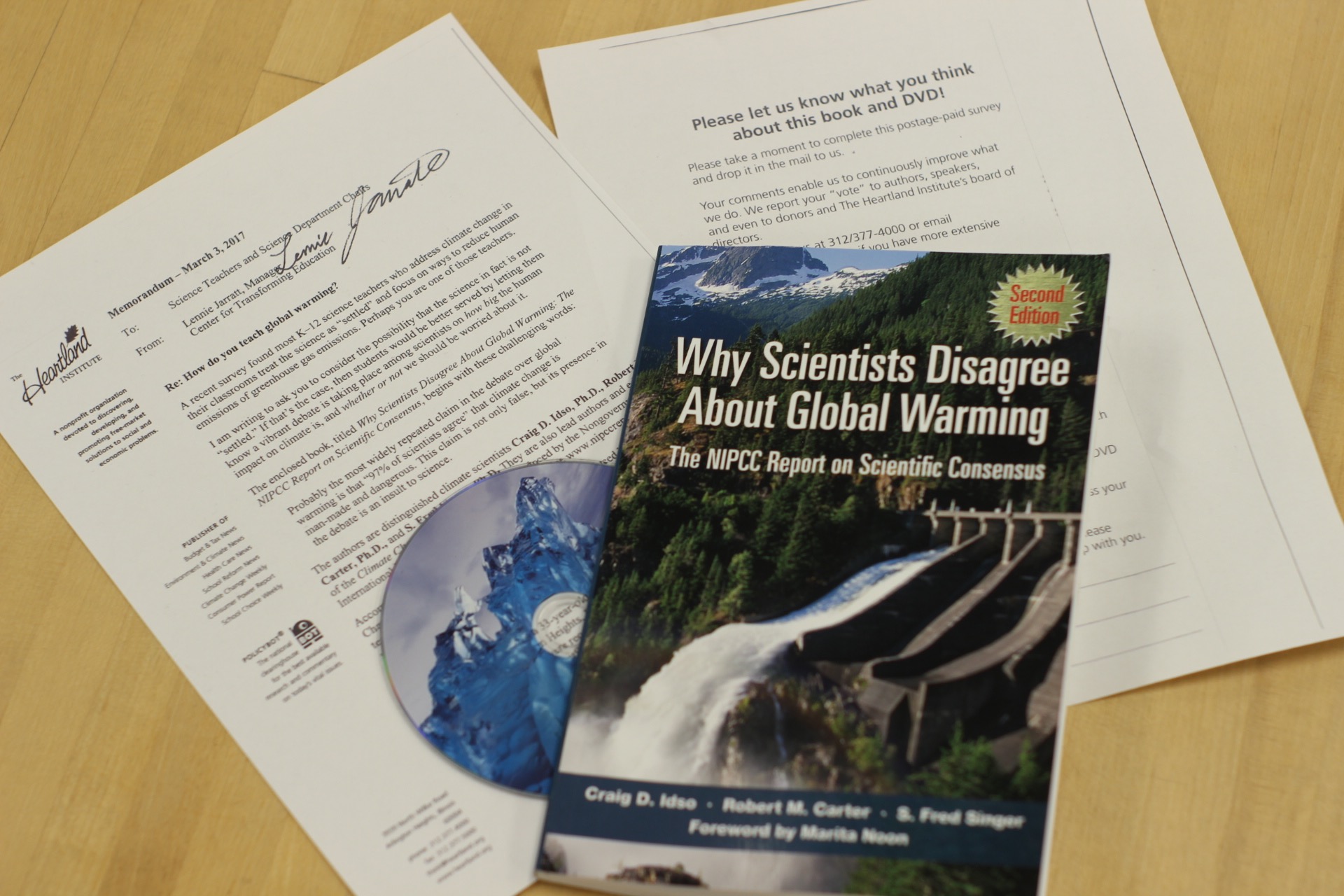
BILL COOK: Yes. This is a book by Fred Singer and Dennis T. Avery.
JOHN HOCKENBERRY: Right. And what about this book really was meaningful to you?
BILL COOK: Well, it’s very factual. It tells all the studies and gives you a complete bibliography on who did what kind of study and where it was done and when it was done and how it was done. This book made better sense to me than what I’ve seen from other sources. CO2 is a gas that is used by all these beautiful trees, grass.
JOHN HOCKENBERRY: It’s a good thing.
BILL COOK: It’s a good thing.
JOHN HOCKENBERRY: [voice-over] Cook co-sponsored a bill to compel North Carolina to disregard scientific warnings about climate change. It was written by state senator David Rouzer.
DAVID ROUZER (R), North Carolina State Senator: Well, you know, I don’t necessarily listen to any one person. And I can’t, you know, tick off a whole list of scientists that are pro-sea level rise and a whole list of scientists that aren’t. I’m just coming at it from a common sense standpoint. The earth has been warming and cooling since day one. And you know, the effect on sea level change, what do we know about it?
JOHN HOCKENBERRY: The bill would limit authorities to considering historical data in their sea level projections. The future could only be based on the past.
GAVIN SCHMIDT, Climate scientist, NASA Goddard Institute: The problem is— I mean, North Carolina beachfronts are very close to sea level. You’re very close, and you’re vulnerable because of hurricane effects, because of the storm surges, and you’re vulnerable because of high tides. Those vulnerabilities don’t go away because you just legislate them away.
[www.pbs.org: Watch on line]
JOHN HOCKENBERRY: When the bill hit the beaches of North Carolina, it had become so controversial that the provision disregarding global warming was dropped. But the science was put on hold for four years. There would have to be a new coastline study, and skeptic views would need to be considered.
[on camera] Well, you’re winning.
TOM THOMPSON: Well, we won this one. This was a home run.
JOHN HOCKENBERRY: Yeah, this was a home run.
TOM THOMPSON: And we’re going to be involved, I hope, in picking some of the scientists that come in to redo this thing because they definitely were one-sided.
STANLEY RIGGS, Geological Sciences, East Carolina Univ.: —the real estate people, and they have a lot to lose if we have to change—
What they’re saying is that we have to include all the naysayers and all the people who say climate change isn’t happening, that sea level isn’t rising. So it’s got to be—
JOHN HOCKENBERRY: Which makes it look like you’re just one opinion.
STANLEY RIGGS: Yeah.
JOHN HOCKENBERRY: Which means you’ve lost.
STANLEY RIGGS: Well, for the moment. There’s the tester right there. That ocean will dictate what happens. The ocean’s going to win.
JOHN HOCKENBERRY: [voice-over] But for now, back at the Heartland conference in Chicago, they feel they’re winning. Their campaign of alternative scientific studies, opinion pieces, books and advertising, charts and presentations has been building for years.
It’s been money well spent. In the early days, much of it came from fossil fuel interests. Heartland presenter Willie Soon has received money from ExxonMobil. Chris Horner was formerly a registered lobbyist for oil, gas and chemical companies. Climatologist Pat Michaels of the Cato Institute has estimated 40 percent of his funding has come from fossil fuel interests. Exxon at the time was one of Heartland’s most generous donors.
STEVE COLL, Author, Private Empire: ExxonMobil and American Power: There were a lot of corporations, including oil companies, that objected to the Kyoto accords in 1997, but most of them lobbied against the treaty on economic and fairness grounds. But Exxon did something that I think was fairly radical, which was that they chose to go after the science.
*COMPETITIVE ENTERPRISE INSTITUTE COMMERCIAL: And as for carbon dioxide, it isn’t smog or smoke, it’s what we breathe out and plants breathe in.
JOHN HOCKENBERRY: Borrowing tactics used on behalf of the tobacco industry, advocacy groups were enlisted to confuse the issue and shut down new federal regulations.
CEI COMMERCIAL: They call it pollution. We call it life.
STEVE COLL: A lot of these groups were run by economists, litigators, lawyers and public policy specialists, people who specialized in getting a message out.
JOHN HOCKENBERRY: [on camera] This group may not have been scientists, but they were really good at this sort of thing.
STEVE COLL: Well, some of them actually came out of campaigning on behalf of the tobacco industry. The explicit goal that was written down as part of this campaign was, “Let’s create doubt, create a sense of a balanced debate, and make sure that these lines of skepticism and dissent become routinely a part of public discussion about climate science.” And in fact, they succeeded at that.
JOHN HOCKENBERRY: [voice-over] Exxon’s millions for skeptic groups made it a public target, which would eventually be a problem for a publicly traded company.
[on camera] When did this become a PR problem on some level for Exxon?
STEVE COLL: Well, environmental groups, scientists, and later members of Congress became aware of this campaigning because it was right out in the open. At ExxonMobil shareholder meetings, some of these activists and dissenters started turning up to protest ExxonMobil’s funding of such groups.
JOHN HOCKENBERRY: [voice-over] In 2006, new leadership at ExxonMobil decided to reassess this “fight the science” strategy.
STEVE COLL: They reviewed some of these free market groups that they had been funding, and they cut funding to the most radical among them, especially the smaller sort of purpose-built groups that were just concentrating on attacking climate science.
JOHN HOCKENBERRY: Exxon stopped funding this Heartland conference and its sponsors five years ago. But that didn’t stop the broader mission of defending the free market.
[on camera] If dealing with global warming did not involve intervention in the economy, would Heartland Institute be involved in this?
JAMES TAYLOR, Heartland Institute: That’s a theoretical question. We believe in limited government and free markets. We believe in identifying and implementing sound science, free market solutions to societal problems.
JOHN HOCKENBERRY: [voice-over] And that message has generated solid financial support for activist groups like Americans for Prosperity.
TIM PHILLIPS, Pres., Americans for Prosperity: We have over 80,000 activists and donors across the country who fund AFP.
JOHN HOCKENBERRY: [on camera] Some big donors?
TIM PHILLIPS: Sure. You bet. We’re glad to have big donors. Absolutely.
JOHN HOCKENBERRY: Exxon?
TIM PHILLIPS: I wish we had more corporate support. They don’t tend to want to give to AFP very often. They think, frankly, that we’re too out there on the free market front.
JOHN HOCKENBERRY: Koch brothers?
TIM PHILLIPS: David Koch’s the chairman of our AFP Foundation. We’re glad to have his support. We don’t disclose the level of contributions, but we’re very proud to have their support.
Americans for Prosperity— we’re blessed with just such a leader in our chairman, David Koch.
JOHN HOCKENBERRY: [voice-over] With money from their oil and gas holdings, David Koch and his brother Charles, along with other powerful family foundations, have quietly become the venture capitalists of this free market ideology.
DAVID KOCH: The American dream of free enterprise capitalism is alive and well.
ROBERT BRULLE, Sociologist: The major funders of the climate counter-movement are ideologically-driven foundations that are very much concerned about conservative values and world views.
JOHN HOCKENBERRY: Sociologist and Stanford fellow Robert Brulle is studying the funding patterns of these groups. In fact, he’s noticed a new benefactor, an entity called “Donors Trust.”
[on camera] Who’s Donors Trust?
TIM PHILLIPS: Donors Trust I think is a C-4 or C-3 that’s given to us. Absolutely.
JOHN HOCKENBERRY: [voice-over] We discovered that nearly half of Americans for Prosperity’s support comes from Donors Trust.
[on camera] And do you know who’s behind it?
TIM PHILLIPS: I think their board is publicly listed. I’m pretty sure.
JOHN HOCKENBERRY: [voice-over] Their directors are listed, but the donors aren’t. From this office on an unassuming street in Alexandria, Virginia, according to public records, Donors Trust has become the number one supporter of the groups that lead this movement.
ROBERT BRULLE: We don’t know a lot about Donors Trust. It is a black box with a few little clues coming out here and there, but no real image can be formed yet.
JOHN HOCKENBERRY: Donors Trust supports limited government and free enterprise. With a promise of anonymity, their Web site says, “for donors who wish to safeguard their charitable intent.”
ROBERT BRULLLE: So you see this shift from attributable funding to anonymous funding, which insulates the giver from any kind of political fallout from their giving. People were organizing around, “Oh, evil ExxonMobil. Oh, evil Koch brothers.” Now it’s Donors Trust, Donors Capital— who are they? They get money, they give it out.
[www.pbs.org: More from Robert Brulle]
JOHN HOCKENBERRY: And that quiet money buys a platform for people like Christopher Monckton.
CHRISTOPHER MONCKTON, Science and Public Policy Institute: The scientists who are pushing this scam have a political agenda. It’s a Marxist agenda. Of course, they wouldn’t call themselves that. They call themselves environmentalists. Green is the new red, if you like.
JOHN HOCKENBERRY: Amidst all of the conspiratorial language and arguable claims by the skeptics, the idea of doing something about climate change has gotten lost.
Sen. BARACK OBAMA (D-IL), Presidential Candidate: This is not just an economic issue or an environmental concern, this is a national security crisis.
JOHN HOCKENBERRY: The national call to action from just four years ago has vanished.
Sen. JOHN MCCAIN (R-AZ), Presidential Candidate: Global warming demands our urgent attention.
MITT ROMNEY (R-MA), Fmr. Governor: The risks of climate change are real and that you’re seeing climate change. I think human activity is contributing to it.
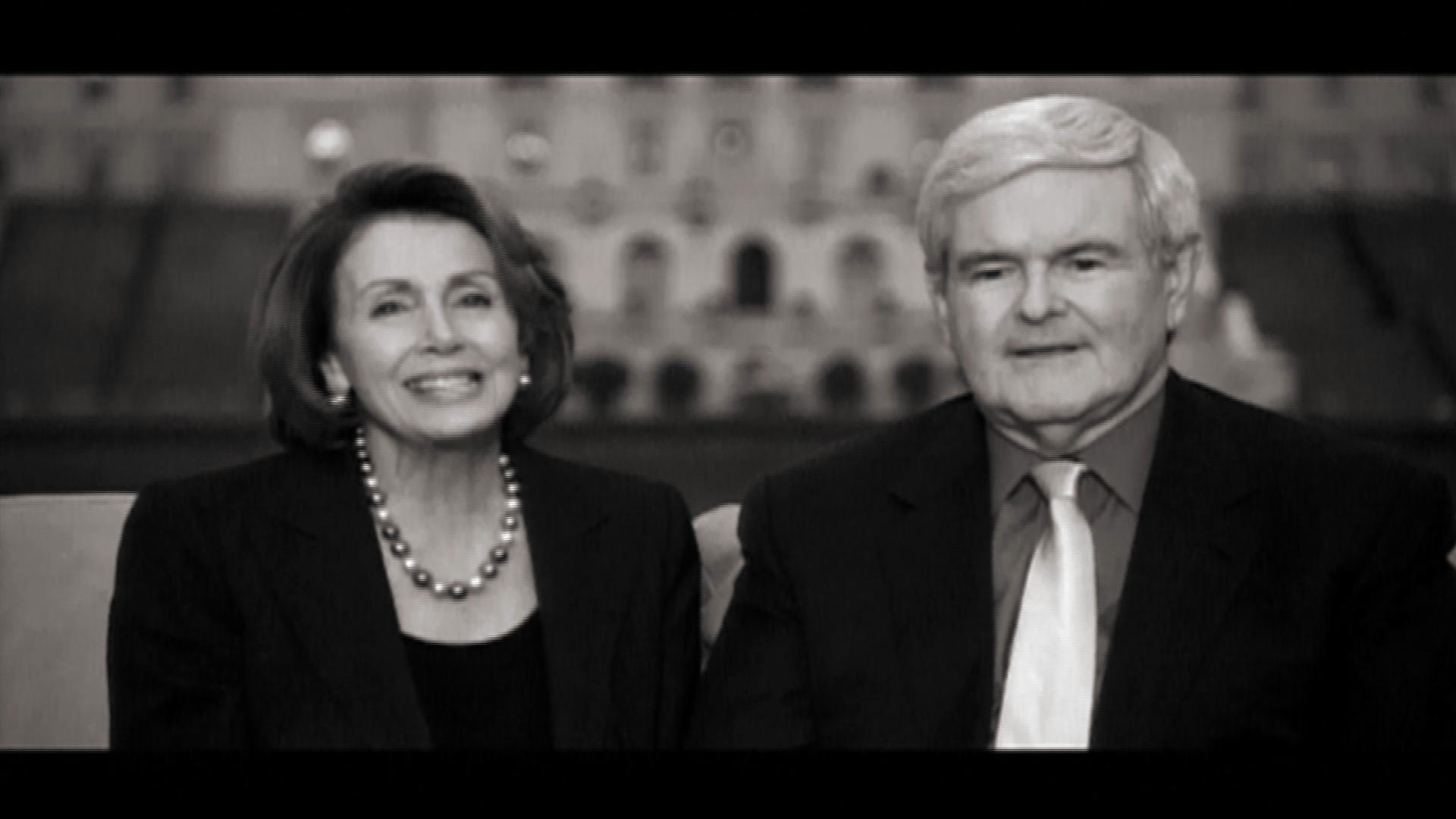
Rep. NANCY PELOSI (D-CA), Fmr. Speaker of the House: We don’t always see eye to eye, do we, Newt?
NEWT GINGRICH (R-GA), Fmr. Speaker of the House: No, but we do agree our country must take action to address climate change.
SEAN HANNITY, Fox News: Why would you ever do a commercial with Nancy Pelosi?
NEWT GINGRICH, Presidential Candidate: I was really stupid.
SEAN HANNITY: Do you believe global warming, man-made global warming is real?
NEWT GINGRICH: I— I believe we don’t know.
MITT ROMNEY, Presidential Candidate: We don’t know what’s causing climate change.
RICK SANTORUM (R-PA), Presidential Candidate: There is no such thing as global warming.
Gov. RICK PERRY (R-TX), Presidential Candidate: The science is not settled on this.
JOHN HOCKENBERRY: Even for President Obama, action on climate change has been only a passing reference in a close election campaign.
Pres. BARACK OBAMA: Denying climate change won’t make it stop. These things won’t make for a brighter future.
TIM PHILLIPS: That issue is not good for them right now. If you’ve noticed, the president doesn’t talk much about it anymore.
JOHN HOCKENBERRY: [on camera] I’ve noticed.
TIM PHILLIPS: I mean, I’ve noticed that. We’ve—
JOHN HOCKENBERRY: Does that make you feel good?
TIM PHILLIPS: I think it says a lot about the effort and I think it says a lot about Americans making a decision.
JAMES TAYLOR: It’s real interesting because we don’t hear Barack Obama talking much about it.
JOHN HOCKENBERRY: I know.
JAMES TAYLOR: We don’t hear Mitt Romney talking much about it.
JOHN HOCKENBERRY: What if you’re wrong?
MYRON EBELL: What if anybody is wrong in this debate?
JOHN HOCKENBERRY: What if you’re wrong?
MYRON EBELL: Then I’ll have to say I’m sorry and I wish we could speed up our efforts to reverse the policies that we have supported here at CEI.
JOHN HOCKENBERRY: [voice-over] Apologies or not, inaction has consequences.
NEWSCASTER: High temperature records broken by the hundred.
JOHN HOCKENBERRY: There is now no concerted national response to climate change.
NEWSCASTER: The worst wildfire season in Texas—
BYRNES: And delay, the scientific community says, is what the planet simply can’t afford.
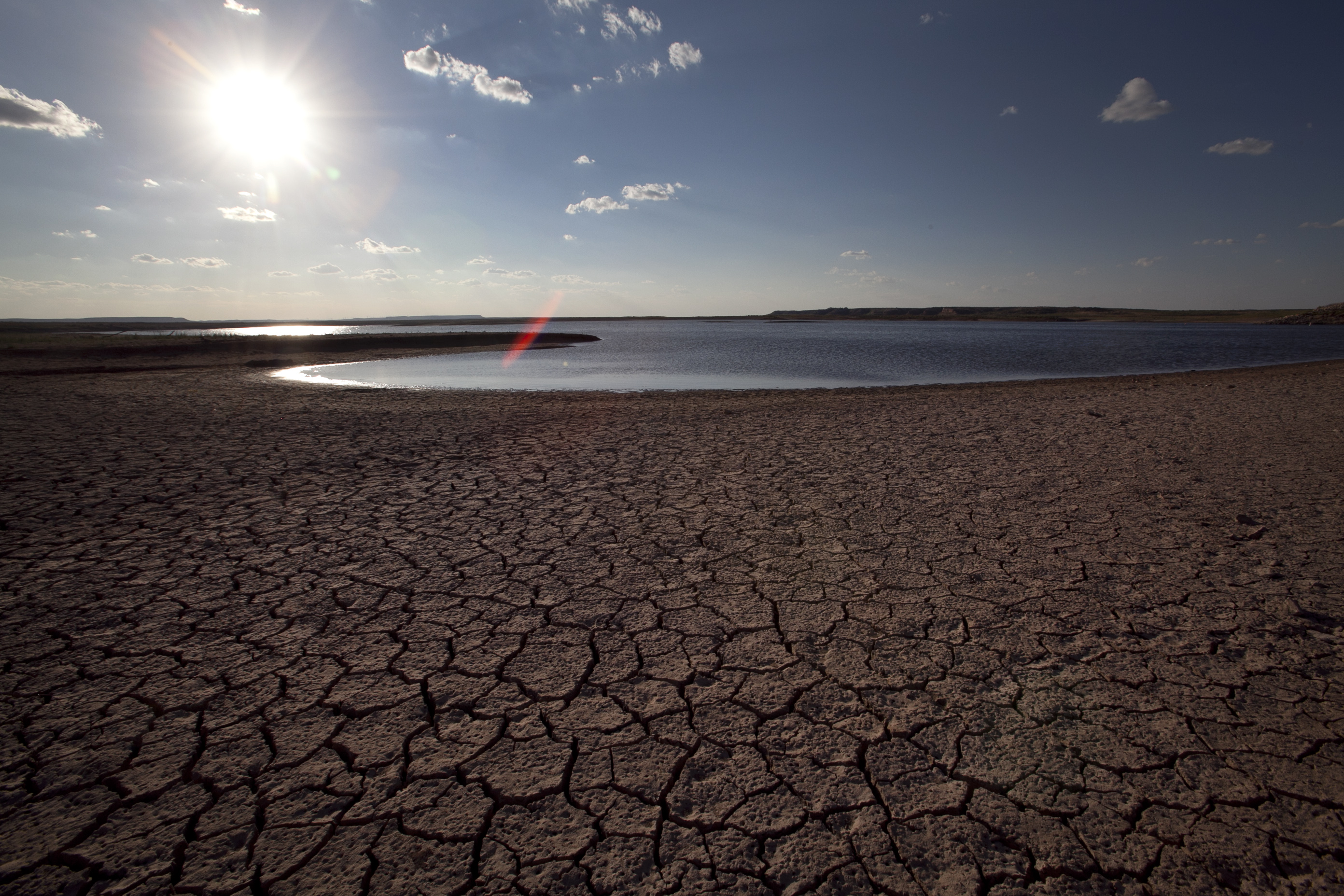
ANDREW DESSLER, Climate Scientist, Texas A&M University: Climate change is coming. It means drought. It means fire. It means suffering.
KATHARINE HAYHOE, Climate Scientist, Texas Tech University: The entire climate is changing. It’s affecting our energy, our water, our agriculture and our health.
NEWSCASTER: —drought has forced it to drink from its last reserves—
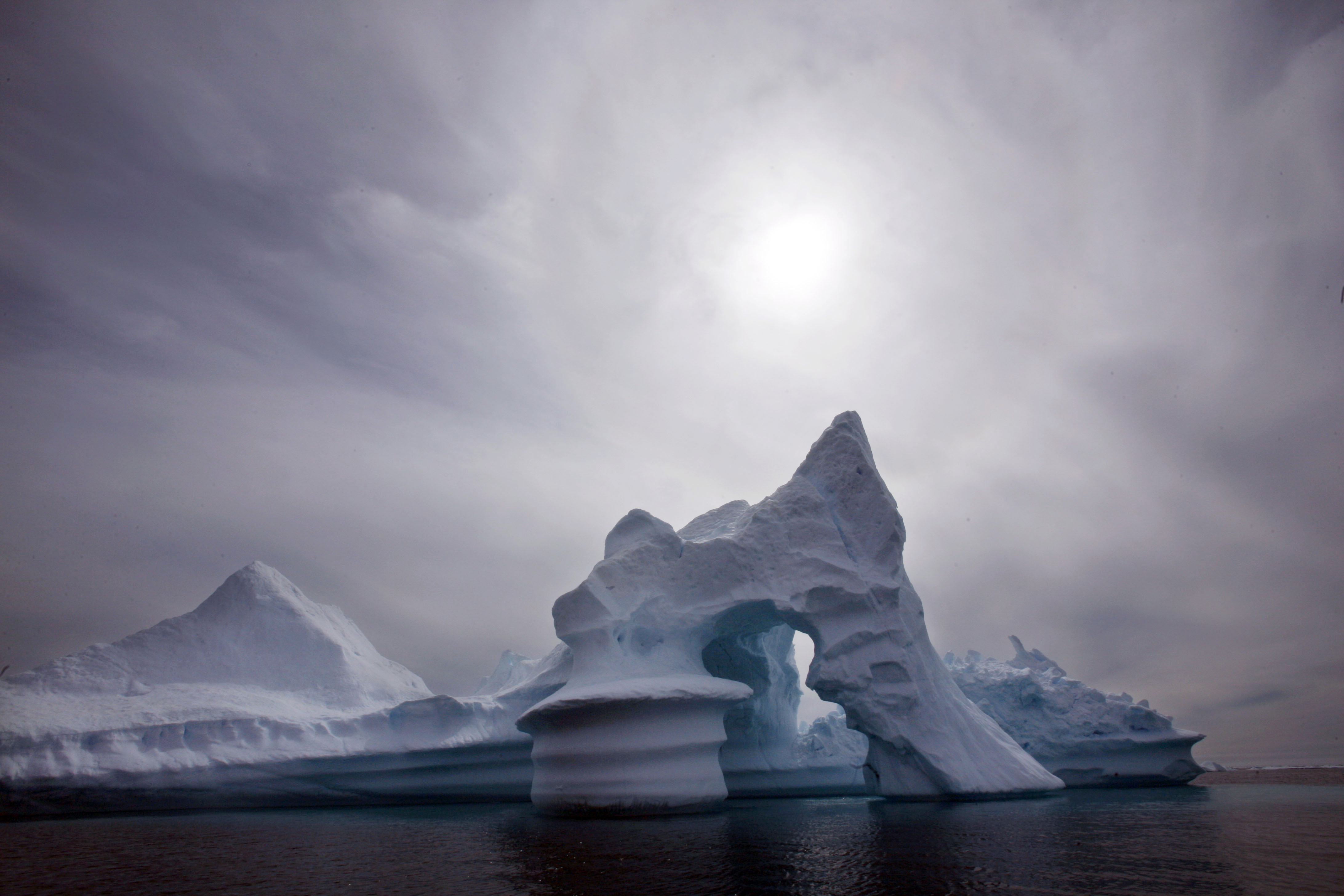
RALPH CICERONE, Pres., National Academy of Sciences: The amount of sea ice on the Arctic Ocean 2012 is a record low.
NEWSCASTER: We’ll all have to start getting used to this kind of thing—
STEVE COLL, Author, Private Empire: ExxonMobil and American Power: The problem with climate change is that, I think, to many Americans, it has seemed like a threat not to living generations but to future generations. And with that uncertainty, and with the economic climate that we are in, Americans have been unwilling to impose a tax on themselves in order to protect generations as yet unborn.
It may be that over the next 10 or 15 years, Americans will reconsider the ideas that were propounded by these campaigners, which is to say that there’s a lot of doubt about all of the tenets of the science, and follow a different kind of intuition, which is that this is here with us now.