Cleared by DNA, Texas Man Still Fighting to Clear His Name
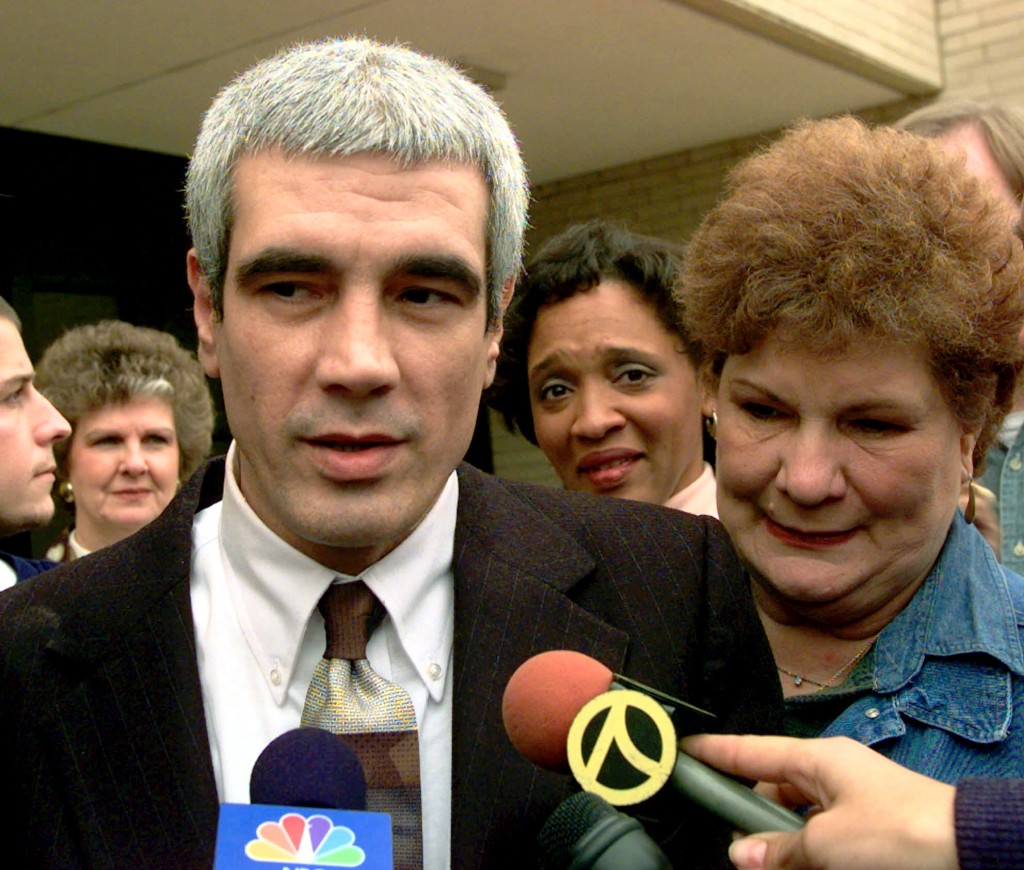
April 2, 2012
Share
The last time FRONTLINE viewers saw Kerry Max Cook was 2004. He was living in Texas with his wife and young son. Idyllic, maybe, compared with the two decades he spent in prison, mostly on death row, after being twice convicted of murdering 21-year-old Linda Jo Evans in 1977.
Today Cook, who has always maintained his innocence, is still living in Texas with his wife and son. Little has changed. And that, says Cook, is the problem.
Cook’s case is one of the most complex and controversial in Texas history; the video above from our film The Plea unravels the years of legal twists and turns. Both of his convictions were eventually overturned by Texas courts. In the end, almost all the evidence against Cook — from witness testimony to forensic evidence — crumbled, prompting an overturned conviction and a scathing 1996 critique by the Texas Court of Criminal Appeals that admonished the conduct of both the police and prosecution going back to his first trial in 1978.
Faced with a fourth trial in 1999 with almost no usable evidence, the state of Texas took an unusual tact: It offered Cook the option of taking a “no contest” plea. It’s a strange legal position the Supreme Court opened the door to in 1970 — the argument is that the Constitution allows for a defendant to make a deal and plead guilty, while still maintaining his innocence.
“The important thing for us was to insure that he got a conviction for murder that would follow him for the rest of his life,” then-first assistant District Attorney David Dobbs, who prosecuted the second two trials, told FRONTLINE.
Cook took the plea. Two months later, DNA testing of semen found at the scene excluded him.
More than a decade later, Dobbs’ words ring true, evidenced by Texas Monthly senior editor Michael Hall’s recent update on Cook’s life now.
He’s still living in a perpetually liminal state: while Cook has never admitted guilt, he’s a convicted murderer in the eyes of Texas law. And this affects his daily life, he tells Hall:
‘I couldn’t get a job, couldn’t sign a lease,’ he said. ‘We’ve had to move five times because people would find out about me. One woman threatened to put up posters in the neighborhood saying “Convicted murderer lives here.”‘
And he says he still suffers from “nightmares and suicidal urges” due to his incarceration.
Cook and his lawyer Marc McPeak recently embarked on a new legal strategy to clear his name — a motion to perform DNA tests on other physical evidence found at the murder scene. McPeak also filed a motion to recuse the judge who would hear the DNA-testing motion — in yet another twist, the judge is Jack Skeen, the former district attorney who prosecuted Cook’s first two trials.
The goal, writes Michael Hall, is for Cook to be further excluded as a suspect, after which his lawyer can file a writ of habeas corpus to ask that Cook be found innocent in the eyes of the law.
Until then:
Cook waits. He dresses only in black (he swears he will not wear any other color until he is exonerated), and with his dark eyes and white hair, he cuts a striking figure. What he wants more than anything else are life’s simplest things.
‘All I want is to be able to put my name on a lease,’ he said. ‘I want to be able to walk my dog and have my neighbors over for cookouts. I want to live a normal life.’
Read Michael Hall’s full Texas Monthly piece here; watch FRONTLINE’s film The Plea for more on other troubling cases involving plea deals.
Update [April 10, 2012]: A Texas judge yesterday granted Kerry Max Cook’s request for DNA testing on other items found at the crime scene, but ruled that the case will stay in Smith County.
Latest Documentaries






Explore
Policies
Teacher Center

Jon and Jo Ann Hagler on behalf of the Jon L. Hagler Foundation
Corey David Sauer
Koo and Patricia Yuen
FRONTLINE is a registered trademark of WGBH Educational Foundation. Web Site Copyright ©1995-2025 WGBH Educational Foundation. PBS is a 501(c)(3) not-for-profit organization.
Funding for FRONTLINE is provided through the support of PBS viewers and by the Corporation for Public Broadcasting, with major support from Ford Foundation, and Fialkow Family Foundation. Additional funding is provided the Abrams Foundation, Park Foundation, John D. and Catherine T. MacArthur Foundation, Heising-Simons Foundation, and the FRONTLINE Trust, with major support from Jon and Jo Ann Hagler on behalf of the Jon L. Hagler Foundation, and Corey David Sauer, and additional support from Koo and Patricia Yuen. FRONTLINE is a registered trademark of WGBH Educational Foundation. Web Site Copyright ©1995-2026 WGBH Educational Foundation. PBS is a 501(c)(3) not-for-profit organization.