Texas Arson Review Yields A Handful of Questionable Cases
August 10, 2012
Share
How many Texans are in prison for arson fires that, in fact, were accidents?
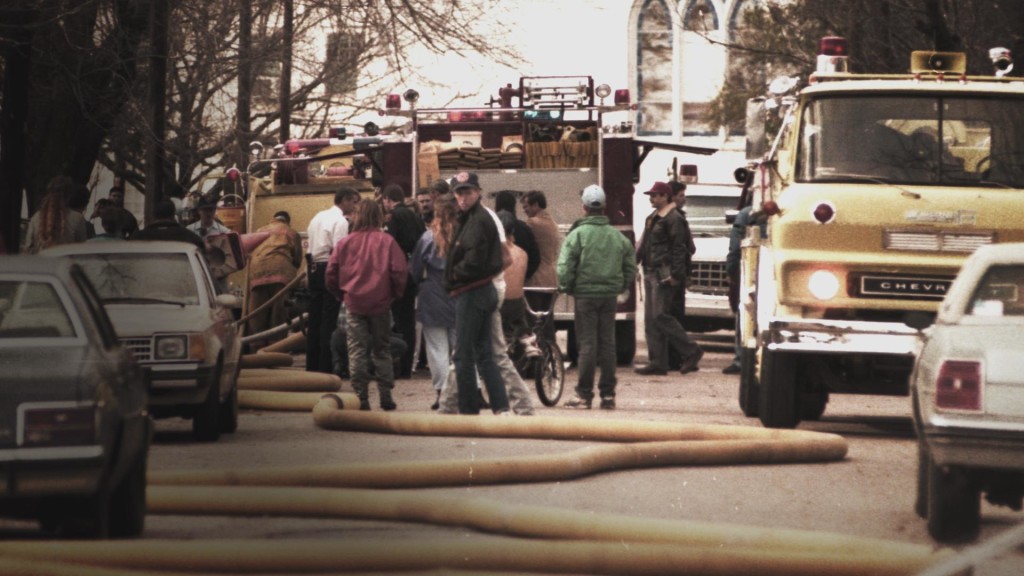
The Innocence Project of Texas, in conjunction with the state fire marshal’s office, recently completed first steps of a review of 1,000 fires in which someone was held criminally responsible. Of those, 26 stood out because of one important factor: flawed forensic science may have been used to make an arson determination.
The review comes almost a year after the Texas Forensic Science Commission (TFSC) concluded its investigation of the Cameron Todd Willingham case. Willingham, who was convicted of starting the fire that killed his two daughters in 1991, was executed 13 years later. His final appeal included new evidence provided by renowned fire scientist Gerald Hurst, who offered a strongly worded critique of the original arson findings.
“On first reading, one might well wonder how anyone could make so many critical errors in interpreting the evidence,” Hurst wrote. His opinion, which debunked “telltale” signs of arson, including crazed glass and certain types of burn marks, was later bolstered by other arson experts, including John Lentini and Craig Beyler.
The Innocence Project submitted the Willingham case to the TFSC for review in 2005. And while the commission didn’t conclude that the fire marshal’s office was negligent in that case (in part because they couldn’t, per a ruling from the state attorney general), it did call for a review of past cases.
According to a document obtained by the Texas criminal justice blog Grits for Breakfast, the Innocence Project is currently ordering court documents and transcripts to further investigate the 26 cases. Once these are reviewed, the group, with the assistance of the state fire marshal’s office, will decide whether to file writs of habeas corpus to seek relief in some cases.
In the document, Jeff Blackburn, the chief legal counsel for the Innocence Project of Texas, calls attention to three potentially troubling cases:
One case, from 1999, involves a fire that happened in a mobile home. The model of mobile home was apparently later recalled for having wiring and electrical problems that led to fires. The state’s case was made by a local fire marshal who testified that in his opinion accelerants had to have been used. Another case involves a victim with a history of sleepwalking and sleep apnea who, according to the defendant – his wife – knocked over a candle. Again, the testimony of the local expert carried the state’s case but it seems to be based on outmoded science. Yet another conviction involves an arson murder in a home that was located close to a ruptured gas line.
Blackburn also told the TFSC that the most common issue in the problematic cases he’s uncovered so far is a lack of competent counsel.
Currently, writes Blackburn, there are about 900 people serving time in Texas prisons on arson convictions.
In a separate development, the way the Texas fire marshal’s office conducts arson investigations may also be changing. Chris Connealy, the new fire marshal, told the TFSC that he plans to use its recommendations in the Willingham case — which emphasize training investigators in solid, modern science — as benchmarks going forward. Grits for Breakfast also reports that Connealy will create a science advisory committee.
This move is a break from how the last fire marshal, Paul Maldonado, viewed fire science. In September 2009, he affirmed the methods used in the original 1992 investigation of the Willingham fire. “We stand by the original investigator’s report and conclusions,” he said.
Bonus: What’s the problem with fire science anyway? This November 2011 article in Discover Magazine explains just how prevalent dated methods of arson investigation really are, and how few people are adequately trained in the field.
Support provided by:
Learn More
Related Documentaries
Latest Documentaries



Related Stories
Death by Fire
Related Stories
Death by Fire
Explore
Policies
Teacher Center

Jon and Jo Ann Hagler on behalf of the Jon L. Hagler Foundation
Corey David Sauer
Koo and Patricia Yuen
FRONTLINE is a registered trademark of WGBH Educational Foundation. Web Site Copyright ©1995-2025 WGBH Educational Foundation. PBS is a 501(c)(3) not-for-profit organization.
Funding for FRONTLINE is provided through the support of PBS viewers and by the Corporation for Public Broadcasting, with major support from Ford Foundation, and Fialkow Family Foundation. Additional funding is provided the Abrams Foundation, John D. and Catherine T. MacArthur Foundation, Park Foundation, Heising-Simons Foundation, and the FRONTLINE Trust, with major support from Jon and Jo Ann Hagler on behalf of the Jon L. Hagler Foundation, and Corey David Sauer, and additional support from Koo and Patricia Yuen. FRONTLINE is a registered trademark of WGBH Educational Foundation. Web Site Copyright ©1995-2026 WGBH Educational Foundation. PBS is a 501(c)(3) not-for-profit organization.