Pressure Mounts on Syria as U.N. Calls for Action to Prevent Civil War
December 2, 2011
Share
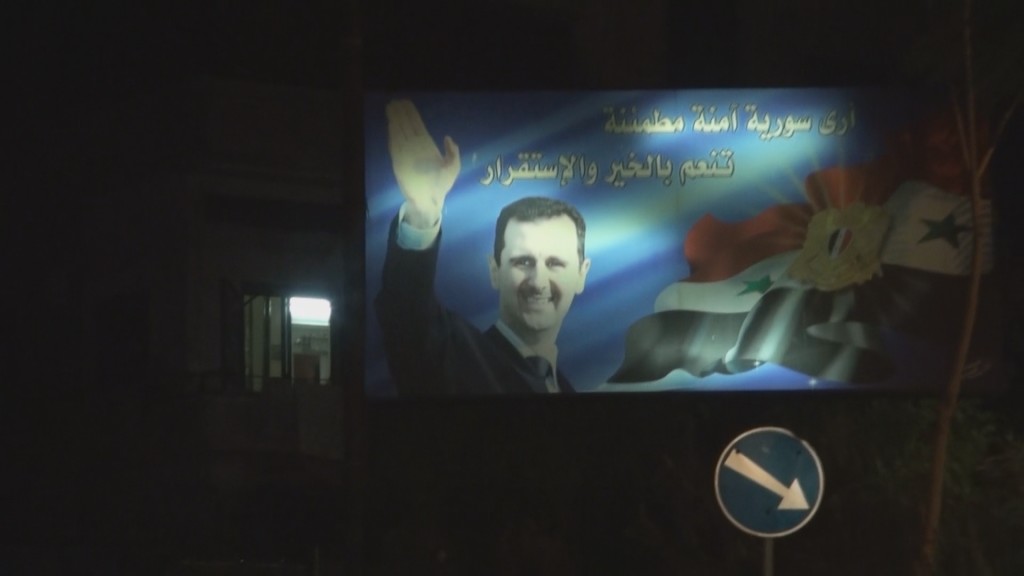
Today U.N. High Commissioner for Human Rights Navi Pillay called for international intervention to protect Syrians from the government’s brutal nine-month crackdown, which the organization estimates has now killed more than 4,000 civilians, including 307 children.
Speaking at a specially convened session of the Human Rights Council in Geneva today, Pillay warned that the Syrian authorities’ “continual ruthless repression, if not stopped now, can drive the country into a full-fledged civil war.”
Concerns over civil war in Syria are mounting as Army defectors are increasingly targeting the state. Last night, defectors attacked an airforce intelligence base in the northern province of Idlib, killing eight, according to the British-based rights group the Syrian Observatory for Human Rights.
Pillay’s comments come as the European Union announced more stringent sanctions against the state on Thursday, including blacklisting state-owned firms involved in oil trade and exploration. To comply with the sanctions, oil giant Royal Dutch Shell announced today that it would be ceasing its activities in Syria. Other European oil companies, including Total and Gulfsands Petroleum, are expected to follow suit.
The European Union had already issued a number of sanctions against Syria, including a ban on the import of crude oil which took effect mid-November, and it froze the assets and banned the travel of dozens of Syrian officials it says are involved in the crackdown. Its latest moves also ban Syrian banks from opening branches in EU countries and investing in European banks, and prohibit EU companies from trading in Syria debt.
Because 25 percent of Syria’s trade is with EU countries — particularly oil exports to Italy and Germany — the EU’s oil sanctions have already hit Syria hard. And because Syrian crude oil requires a particular kind of processing, it has proven difficult for Syria to find alternative markets to export oil.
The EU’s latest moves follow the Arab League and Turkey’s imposition of wide-ranging sanctions against Syria earlier this week.
Also today The Wall Street Journal published an interview with Burhan Ghalioun, the head of main opposition group the Syrian National Council (SNC). He told the paper that if his group obtained power, it would normalize relations with Lebanon, stop the flow of arms to militant groups like Hezbollah and Hamas, and cut military ties with Iran:
Our relations with Iran will be revisited as any of the countries in the region, based on the exchange of economic and diplomatic interests, in the context of improving stability in the region and not that of a special relationship. There will be no special relationship with Iran. … Breaking the exceptional relationship means breaking the strategic military alliance. We do not mind economic relations.
Ghalioun also sought to dismiss fears of an Islamist takeover in Syria:
I don’t think there is a real fear in Syria of a monopoly of Islamists—not even 10%. In this regard, Syria is different than the other Arab nations. The Syrian Muslim Brotherhood has been in exile for 30 years and their internal coordination is non-existent. The people who are protesting and society in general, are pious. But not every Muslim is an Islamist. This is a big mistake [in perception]. Being someone who prays or fasts doesn’t mean you want an Islamic state. Islam in the form of the Iranian state has been defeated in the Arab world. All Islamist movements now want to copy the Turkish model.
He also responded to longstanding questions about the SNC’s funding:
Up until now, the council has been funded by donations from generous Syrian businessmen. We have been promised help from several Arab states. We are open to receiving donations. Among them are the Libyans for example. They don’t have the liquidity now but they have pledged. Even counting donations inside Syria, around 90% are from businessmen.
Though the SNC is Syria’s broadest-based opposition group, its critics say the group, which was formed outside the country, does not adequately represent Syrian society.
Dig Deeper: Syria’s Fragmented Opposition: Learn more about the obstacles for the SNC and other Syrian opposition groups.
Latest Documentaries
Related Stories
Syria Behind the Lines
The Battle for Syria
The Regime Responds
Syria Undercover

The Regime
Related Stories
Syria Behind the Lines
The Battle for Syria
The Regime Responds
Syria Undercover
The Regime
Explore
Policies
Teacher Center

Jon and Jo Ann Hagler on behalf of the Jon L. Hagler Foundation
Corey David Sauer
Koo and Patricia Yuen
FRONTLINE is a registered trademark of WGBH Educational Foundation. Web Site Copyright ©1995-2025 WGBH Educational Foundation. PBS is a 501(c)(3) not-for-profit organization.
Funding for FRONTLINE is provided through the support of PBS viewers and by the Corporation for Public Broadcasting, with major support from Ford Foundation, and Fialkow Family Foundation. Additional funding is provided the Abrams Foundation, Park Foundation, John D. and Catherine T. MacArthur Foundation, Heising-Simons Foundation, and the FRONTLINE Trust, with major support from Jon and Jo Ann Hagler on behalf of the Jon L. Hagler Foundation, and Corey David Sauer, and additional support from Koo and Patricia Yuen. FRONTLINE is a registered trademark of WGBH Educational Foundation. Web Site Copyright ©1995-2026 WGBH Educational Foundation. PBS is a 501(c)(3) not-for-profit organization.