NOTE: If you are short on time, watch the video and complete this bell ringer activity: What did you notice? What did the story make you think about? What would you want to learn more about?
SUMMARY
Researchers in Florida are testing a new gene-edited tree that they hope will be able to fight off the tiny insects that have devastated the state’s orange groves for years.
View the transcript of the story.
News alternative: Check out recent segments from the News Hour, and choose the story you’re most interested in watching. You can make a Google doc copy of discussion questions that work for any of the stories here.
WARM-UP QUESTIONS
- What is the name of the disease that began to affect Ron English's orange and grapefruit groves?
- How do the Asian citrus psyllid insects infect the orange trees?
- Who did English turn to for help with keeping his orange groves alive?
- Why have other attempts at combating citrus greening failed?
- When do researchers anticipate that gene edited trees will become commercially available?
FOCUS QUESTIONS
- Do you think it is ethical for humans to alter organisms through genetic engineering? Why or why not?
- What do you think about gene editing being used in the food industry? Are there any areas where you think gene editing should not be allowed?
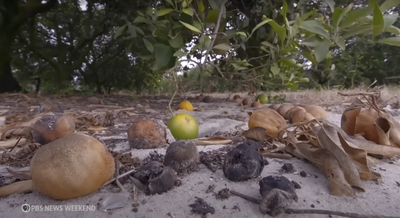
Media literacy: How does the close-up footage of the orange groves, combined with the interview of a farmer who had to shut down his groves, help shape the audience's understanding of the citrus greening problem and its impact?
Think about scenes and images like the following:

WHAT STUDENTS CAN DO
- Watch this video to learn more about what exactly CRISPR gene editing is and its potential impact on reducing the transmission of other diseases, such as Lyme Disease.
- You can also read this article to learn about how gene editing is being used to preserve endangered species.
- As a class, discuss — what other ways can gene editing can be used to preserve our environment and to combat climate change? What are some ways gene editing could have a negative impact on our natural ecosystems? What steps can be taken to make sure gene editing remains a safe and beneficial practice?
Written by Brooke Ingemi, PBS News Hour Classroom's intern and senior at Amherst College, and News Hour's Vic Pasquantonio.
Fill out this form to share your thoughts on Classroom’s resources.