NOTE: If you are short on time, watch the video and complete this See, Think, Wonder activity: What did you notice? What did the story make you think about? What would you want to learn more about?
SUMMARY
Tensions between the U.S. and Iran seems to have quieted after indirect talks in Oman, but the threat remains. For a rare view from Iran and its perspective, special correspondent Reza Sayah sat down with Esmail Baghaei, a member of Iran’s negotiating team and the spokesperson for Iran’s foreign ministry.
View the transcript of the story.
News alternative: Check out recent segments from the NewsHour, and choose the story you’re most interested in watching. You can make a Google doc copy of discussion questions that work for any of the stories here.
WARM-UP QUESTIONS
- Who is Esmail Baghaei, and what is his role in Iran?
- What does Baghaei say about the possibility of war with the United States?
- Why is the United States currently pressuring Iran?
- When did the United States previously launch an attack on Iran's nuclear facilities?
- How might current talks avoid war, according to Baghaei?
ESSENTIAL QUESTIONS
- Why do you think the United States is pressuring Iran? What outcomes does the Trump administration seek?
- Do you think the current actions of the U.S. are more likely to lead to increased peace and security, or more risk? Why do you think so?
Media literacy: Why do you think the producers decided to interview an Iranian diplomat instead of one from the U.S.?
WHAT STUDENTS CAN DO
Some of the reasons for U.S. pressure on Iran are stated in this interview. But what concerns does the U.S. have about Iran, and why is Iran worried about the actions of the United States?
As a class, skim through the headlines of video segments and AP news articles on the News Hour site here. Then discuss —
- What seem to be the greatest concerns about Iran based on frequency of coverage? If time allows, you may explore other news sites as well to see if coverage is different, including Al Jazeera's article US says it caused dollar shortage to trigger Iran protests: What that means and CNN's US sending second aircraft carrier group to Middle East, sources say.
- What other countries or global powers do you think are part of the United States pressure campaign on Iran, and why?
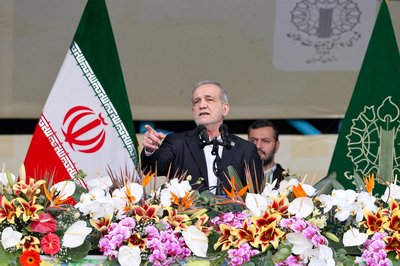
Iranian President Masoud Pezeshkian speaks during the 47th anniversary of the Islamic Revolution in Tehran, Iran, February 11, 2026. Iran's Presidential website/WANA (West Asia News Agency)/Handout via REUTERS ATTENTION EDITORS - THIS PICTURE WAS PROVIDED BY A THIRD PARTY. TPX IMAGES OF THE DAY
Sign up to receive our weekly newsletter with Daily News Lessons and community events.
To provide feedback on News Hour Classroom's resources, including this lesson, click here.