SUMMARY
For the first time in more than 50 years, the United States is sending astronauts back toward the moon. NASA launched Artemis II from the Kennedy Space Center in Florida, sending a crew of four astronauts on a 10-day voyage. If all goes as planned, they will travel farther into space than any humans before them. Miles O’Brien was there for the launch and joined Amna Nawaz to discuss the mission.
View the transcript of the story.
NOTE: If you are short on time, watch the video and complete this See, Think, Wonder activity: What did you notice? What did the story make you think about? What would you want to learn more about?
News alternative: Check out recent segments from the News Hour, and choose the story you’re most interested in watching. You can make a Google doc copy of discussion questions that work for any of the stories here.
WARM-UP QUESTIONS
- Who are the astronauts that make up the Artemis II mission, and what did you learn about them?
- What does NASA hope to learn from the Artemis II mission that will help them on future missions?
- How do the astronauts plan to spend their time in space?
- Why is Artemis II not landing on the moon?
- When was the last time humans landed on the moon?
ESSENTIAL QUESTIONS
- What do you find most interesting about the Artemis II lunar mission?
- Do you think the Artemis space program is a worthwhile endeavor and investment of taxpayer money? Why or why not?
Media literacy: How do visuals like the one below add to your understanding of the story?
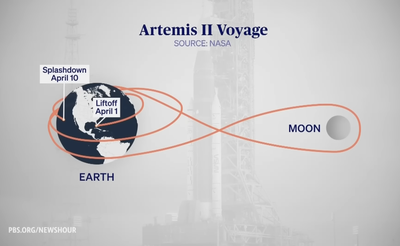
Credit: PBS News Hour screenshot of graphic of lunar mission Artemis II
WHAT STUDENTS CAN DO
Invent for space! How do engineers and inventors need to consider the different environmental conditions in which their inventions will operate? Try out this fun lesson: Lesson plan: Learn from NASA how to invent for any environment with a friend, family member or classmate. You'll explore some of the engineering and technical challenges of controlling spacecraft tens of millions of miles away. Then plan your own design for a “space helicopter” that mimics NASA objectives, including making them as durable and low-weight as possible.
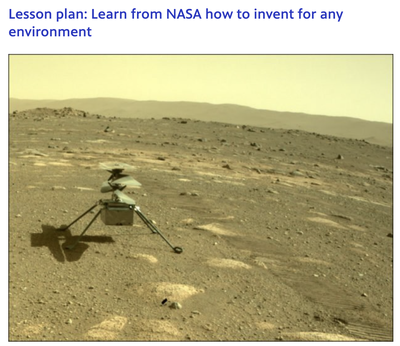
Credit: PBS News Hour Classroom Lesson plan: Learn from NASA how to invent for any environment
Sign up to receive our weekly newsletter with Daily News Lessons and community events.
To provide feedback on News Hour Classroom's resources, including this lesson, click here.