SUMMARY
The U.S. fertility rate is at an all-time low, according to recent data from the Centers for Disease Control and Prevention. Researchers say this is part of a larger downward trend. Since 2007, the number of Americans having babies has dropped 23%, well below the replacement level, meaning not enough are being born to replace those who die.
View the transcript of the story.
NOTE: If you are short on time, watch the video and complete this See, Think, Wonder activity: What did you notice? What did the story make you think? What would you want to learn more about?
News alternative: Check out recent segments from the NewsHour, and choose the story you’re most interested in watching. You can make a Google doc copy of discussion questions that work for any of the stories here.
WARM-UP QUESTIONS
- How much has the number of people in the U.S. having babies dropped since 2007?
- Who is Brian Mann, and what is his background?
- What are some of the reasons that people in the U.S. may be having fewer children now compared to the past, according to Mann?
- When will the population of the U.S. begin to shrink if birth trends don't change?
- Why might the declining birthrate impact the economy in the future?
ESSENTIAL QUESTIONS
In this segment, Brian Mann says that unless birth rates or immigration rates change, the U.S. population will begin to shrink.
- What do you think would be some of the impacts of a shrinking U.S. population?
- Which do you think would be easier to change — increasing immigration to address declining populations or encouraging families to have more children? What do you think the federal government might do to address the negative impacts of shrinking populations?
Media literacy: Take a look at the infographic below. Why do you think this information was included? What are some characteristics that the states mentioned have in common?

WHAT STUDENTS CAN DO
Learn more about birthrates and how the U.S. compares to other countries. First, read the article, "The U.S. fertility rate reached a new low in 2024, CDC data shows."
- As a class, discuss — what details about the history of birth rates in the U.S. surprised you the most?
- Next, use data from the World Bank to compare U.S. birthrates to other countries. Does it seem higher or lower than most? Why do you think this is?
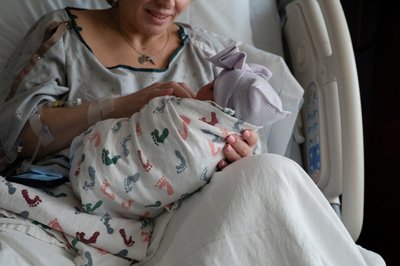
Flora Matty holds her newborn child, Malaki, after giving birth in the Family Birth Center at Beaumont Hospital in Royal Oak, Michigan, U.S., February 1, 2022. REUTERS/Emily Elconin
Sign up to receive our weekly newsletter with Daily News Lessons and community events.
To provide feedback on News Hour Classroom's resources, including this lesson, click here.