SUMMARY
In Virginia, voters are heading to the polls on Tuesday for a high-stakes ballot measure that could reshape the state’s congressional map and potentially shift the balance of power in Washington. Supporters say it’s a necessary response to aggressive Republican-led redistricting in other states. Opponents call it blatant partisanship. Lisa Desjardins reports.
UPDATE: Virginians voted to approve the ballot measure. You can read more about the vote and what it means here.
View the transcript of the story.
NOTE: If you are short on time, watch the video and complete this bell ringer activity: What did you notice? What did the story make you think about? What would you want to learn more about?
News alternative: Check out recent segments from the News Hour, and choose the story you’re most interested in watching. You can make a Google doc copy of discussion questions that work for any of the stories here.
Key terms
gerrymandering — practice of drawing congressional district lines to benefit one political party over another is known as gerrymandering and dates back to the 19th century
partisanship — prejudice in favor of a particular cause; bias
WARM-UP QUESTIONS
- Where are Democrats hoping to pick up seats through redistricting?
- When did Republican-led sates vote to redistrict for partisan advantage, and who pushed them to do so?
- Who is James Walkinshaw, and why does he favor redistricting?
- How would redistricting remove rural voices, according to Republican Ben Cline?
- What is the reason that this redistricting is only temporary, according to Democrat Don Scott?
FOCUS QUESTIONS
- Why do you think states have different rules for how Congressional districts are drawn?
- Do you think there should be one uniform set of rules for every state? Why or why not?
Media literacy: Do you know how Congressional districts are drawn in your state? Who controls the process? Do you think they seem fair or not? What could make the districts more fair?
WHAT STUDENTS CAN DO
At the end of the segment, the following graphic appears:

The graphic mentions "Princeton's Gerrymandering Project." You can learn more about the Gerrymandering Project by visiting their website and finding out more about the score they give to your state. As a class, discuss —
- Why did the site seem to give your state the grade it received?
- What was determined to be fair or unfair in the way your state assigned Congressional districts?
- What other methodology (strategy for determining fairness) was part of the site's grade for your state?
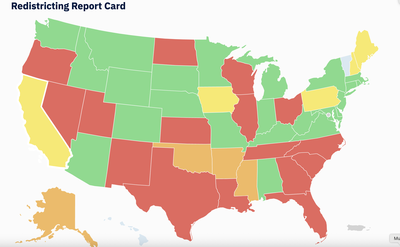
Screenshot from the Princeton Gerrymandering Project
Sign up to receive our weekly newsletter with Daily News Lessons and community events.
To provide feedback on News Hour Classroom's resources, including this lesson, click here.