SUMMARY
The Ebola outbreak in the Democratic Republic of the Congo and Uganda is escalating quickly. There are growing warnings that, without a stronger response, this Ebola outbreak could become one of the deadliest. William Brangham takes a closer look with Jeremy Konyndyk, the president of Refugees International. In 2014, he ran USAID’s foreign disaster assistance when Ebola broke out in Africa.
View the transcript of the story.
NOTE: If you are short on time, watch the video and complete this See, Think, Wonder activity: What did you notice? What did the story make you think about? What would you want to learn more about?
News alternative: Check our recent segments from the News Hour, and choose the story you’re most interested in watching. You can make a Google doc copy of discussion questions that work for any of the stories here.
WARM-UP QUESTIONS
- Who is Jeremy Konyndyk?
- What can be done to help control this rising outbreak?
- Where were the first cases of Ebola reported in?
- When does Konyndyk expect efforts to be made in controlling this epidemic?
- How does Konyndyk say that the Ebola outbreaks of 2014 and 2018 compare to that happening in 2026?
ESSENTIAL QUESTIONS
- Brangham mentions Konyndyk's statement of America abandoning any responsibility in connection with this Ebola outbreak. Why do you think the U.S. government is choosing not to involve itself to the extent it did during the 2014 outbreak?
- The Ebola outbreak has now reached alarming numbers three times. What has caused it to continuously return?
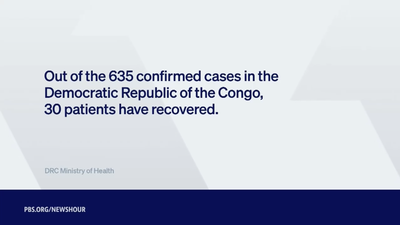
Media literacy: Read over this statistic provided by the DRC Ministry of Health at the end of the video. After, answer the following question:
What do you believe are reasons for the outbreak spreading? What are things that need to be done in order for this infection rate to decrease and for the number of patients recovered to increase?
WHAT STUDENTS CAN DO
Read over this article on the Ebola outbreak in DRC: what to know and how to help, which takes a look at how a major non-profit organization, the International Rescue Committee (IRC), is tackling the problem. After students are finished reading, they should brainstorm further action steps that can be taken to by the U.S. government, the international community and the International Rescue Committee (IRC) to help solve this outbreak before it continues spreading. Some guiding questions can be:
- What caused the Ebola virus to first appear?
- How is the IRC currently responding?
- What can be changed or added to the method in which the IRC is tackling this problem?
Written by Justin Vasquez, News Hour Classroom intern and Amherst College student, and PBS News Hour's Vic Pasquantonio
Sign up to receive our weekly newsletter with Daily News Lessons and community events.
To provide feedback on News Hour Classroom's resources, including this lesson, click here.