SUMMARY
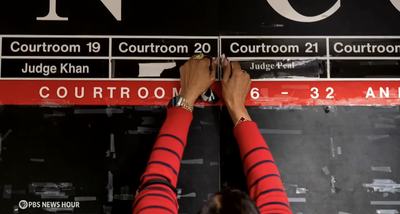
The Trump administration has fired more immigration judges as it moves to reshape the court system that polices deportations. Immigration courts are overseen by the Department of Justice itself. That means judges are required to answer to the administration whose policies they're ruling on. Ali Rogin spoke with Holly D'Andrea, president of the National Association of Immigration Judges.
View the transcript of the story.
NOTE: If you are short on time, watch the video and complete this See, Think, Wonder activity: What did you notice? What did the story make you think? What would you want to learn more about? You can also make a Google doc copy of these general discussion questions.
News alternative: Check our recent segments from the News Hour, and choose the story you’re most interested in watching and see the Google doc above for discussion questions.
WARM-UP QUESTIONS
- Who is Holly D'Andrea, and what is her background?
- What are deportation judges, and what branch of government are they a part of?
- When does immigration law shift the most, according to this segment?
- Why have many judges resigned under the current administration?
- How many immigration judges has the Trump administration fired?
ESSENTIAL QUESTIONS
- What constitutional questions does the Trump administration's mass firing of immigration judges raise about the separation of powers and judicial independence?
- What role should judges play in ensuring that laws are applied fairly, even during periods of changing immigration policy?
Media literacy: Consider how the story is framed. What questions does the reporter choose to ask? How might different questions or additional context influence your understanding of the issue?
WHAT STUDENTS CAN DO
Briefly research the differences between these three types of courts.
- Article III courts
- Article I courts
- Immigration courts
Then, answer the following questions to further understand their differences.
- Who oversees each court?
- Who appoints the judges?
- How long do judges serve?
- What types of cases do they hear?
- What are the advantages and disadvantages of each system?
Written by Jackalyn Karamanougian, PBS News Hour Classroom's intern, and News Hour's Luke Gerwe
Sign up to receive our weekly newsletter with Daily News Lessons and community events.
To provide feedback on News Hour Classroom's resources, including this lesson, click here.