SUMMARY
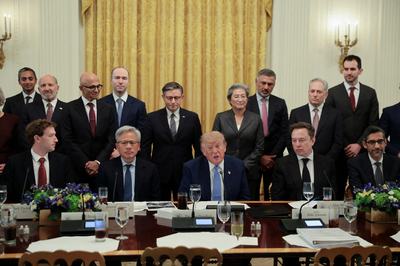
With planning for the midterm elections well underway, President Trump has ousted the remaining members of a bipartisan federal agency that helps state and local officials run smooth elections and certify voting equipment. White House correspondent Liz Landers explains what happened at the Election Assistance Commission and the impact it could have in November.
View the transcript of the story.
NOTE: If you are short on time, watch the video and complete this See, Think, Wonder activity: What did you notice? What did the story make you think about? What would you want to learn more about?
News alternative: Check our recent segments from the News Hour, and choose the story you’re most interested in watching. You can make a Google doc copy of discussion questions that work for any of the stories here.
WARM-UP QUESTIONS
- What does the EAC do?
- Who was removed from the Election Assistance Commission (EAC)?
- What recent Supreme Court decision was referenced as evidence by the White House concerning their authority to remove these commissioners?
- How does this removal fit into the existing pattern of the White House pressuring states on election-related matters ahead of the 2026 midterm elections?
- How have their efforts been held up across the different branches of government?
ESSENTIAL QUESTIONS
- In the video, several suggestions for helping the voting process are mentioned by Oregon Secretary of State Tobias Read. What is his opinion on the firings and what are his suggestions more focused on?
- Considering these firings, the executive orders, and the SAVE Act, what message is the administration sending regarding voting? What are their stated concerns, and do they line up with their actions so far?
Media literacy: Read this statement from the EAC. After reading, answer the following questions:
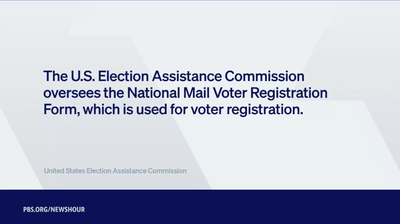
While the EAC may have had limited governing authority, they still oversaw a massive part of the actual administration of elections, including voter registration. With the current attention being drawn to mail-in voting and voter registration as a whole, what does it mean that there are no active commissioners to monitor the process? In an election year, how is this especially significant?
WHAT STUDENTS CAN DO
In the video, Trump v. Slaughter is mentioned as key evidence for the government’s authority to fire commissioners if they don’t line up with administration’s goals. Students can explore this recent decision by reading this law article. They can review each section to learn about the facts and impact of the decision on independent agency authority. After students are done, they should discuss the page and how important this decision is considering the recent EAC commissioner firings. Some guiding questions can be:
- Independent agencies have historically been independent from the White House’s direct control. Considering Trump v. Slaughter, how important will the impact of that decision be? Do you think further action beyond the EAC firings will take place?
- Writing for the majority, Chief Justice Roberts states that: “[T]o remain accountable to the President, those officers must be removable by the President.” Do you agree that agency heads and officers should be accountable to the President to this degree? What does this risk for their independence and ability to serve the American people effectively?
Written by Alyssa Tinoco, News Hour Classroom intern, and PBS News Hour's Luke Gerwe
Sign up to receive our weekly newsletter with Daily News Lessons and community events.
To provide feedback on News Hour Classroom's resources, including this lesson, click here.