SUMMARY
Satire plays a powerful role in challenging authority, exposing hypocrisy and testing the boundaries of free expression. It's among the forces Judy Woodruff explores in the podcast, “In Pursuit of Happiness.” She sat down with The Onion Network’s Joshua Johnson and scholar Sophia McClennen to discuss why the freedom to laugh at those in power can reveal a lot about the strength of a democracy.
View the transcript of the story.
NOTE: If you are short on time, watch the video and complete this See, Think, Wonder activity: What did you notice? What did the story make you think? What do you want to learn more about? You can also make a Google doc copy of these general discussion questions.
News alternative: Check our recent segments from the News Hour and choose the story you’re most interested in watching. See the Google doc above for discussion questions.
WARM-UP QUESTIONS
- Who are Joshua Johnson and Sophia McClennen?
- What does Johnson say has helped Americans survive as a democracy?
- When is it important to incorporate satire in politics, according to this piece?
- Why does Johnson believe that satire is important for a healthy democracy to be maintained?
- How does satire correlate with a stronger democracy, according to McClennen?
ESSENTIAL QUESTIONS
- How has satire helped build America to be a nation with a strong democracy that is able to withstand moments of political turbulence?
- Do you agree that satire is key to helping build resistance to conflicts between two parties?
Media literacy:
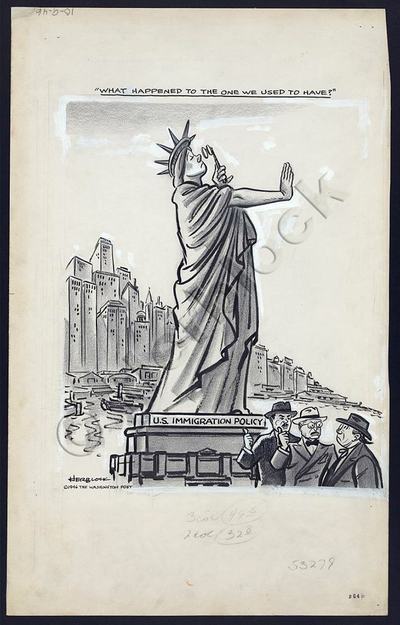
Analyze the Herblock cartoon below. Once you are done, discuss with peers what exactly classifies this cartoon as satire. Here are guiding questions that can be used:
- What makes the cartoon funny to audiences?
- What is ironic of the cartoon?
- What bigger issue does the cartoon highlight?
WHAT STUDENTS CAN DO
Now it is your turn to create a form of satire! It is good to note that satire can come in many forms, such as writing, art, cartoons, comedy sketches, etc. Take time to come up with the style of satire you want to pursue. Once you have made your selection, begin putting your mind to action!
After everyone has finished, students should first share with those in close proximity to them. Once small group discussion ends, students from each group should begin share general trends they noticed about approaches taken in developing their satiric work. To conclude, students who would like to share their work should be given the opportunity to do so.
Written by PBS News Hour Classroom intern Justin Vasquez and News Hour's Victoria Pasquantonio
Sign up to receive our weekly newsletter with Daily News Lessons and community events.
To provide feedback on News Hour Classroom's resources, including this lesson, click here.