SUMMARY
At least one in four NFL players has CTE (Chronic Traumatic Encephalopathy) when they die, according to a new study that examined the brains of former pro players. CTE is a brain disease thought to be caused by years of sustained head trauma and can only be diagnosed after an autopsy of the brain. Amna Nawaz spoke with Dr. Chris Nowinski of the Concussion and CTE Foundation, and a co-author of this study.
View the transcript of the story.
Short on time? Watch the video and complete the following See, Think, Wonder questions: What did you notice? What did the story make you think? What would you want to learn more about?
News alternative: Check out our recent segments from the News Hour, and choose the story you’re most interested in watching. Then make a copy and answer these general discussion questions.
WARM-UP QUESTIONS
- Who is Dr. Chris Nowinski, and what is his background?
- How many former NFL players who were part of the study ended up having CTE?
- What are the causes and symptoms of CTE?
- When does CTE start to show symptoms?
- Why did Randy Grimes, former NFL Player, bring up the role age/level may play in evaluating football's role in CTE? What was Nowinski's reaction?
ESSENTIAL QUESTIONS
- Do you think the study's results will make people think more about the potential health effects of football? Why/why not?
- Why is it important to study the health effects of playing contact sports like football?
- What can be done to mitigate the risks of getting a head injury playing football?
Media literacy: If the News Hour was doing a follow-up to this piece, who would you like to see the producers interview?
WHAT STUDENTS CAN DO
Jesse Tozuda got a serious concussion playing college rugby some years ago. She wanted to make sure others would not experience the pain she went through, so she decided to create her own invention: a special concussion sensor that lets a player or coach know if they need to be pulled from the game. The sensor is attached to the helmet and turns red if it receives a hard hit signifying the player should stop playing.
Learn more about Jesse's story by watching the video below. Answer the discussion questions, if time allows. Then think about what invention you think needs to be invented to make playing sports safer. If you are not sure yourself, ask a friend, neighbor or family member who plays sports to see if they have any ideas. Share your idea with your class the next day.
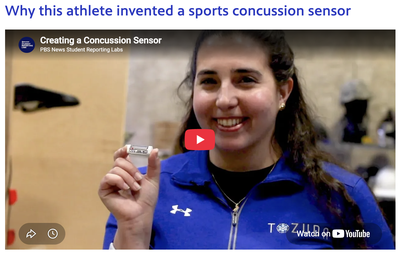
Credit: PBS News Hour Student Reporting Labs
Sign up to receive our weekly newsletter with Daily News Lessons and community events.
To provide feedback on News Hour Classroom's resources, including this lesson, click here.